Short Description
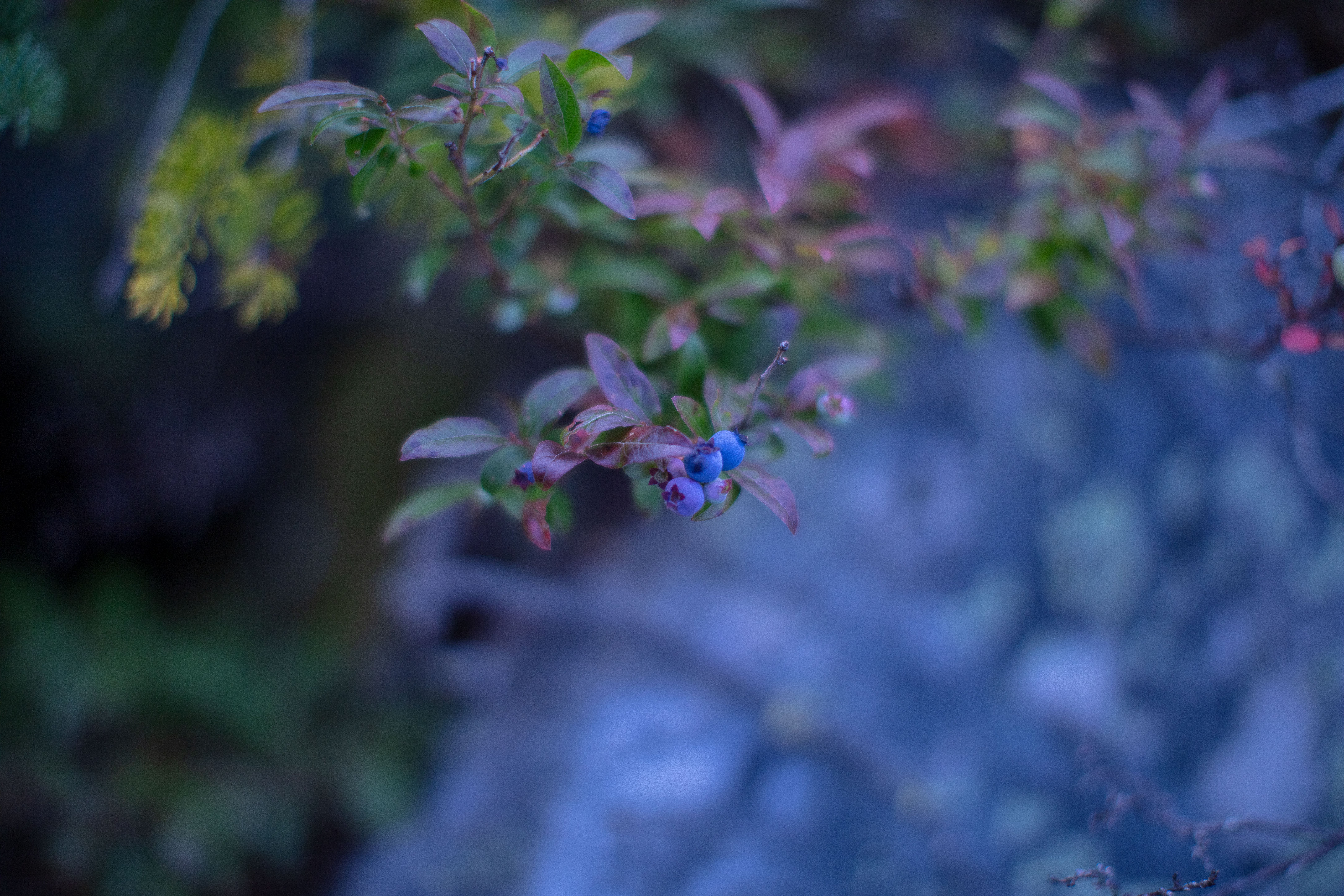
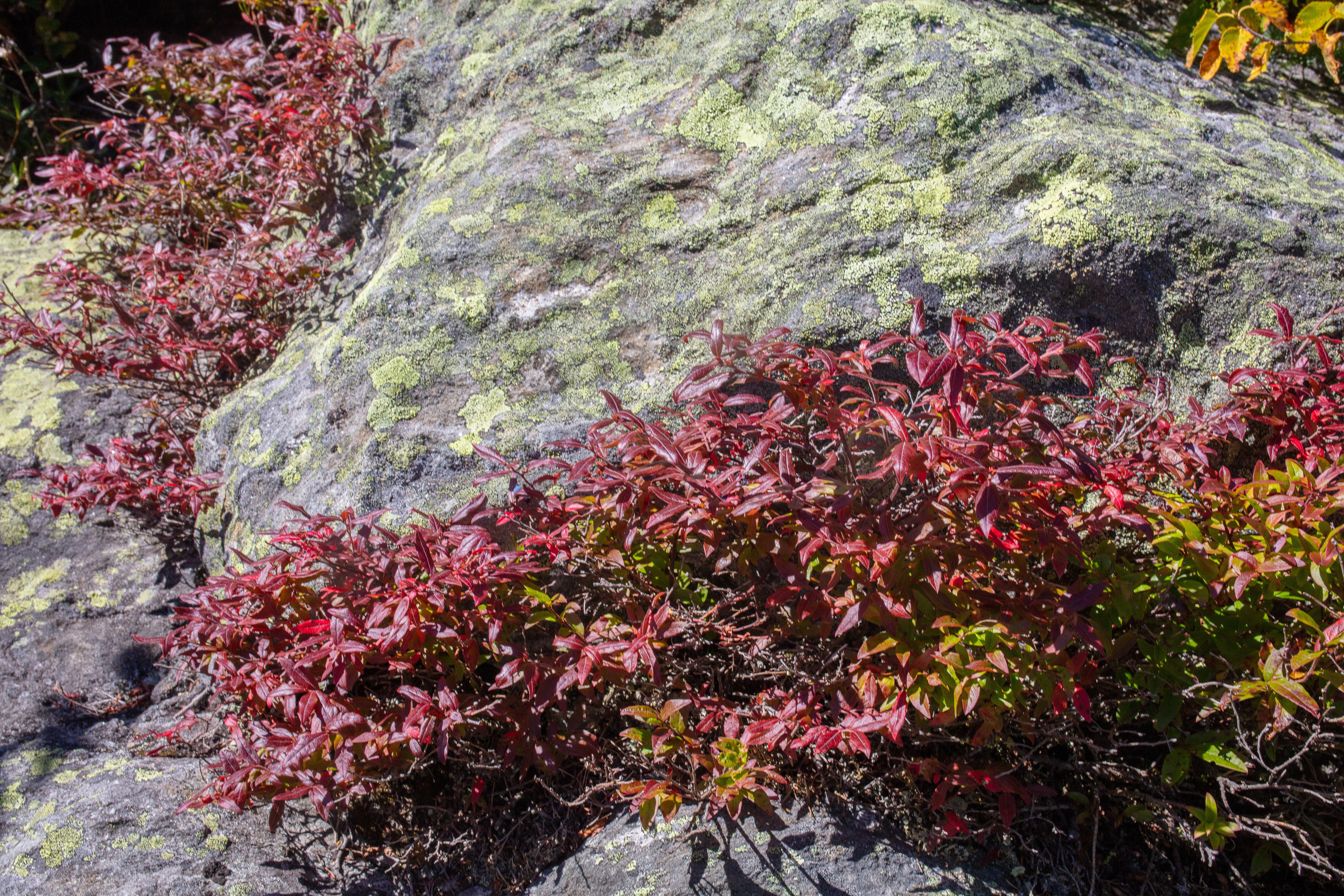
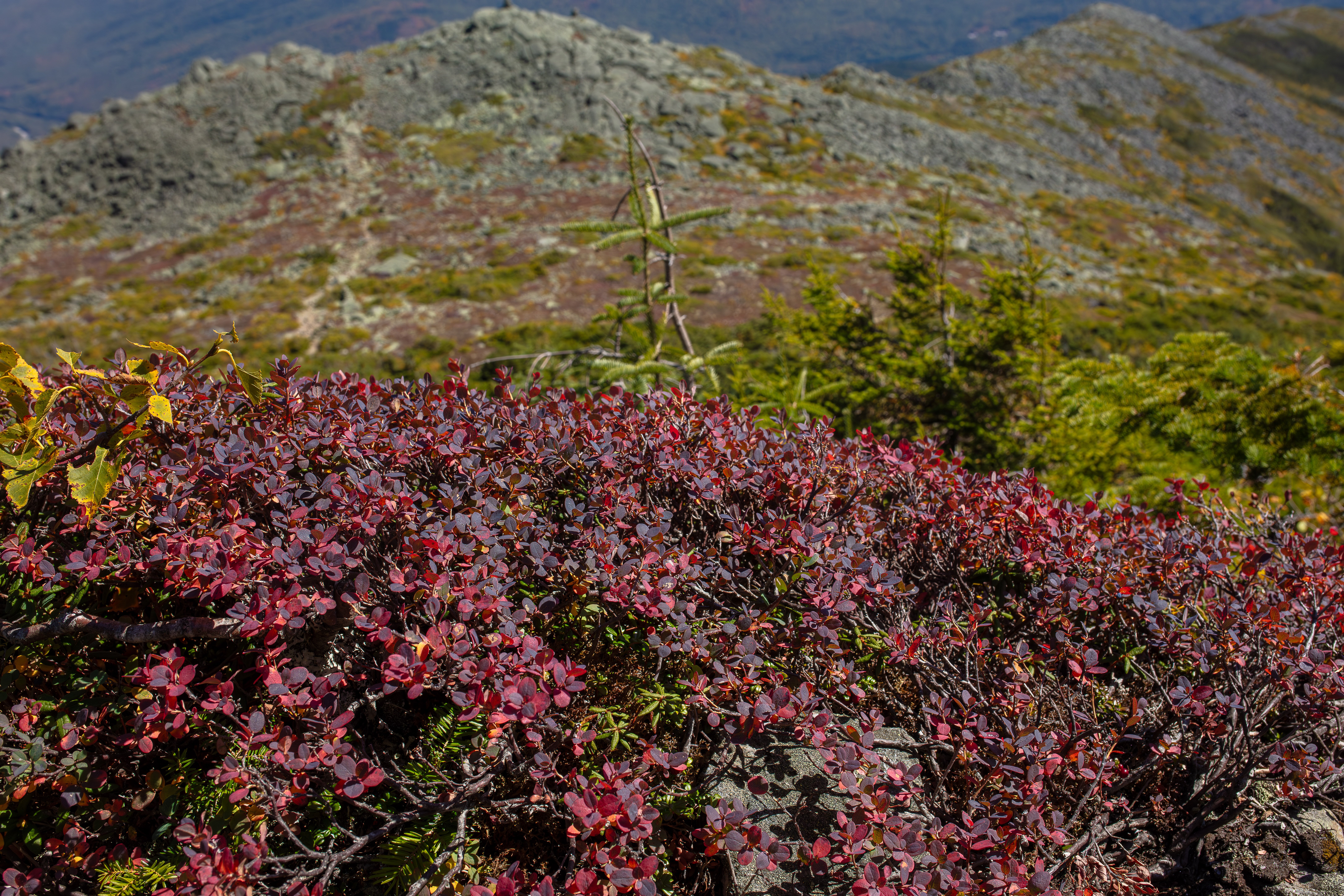
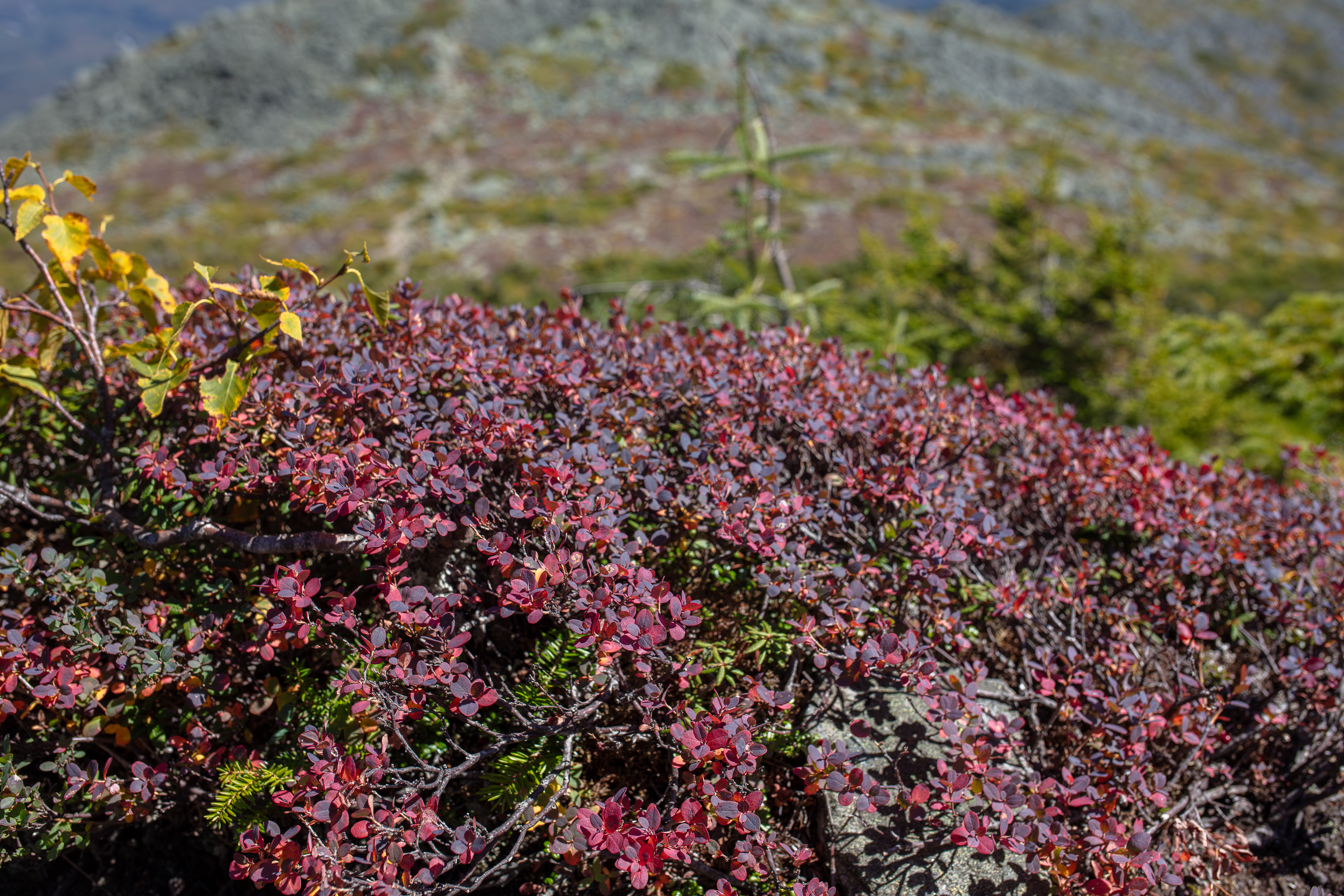
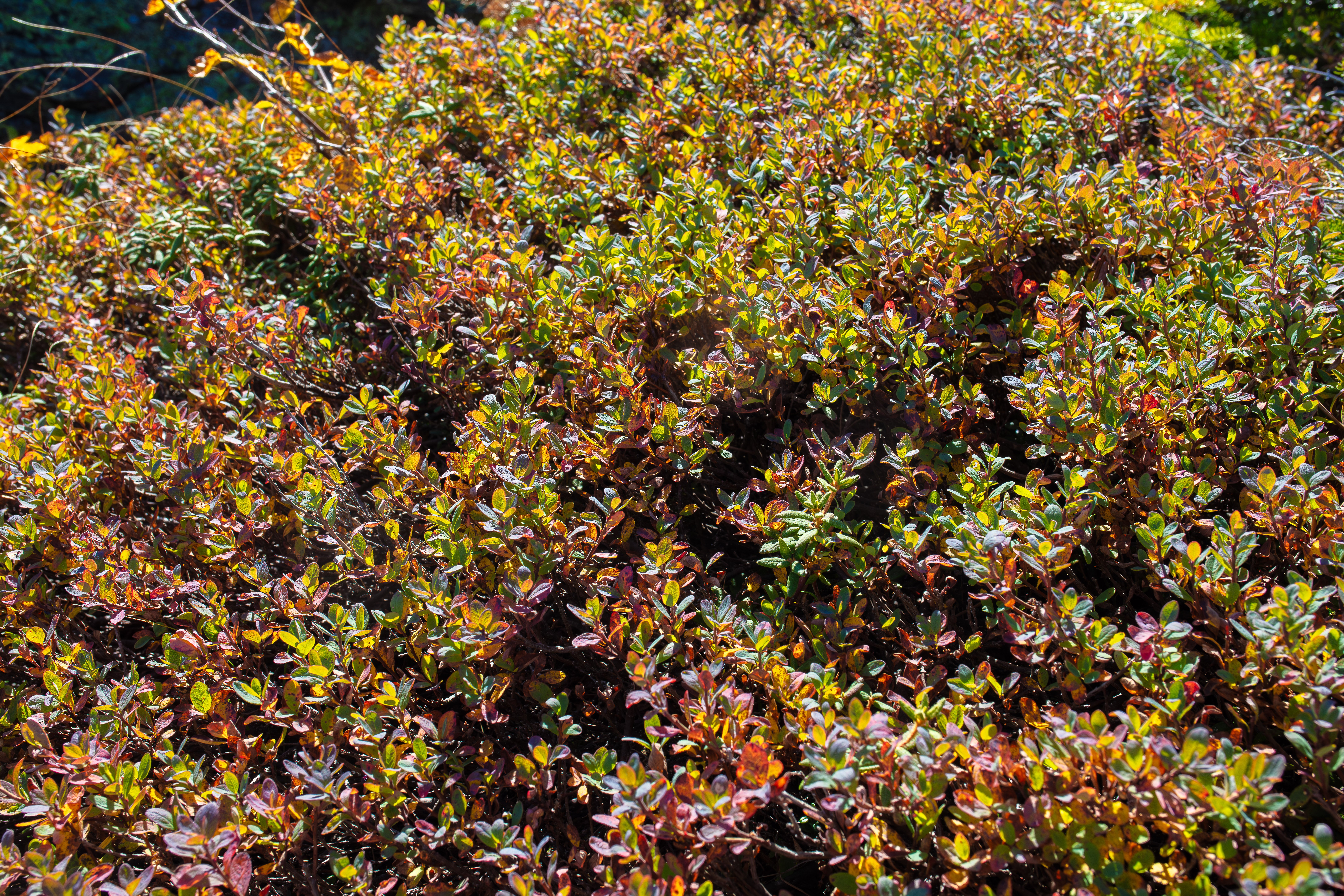
A low-growing alpine blueberry found near mountain summits, at the extreme southern edge of its range in the White Mountains. This deciduous shrub forms mats on exposed ridges and plateaus, providing blue-black berries beloved by alpine birds and small mammals. Its leaves are almost round, green with a bluish tint that turns purple-red in fall, and the flowers are white to pale pink bells hiding under the foliage. In late summer it bears juicy bilberries (similar to blueberries) that help seed new plants via animal dispersal. Though locally common in some alpine pockets, overall it is a rare treasure of the Presidential Range, a remnant of colder climates.
TYPE
Shrub
ELEVATION
4500–6200 ft
HABITAT
Alpine heath and subalpine ledges with thin, acidic soils
BLOOM / SEASON
Late May–June (small pink urn flowers); fruits late summer
LEAF & STEM
Dwarf woody shrub only ~4–8 inches tall, with many wiry branches. Leaves alternate, <1/2 inch (8–14 mm) long, rounded at tip and without teeth, with a smooth edge and slight blue-green waxy hue that can redden in cold. They are thin and drop off in winter. Stems are greenish-brown, and new twigs often green. Flowers are tiny urn-shaped (blueberry-like) blooms, white or pink, in clusters on twig tips. The fruit is a dark blue-purple berry ~1/4 inch across, with a whitish bloom on the skin.
SIMILAR SPECIES
Can be mistaken for Lowbush Blueberry (Vaccinium angustifolium) at lower elevations, but that species has larger, lanceolate serrated leaves and usually grows in warmer, lower habitats. In the alpine zone, Mountain Cranberry (Vaccinium vitis-idaea) often intermingles – but cranberry is an evergreen creeper with thick, shiny leaves and bright red berries, whereas Alpine Bilberry has thinner deciduous leaves and dark blue berries. Mountain cranberry’s leaves also remain through winter, unlike the bilberry’s dropping foliage.
ECOLOGY
An alpine tundra specialist that withstands intense sun, wind, and cold. It often roots in shallow gravelly peat or sheltered pockets near rocks, tolerating both moist boggy spots and dry ledges. Uniquely, this species can accumulate heavy metals in its leaves from mineral-rich soils and has even been studied as an indicator of uranium-rich geology. Its berries feed alpine wildlife (birds like grouse and mammals such as voles), and its low, dense form offers shelter for tiny creatures. In winter it may be insulated by snowpack. As one of the few berry-producing plants at high elevation, it plays a key role in the food web above treeline.
STATUS
Southernmost populations occur on New Hampshire’s highest peaks, making it regionally rare. It is listed as a species of concern in some areas (e.g., Special Concern in Maine). In the White Mountains it is not abundant and considered a protected alpine plant – hikers are urged to avoid trampling its fragile mats. Climate warming could further restrict its habitat. Globally, however, it is widespread across boreal and arctic regions.
Field Notes
- Dwarf woody shrub only ~4–8 inches tall, with many wiry branches. Leaves alternate, <1/2 inch (8–14 mm) long, rounded at tip and without teeth, with a smooth edge and slight blue-green waxy hue that can redden in cold. They are thin and drop off in winter. Stems are greenish-brown, and new twigs often green. Flowers are tiny urn-shaped (blueberry-like) blooms, white or pink, in clusters on twig tips. The fruit is a dark blue-purple berry ~1/4 inch across, with a whitish bloom on the skin.
- An alpine tundra specialist that withstands intense sun, wind, and cold. It often roots in shallow gravelly peat or sheltered pockets near rocks, tolerating both moist boggy spots and dry ledges. Uniquely, this species can accumulate heavy metals in its leaves from mineral-rich soils and has even been studied as an indicator of uranium-rich geology. Its berries feed alpine wildlife (birds like grouse and mammals such as voles), and its low, dense form offers shelter for tiny creatures. In winter it may be insulated by snowpack. As one of the few berry-producing plants at high elevation, it plays a key role in the food web above treeline.
- Southernmost populations occur on New Hampshire’s highest peaks, making it regionally rare. It is listed as a species of concern in some areas (e.g., Special Concern in Maine). In the White Mountains it is not abundant and considered a protected alpine plant – hikers are urged to avoid trampling its fragile mats. Climate warming could further restrict its habitat. Globally, however, it is widespread across boreal and arctic regions.
Photo Credits
(c) Nathan Sobol / NH48pics.com


