Short Description
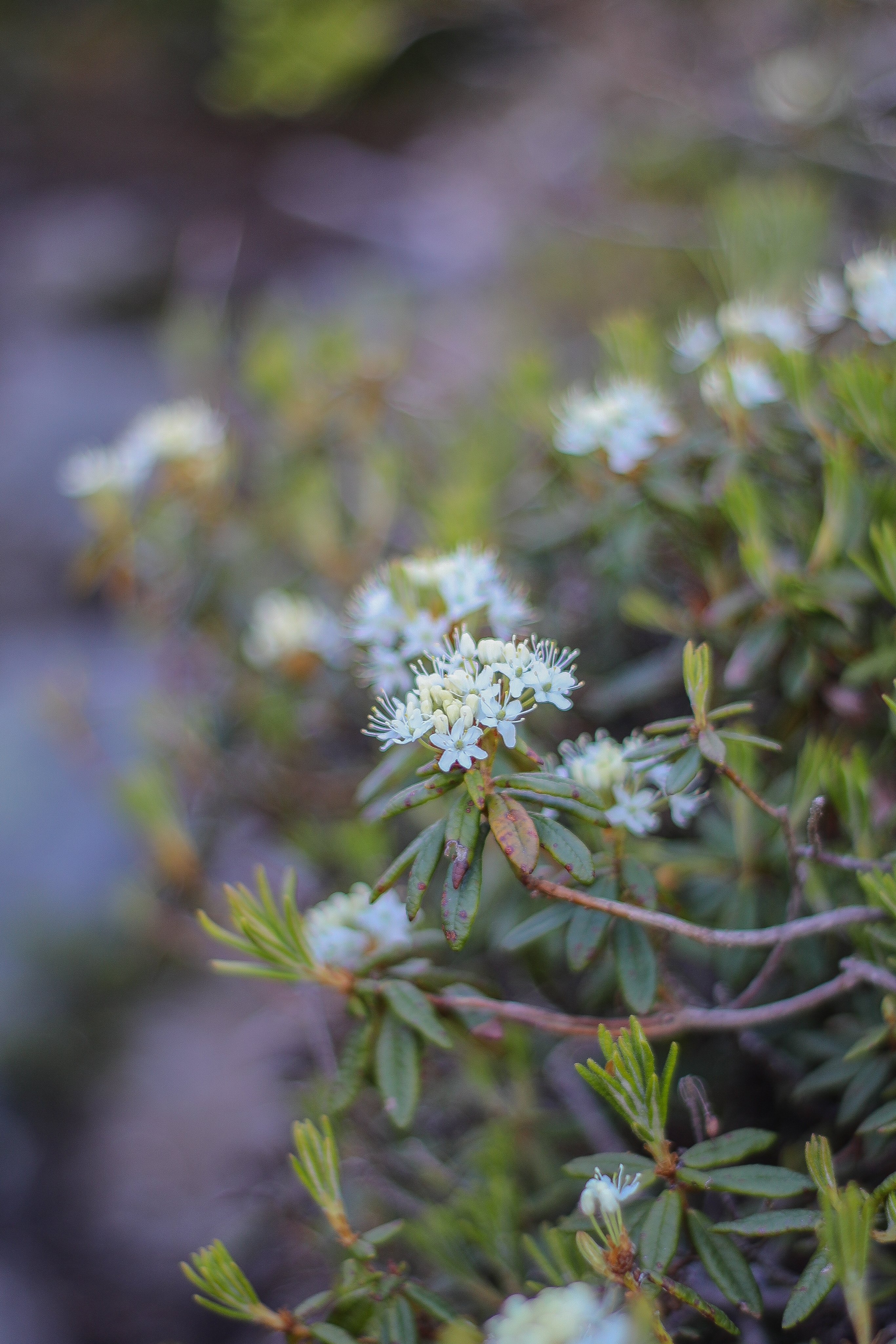
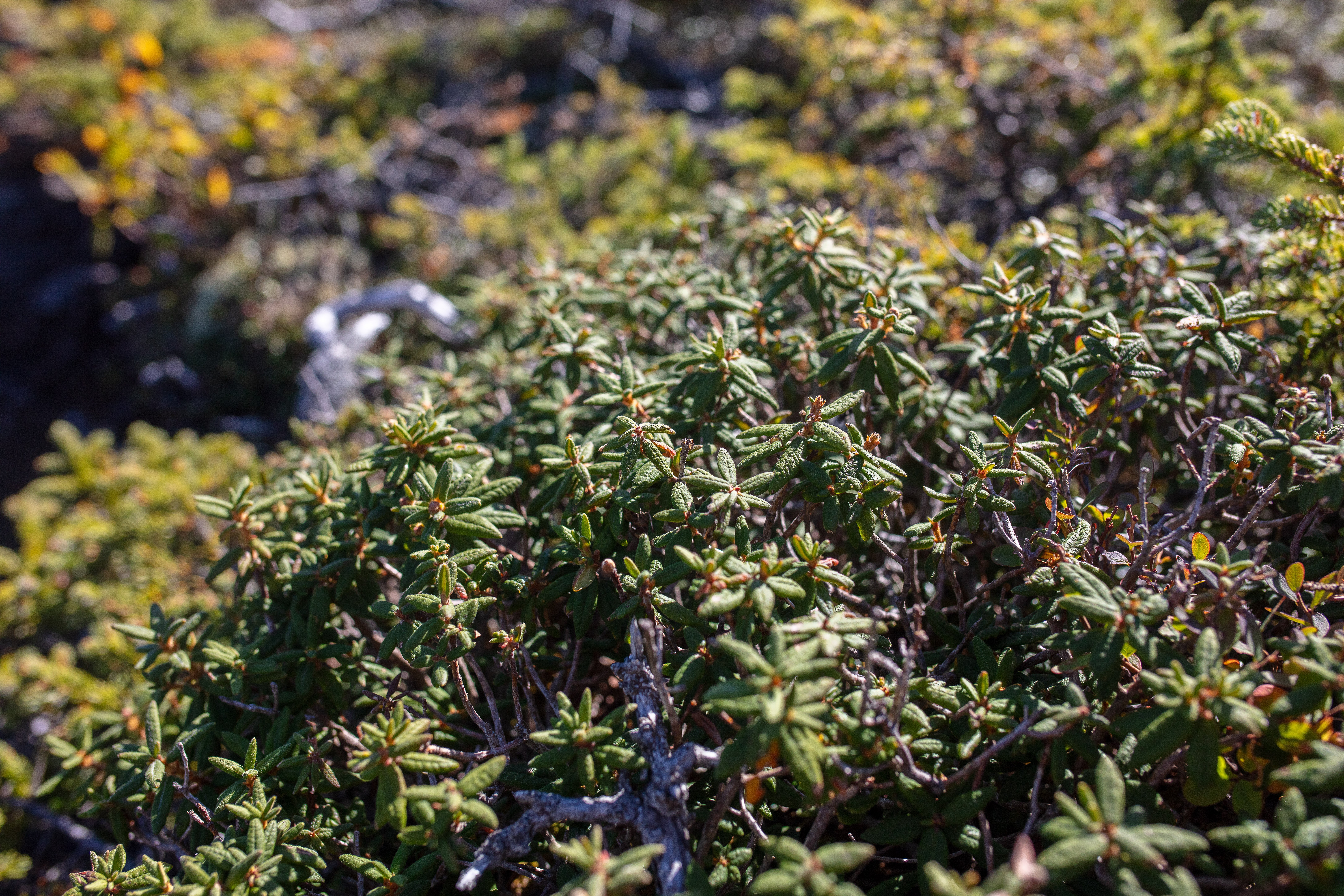
This low evergreen shrub often carpets sphagnum bogs with its leathery foliage, and reappears in the alpine zone wherever there are boggy, sheltered pockets above treeline. Labrador Tea grows ~1–2 ft tall, with leggy branches topped by clusters of small white flowers in early summer. Its namesake leaves were historically brewed as a tea by indigenous peoples and woodsmen for their spicy aroma. Hikers might notice its rusty-brown, fuzzy leaf undersides – an adaptation to cold and drought. Along Howker Ridge, look for Labrador Tea in mossy hollows or protected ravine heads just below treeline, often alongside sedges and cranberries. When in bloom (mid-June through July), it brightens the alpine wetlands with bundles of white starry blossoms atop the green shrubs.
TYPE
Shrub
ELEVATION
1,500–5,000 ft
HABITAT
Bogs and alpine peat mats; sheltered moist hollows near treeline, krummholz edges
BLOOM / SEASON
Mid-June to mid-July (white flower clusters)
LEAF & STEM
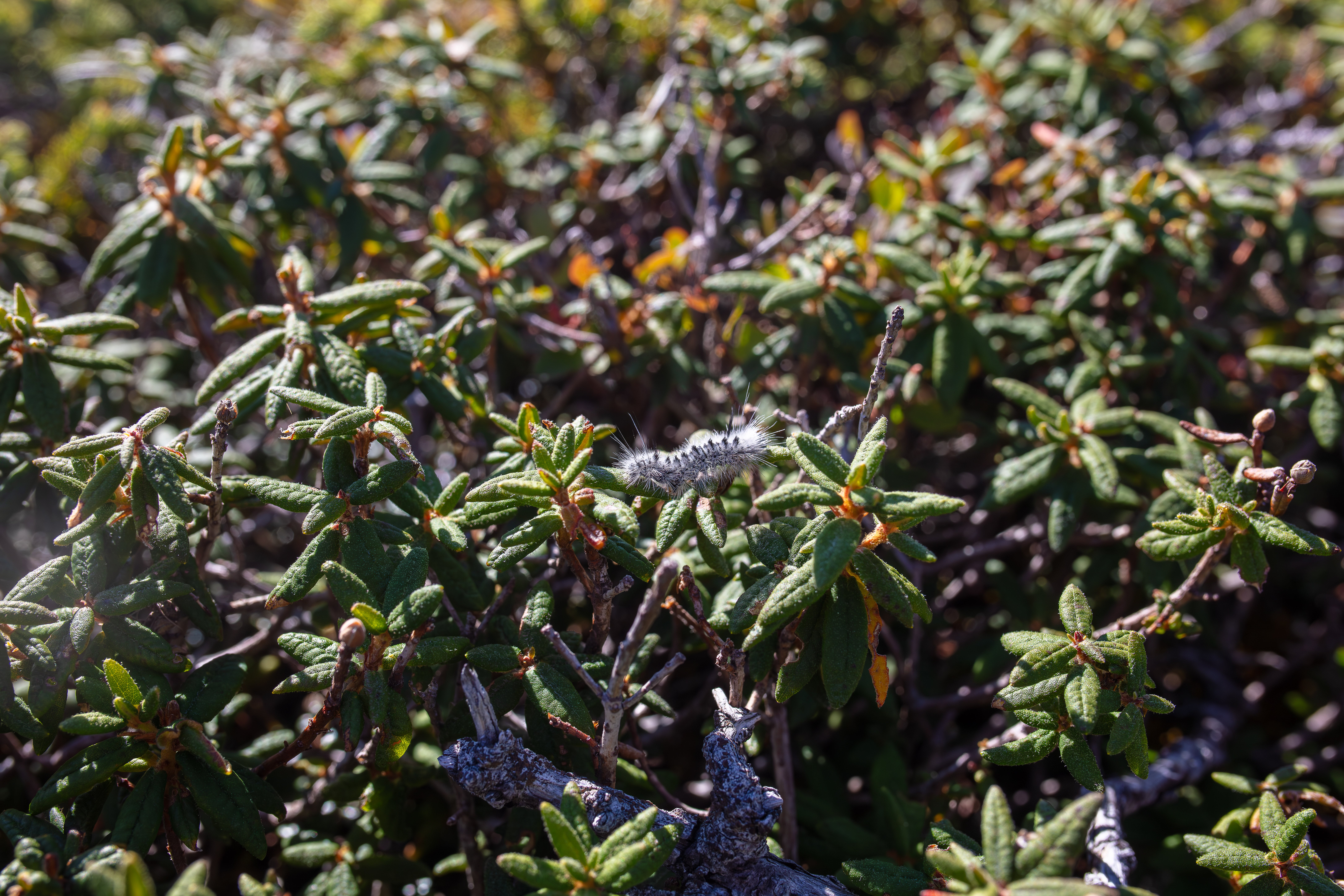
A short, spreading shrub up to 2 feet tall. Leaves are evergreen, 1–2 inches long, narrow elliptical with edges strongly rolled under. The upper surface is shiny dark green and leathery, while the underside is thickly coated in warm brown woolly hairs – feel the felted texture beneath. Leaves are alternately arranged and emit a medicinal, pine-like scent when crushed (owing to aromatic oils). Stems are woody and often gnarled near the base. In June, flower clusters (umbels) of 6–12 white flowers appear at twig tips. Each flower has 5 ragged white petals and a spray of long, projecting stamens, giving a starburst appearance. By late summer they form small seed capsules; no fleshy fruit is produced.
SIMILAR SPECIES
Shares its peatland home with other heath-family shrubs. Bog Laurel (Kalmia polifolia) also grows on alpine bog hummocks – but bog laurel has oppositely arranged, smooth-edged leaves (without fuzzy undersides) and showy pink cup-shaped flowers rather than white clusters. Sheep Laurel (Kalmia angustifolia) at lower elevations is another pink-flowered bog shrub to distinguish. Labrador Tea’s hairy leaf underside is a unique trait; even the somewhat similar Lapland Rosebay has scales rather than thick fuzz below its leaves. Also, Labrador Tea tends to a more sprawling form, whereas true rhododendrons (like Lapland Rosebay) form tighter cushions. If not in bloom, the brownish woolly leaf underside is the best giveaway for Labrador Tea.
ECOLOGY
A classic component of acidic peat bogs and alpine fens. Labrador Tea thrives on waterlogged, acidic soils, often rooting directly in sphagnum moss. It tolerates cold and nutrient-poor conditions that few other shrubs can. The dense leaf hairs help reduce water loss and may protect against frost and intense sun at high elevations. Its evergreen leaves start photosynthesis as soon as conditions allow, giving it a head-start in the short alpine growing season. Leaves contain toxic alkaloids which deter most herbivores – even moose tend to leave it alone – and thus the plant can dominate peatland shrub layers. In spring, its nectar-rich flowers attract hardy bog pollinators like flies and native bees. Labrador Tea is a pioneer of mossy, disturbed ground as well; after glacial retreat, it helped colonize raw peat. The species is widespread across the boreal world, reflecting its adaptability to cold wetlands.
STATUS
Labrador Tea is secure and common in its specialized habitats. In New Hampshire it can be found from sea-level bog preserves up to alpine tarns. It is not considered rare – indeed, it is one of the more conspicuous alpine shrubs in sheltered spots. However, peatland draining or excessive foot traffic in alpine bogs could harm local colonies. Within WMNF and alpine zones, it is protected by conservation measures. Its presence above treeline (in “moss lawns” behind rocks) is a reminder that even subalpine species can creep into the alpine given a bit of shelter. There are no special conservation listings for Labrador Tea in this region, though botanists monitor alpine populations to ensure their health under changing climate conditions.
Field Notes
- A short, spreading shrub up to 2 feet tall. Leaves are evergreen, 1–2 inches long, narrow elliptical with edges strongly rolled under. The upper surface is shiny dark green and leathery, while the underside is thickly coated in warm brown woolly hairs – feel the felted texture beneath. Leaves are alternately arranged and emit a medicinal, pine-like scent when crushed (owing to aromatic oils). Stems are woody and often gnarled near the base. In June, flower clusters (umbels) of 6–12 white flowers appear at twig tips. Each flower has 5 ragged white petals and a spray of long, projecting stamens, giving a starburst appearance. By late summer they form small seed capsules; no fleshy fruit is produced.
- A classic component of acidic peat bogs and alpine fens. Labrador Tea thrives on waterlogged, acidic soils, often rooting directly in sphagnum moss. It tolerates cold and nutrient-poor conditions that few other shrubs can. The dense leaf hairs help reduce water loss and may protect against frost and intense sun at high elevations. Its evergreen leaves start photosynthesis as soon as conditions allow, giving it a head-start in the short alpine growing season. Leaves contain toxic alkaloids which deter most herbivores – even moose tend to leave it alone – and thus the plant can dominate peatland shrub layers. In spring, its nectar-rich flowers attract hardy bog pollinators like flies and native bees. Labrador Tea is a pioneer of mossy, disturbed ground as well; after glacial retreat, it helped colonize raw peat. The species is widespread across the boreal world, reflecting its adaptability to cold wetlands.
- Labrador Tea is secure and common in its specialized habitats. In New Hampshire it can be found from sea-level bog preserves up to alpine tarns. It is not considered rare – indeed, it is one of the more conspicuous alpine shrubs in sheltered spots. However, peatland draining or excessive foot traffic in alpine bogs could harm local colonies. Within WMNF and alpine zones, it is protected by conservation measures. Its presence above treeline (in “moss lawns” behind rocks) is a reminder that even subalpine species can creep into the alpine given a bit of shelter. There are no special conservation listings for Labrador Tea in this region, though botanists monitor alpine populations to ensure their health under changing climate conditions.
Photo Credits
(c) Nathan Sobol / NH48pics.com


