Howker Ridge • Plant

Detailed information for an alpine or subalpine species recorded along Howker Ridge Trail. Use the back link to return to the catalog.

← Back to Catalog

Mountain Cranberry

Vaccinium vitis-idaea
shrubevergreencreepingalpine-heathred-berriesheath-familymat-formingacidic-soil

Short Description

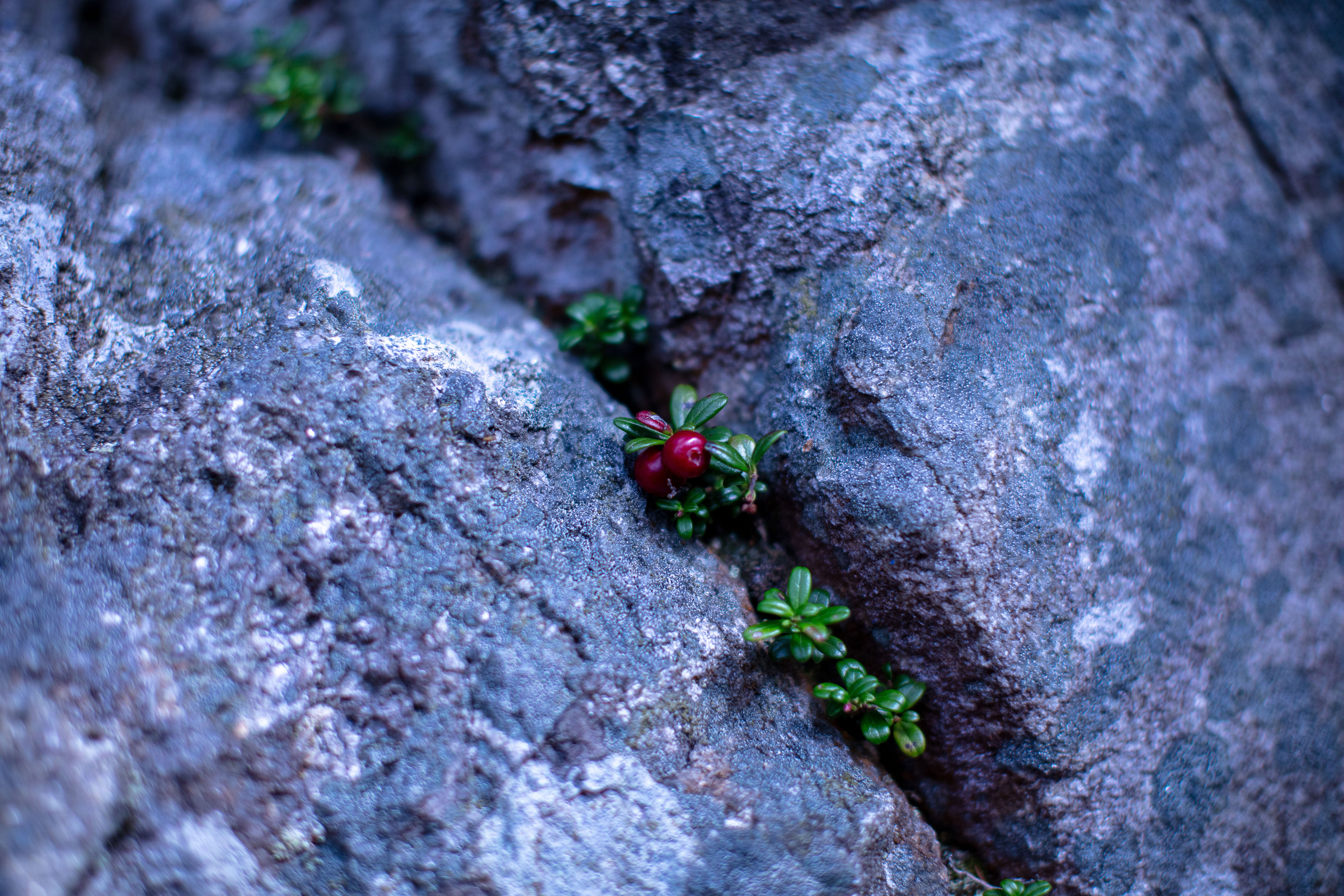
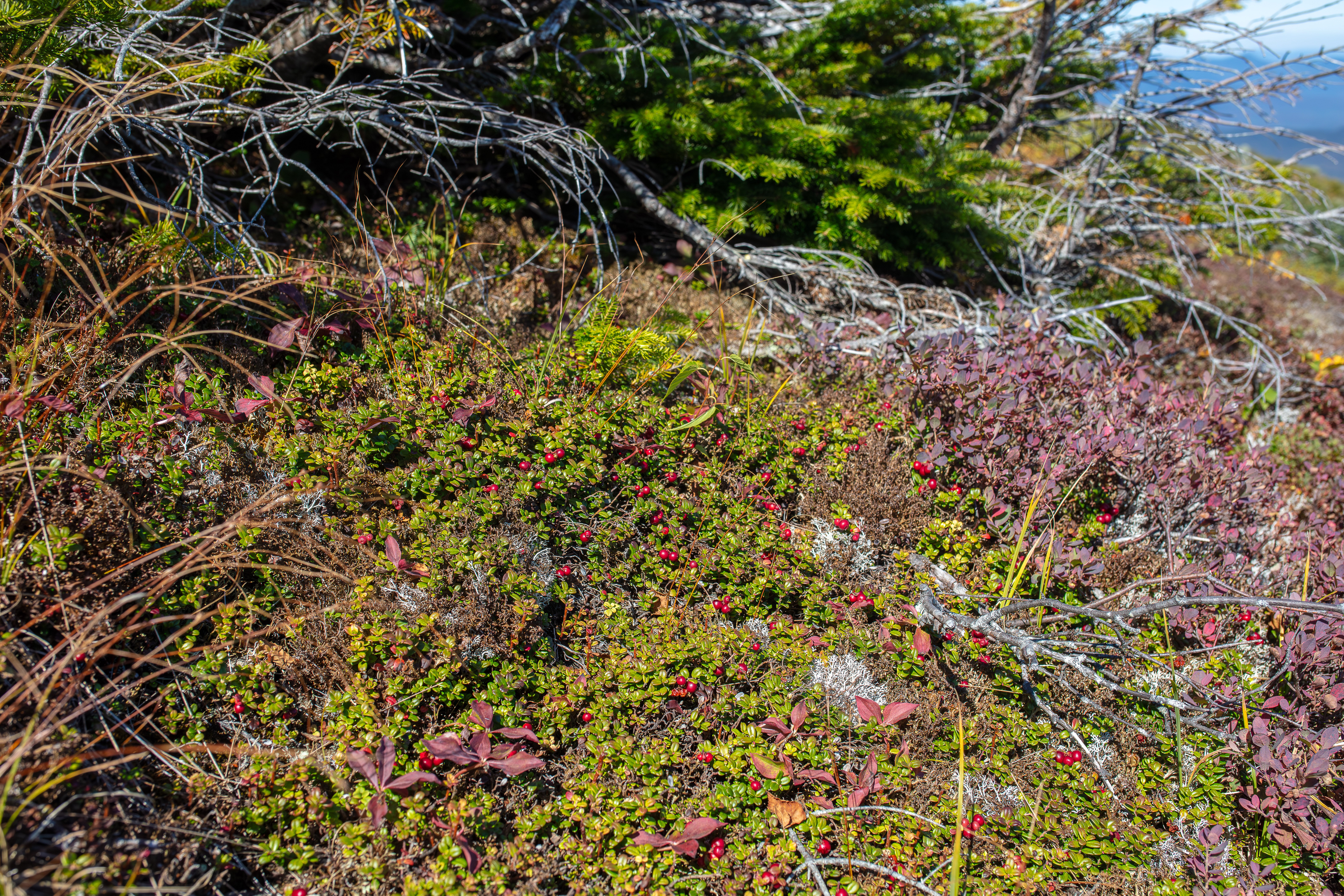
This diminutive lingonberry plant hugs the ground in harsh alpine environs yet also appears in northern bogs and boreal woods. Mountain Cranberry forms creeping mats of glossy, dark green leaves only 1–3 cm long. In early summer it bears tiny bell-shaped flowers, white to light pink, hiding under the leaves. By late summer, the plant lives up to its name – producing bright red, tart berries that resemble small cranberries. Along Howker Ridge and Mount Madison’s summit, you’ll find patches of this shrub nestled between rocks or in sheltered lee of dwarf spruce, often mixed with alpine bearberry and bilberry. Despite its delicate appearance, it’s a hardy survivor of exposed ridgelines and tundra. Hikers may recognize it as the same lingonberry beloved in Scandinavian jams (though in the alpine zone, it’s best left for the wildlife!).

TYPE

Shrub

ELEVATION

1,000–5,500 ft

HABITAT

Alpine and subalpine heath; rocky acidic slopes and mossy bog mats

BLOOM / SEASON

Early June to mid-July (pink urn flowers); red berries late summer–fall

LEAF & STEM

A prostrate, evergreen shrub only 2–8 inches tall, often forming extensive mats via creeping woody stems. Leaves are opposite to alternately clustered, oval and thick, leathery, about 1/4–1/2 inch long. The upper surface is shiny dark green, underside paler with tiny blackish dots. They remain green year-round under the snow. In June, nodding clusters of 2–6 urn-shaped flowers bloom at stem tips. The flowers are pinkish-white, with a waxy texture and reflexed petal tips. Fruits are glossy red berries ~1/4 inch wide, ripening in late August and often persisting into autumn. Stems are slender, woody, and root at nodes, which helps the plant spread as a groundcover carpet.

SIMILAR SPECIES

Mountain Cranberry’s evergreen mats can resemble Bearberry (Arctostaphylos uva-ursi), another trailing shrub with red berries. However, bearberry has larger paddle-shaped leaves (with a net-veined underside) and blooms with different white urn flowers in spring. In alpine zones, bearberry is less common than Mountain Cranberry. Alpine Bilberry (Vaccinium uliginosum), which may grow alongside, differs by being deciduous with broader bluish leaves and dark blue (not red) berries. Also, bilberry’s leaves are seasonally red-tinted and drop in winter, whereas Mountain Cranberry’s remain green. Partridgeberry (Mitchella) has red berries too but is a trailing vine in shaded forests, not in windy alpine turf. The combination of thick evergreen leaves + red berry in an exposed alpine or bog setting is a sure sign of Mountain Cranberry.

ECOLOGY

An alpine evergreen strategy allows this plant to photosynthesize as soon as conditions permit in spring, giving it an advantage in the short alpine summer. Its creeping growth stabilizes thin soils and cushions the ground, creating microhabitats for insects and other seedlings. The bright red berries are a critical food source for alpine birds (like grouse and ptarmigan) and small mammals, who in turn disperse the seeds in their droppings. Mountain Cranberry often grows in association with sphagnum moss in bogs and with lichens and sedges in alpine meadows. It prefers acidic, nutrient-poor soils and can tolerate extreme cold and desiccating winds by staying low-profile. Under winter snowpack, its leaves endure freezing temperatures and then quickly resume function come snowmelt. Because it occupies both low bogs and high summits, it may be somewhat resilient to climate shifts, though shrinking alpine zones could limit its high-elevation range.

STATUS

Widespread across the northern hemisphere (circumboreal), Mountain Cranberry is secure globally and in New England. It is a characteristic species of New Hampshire’s alpine flora and is monitored but not considered threatened. It even persists in some lowland bog preserves. Still, its alpine populations occupy a narrow zone above treeline (~4400+ ft), which faces pressure from warming climate and heavy hiker traffic. In the Presidential Range, it is one of the “common six” alpine plants tracked for phenology changes. Conservation in WMNF focuses on protecting its alpine habitat (by maintaining scree and bog integrity and guiding hikers) rather than the plant itself, as it remains abundant in suitable areas.

Field Notes

  • A prostrate, evergreen shrub only 2–8 inches tall, often forming extensive mats via creeping woody stems. Leaves are opposite to alternately clustered, oval and thick, leathery, about 1/4–1/2 inch long. The upper surface is shiny dark green, underside paler with tiny blackish dots. They remain green year-round under the snow. In June, nodding clusters of 2–6 urn-shaped flowers bloom at stem tips. The flowers are pinkish-white, with a waxy texture and reflexed petal tips. Fruits are glossy red berries ~1/4 inch wide, ripening in late August and often persisting into autumn. Stems are slender, woody, and root at nodes, which helps the plant spread as a groundcover carpet.
  • An alpine evergreen strategy allows this plant to photosynthesize as soon as conditions permit in spring, giving it an advantage in the short alpine summer. Its creeping growth stabilizes thin soils and cushions the ground, creating microhabitats for insects and other seedlings. The bright red berries are a critical food source for alpine birds (like grouse and ptarmigan) and small mammals, who in turn disperse the seeds in their droppings. Mountain Cranberry often grows in association with sphagnum moss in bogs and with lichens and sedges in alpine meadows. It prefers acidic, nutrient-poor soils and can tolerate extreme cold and desiccating winds by staying low-profile. Under winter snowpack, its leaves endure freezing temperatures and then quickly resume function come snowmelt. Because it occupies both low bogs and high summits, it may be somewhat resilient to climate shifts, though shrinking alpine zones could limit its high-elevation range.
  • Widespread across the northern hemisphere (circumboreal), Mountain Cranberry is secure globally and in New England. It is a characteristic species of New Hampshire’s alpine flora and is monitored but not considered threatened. It even persists in some lowland bog preserves. Still, its alpine populations occupy a narrow zone above treeline (~4400+ ft), which faces pressure from warming climate and heavy hiker traffic. In the Presidential Range, it is one of the “common six” alpine plants tracked for phenology changes. Conservation in WMNF focuses on protecting its alpine habitat (by maintaining scree and bog integrity and guiding hikers) rather than the plant itself, as it remains abundant in suitable areas.

Photo Credits

(c) Nathan Sobol / NH48pics.com