Short Description
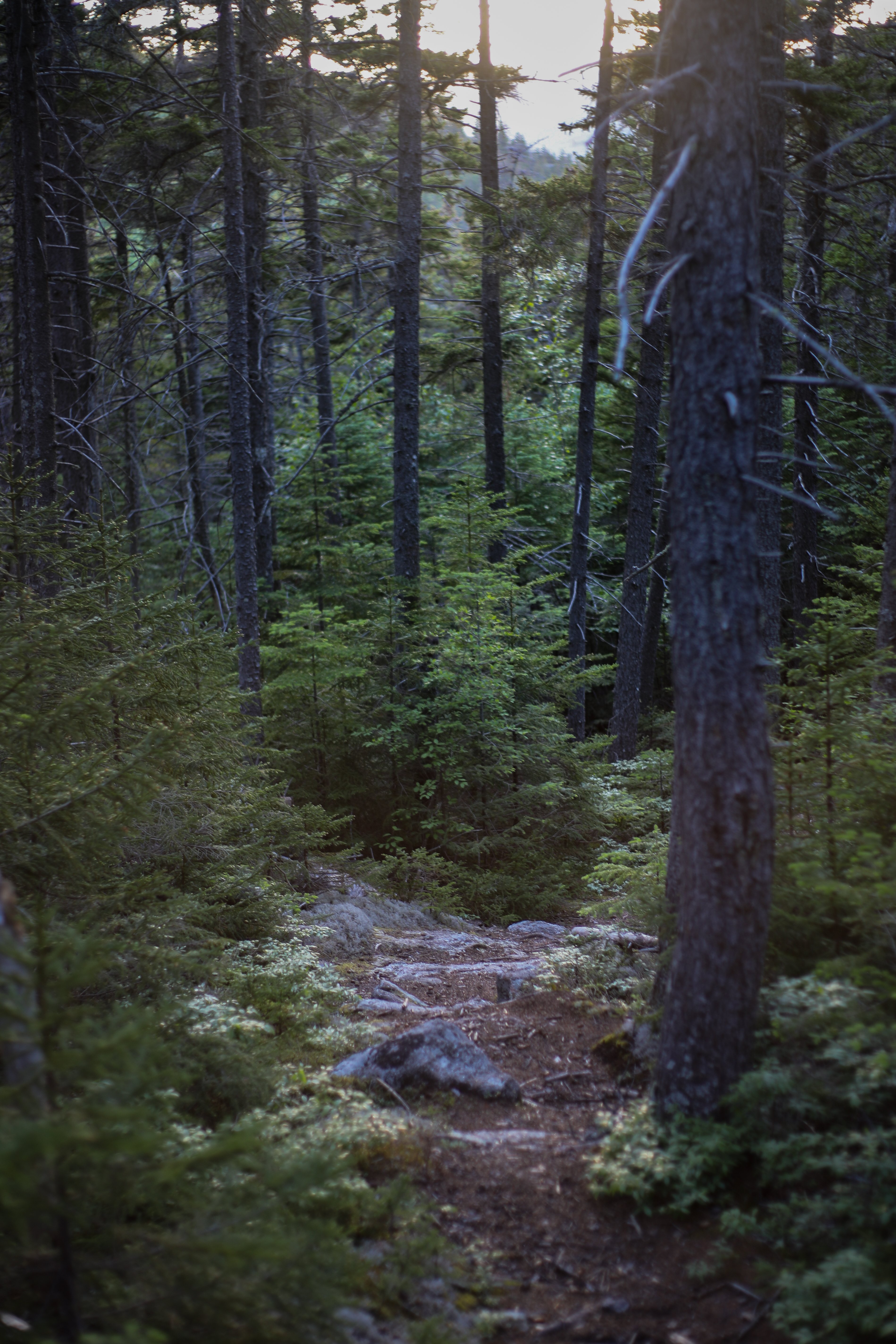
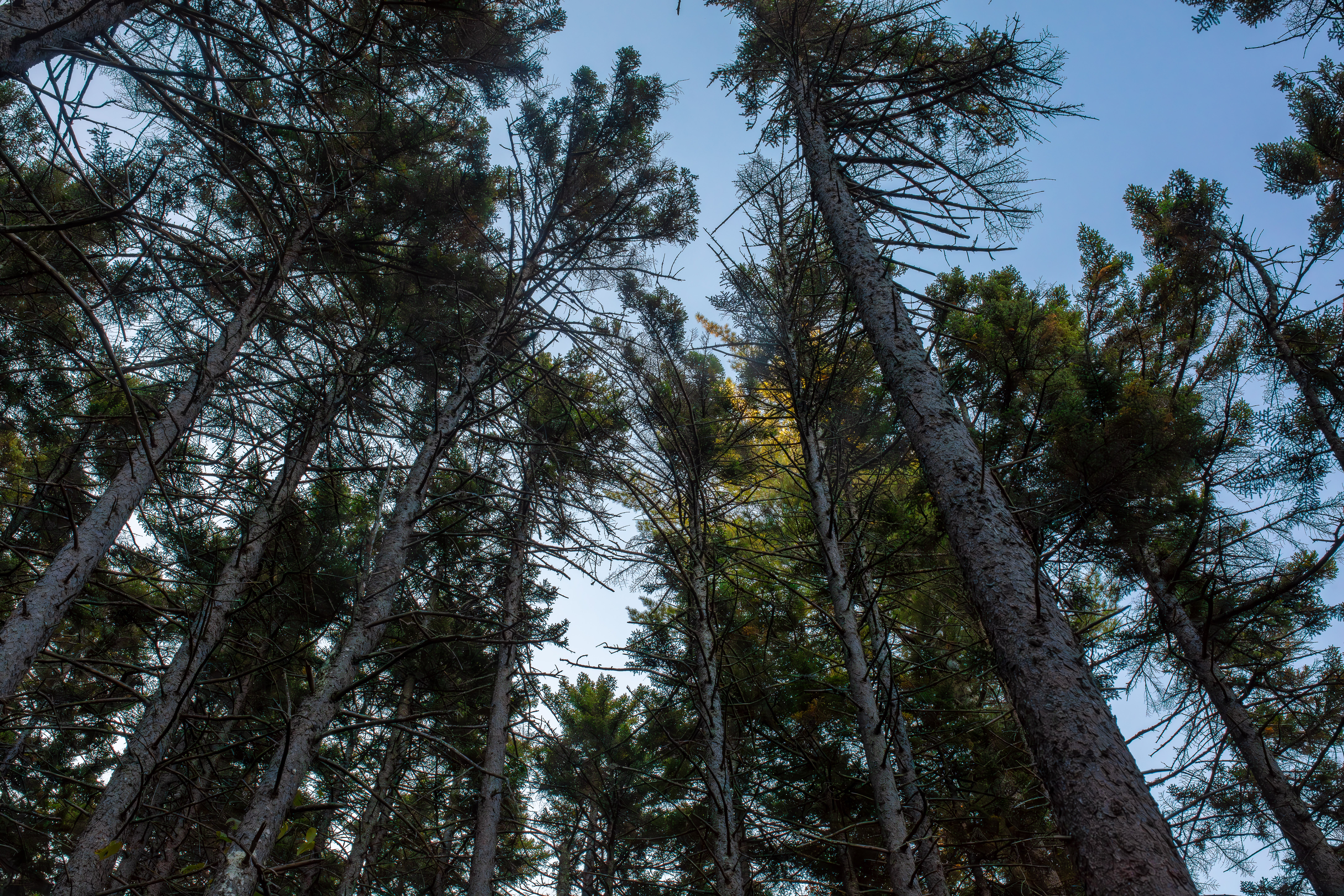
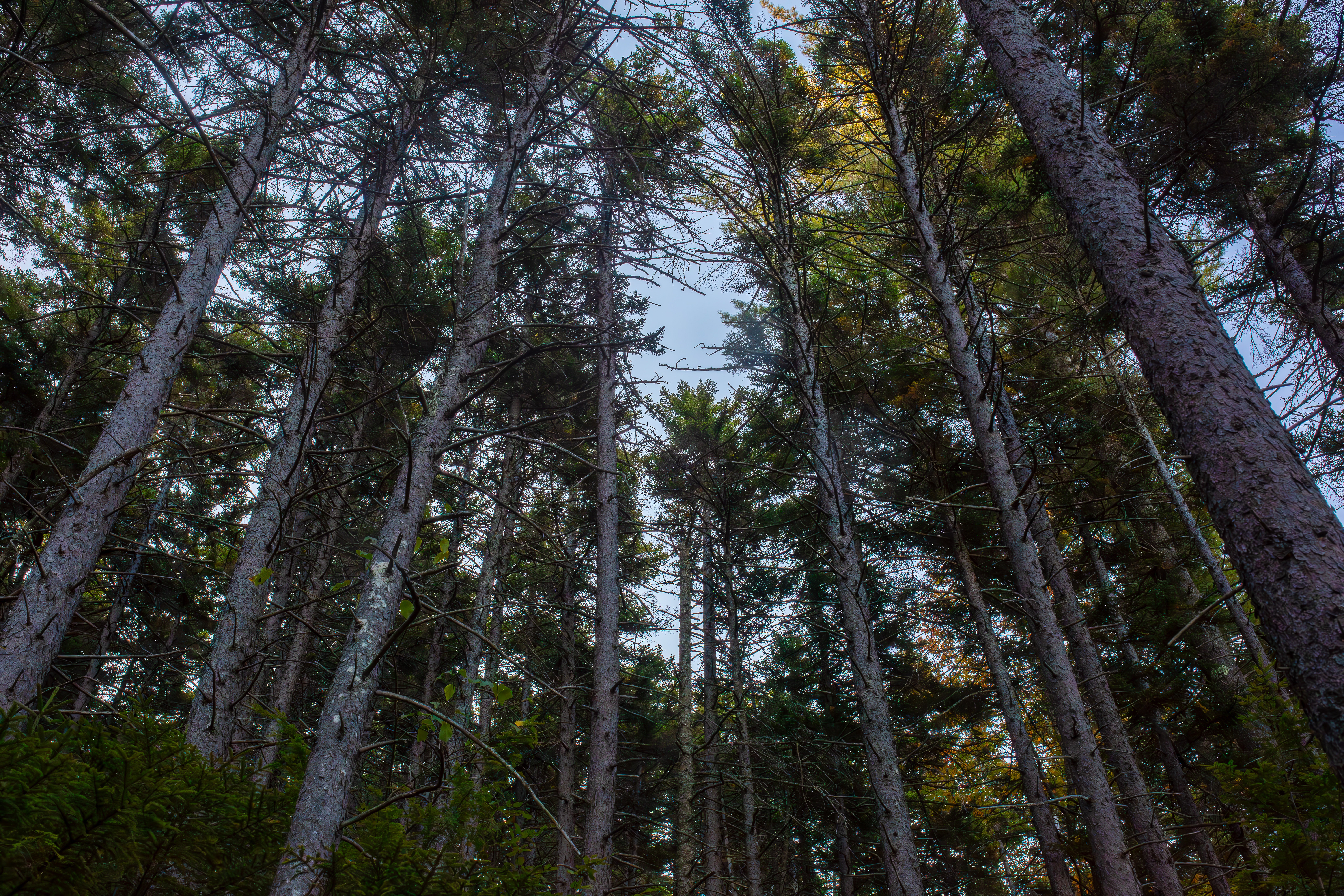
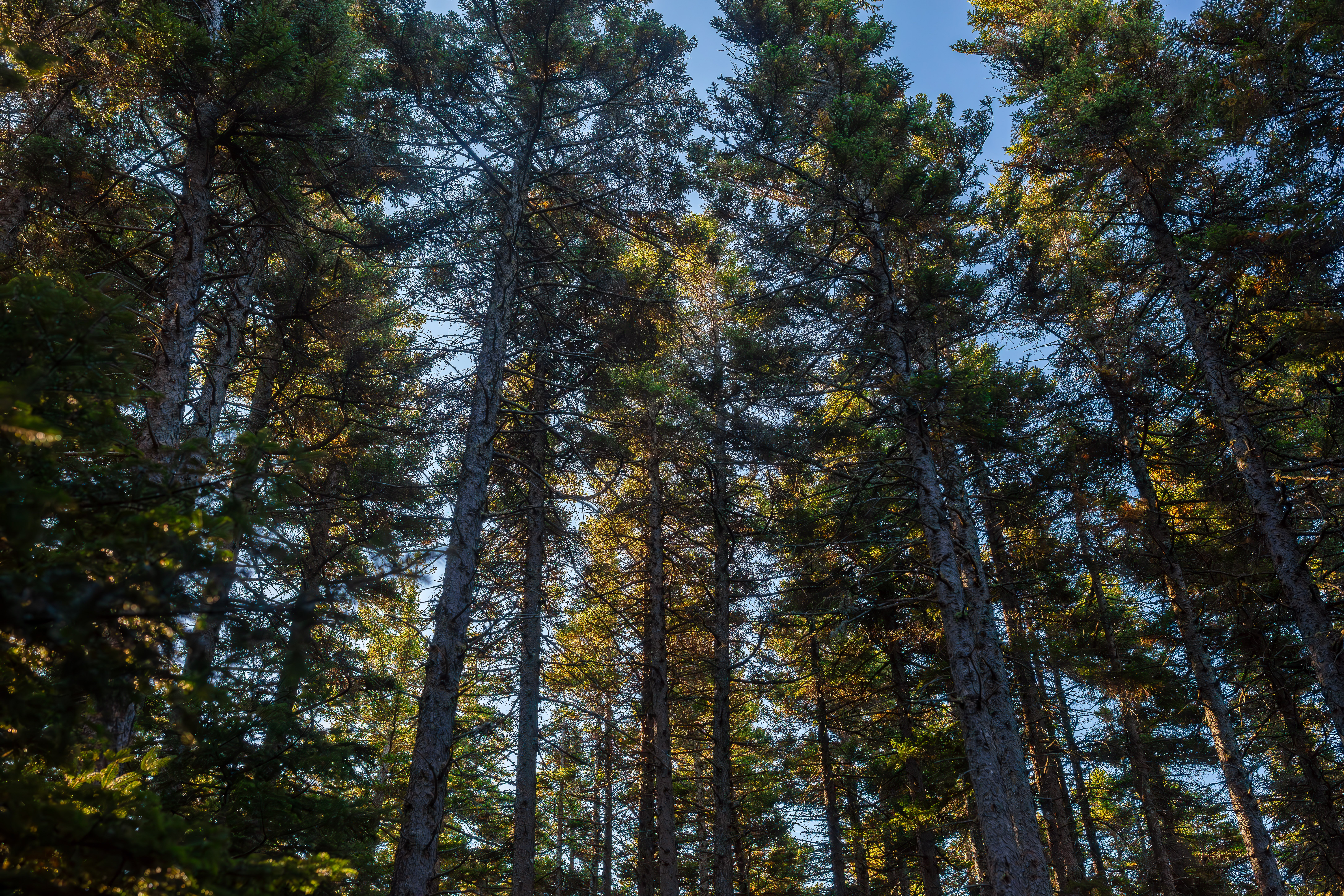
Spruce trees cloak the upper slopes of the White Mountains in dark, spire-tipped forest and form gnarled, ground-hugging thickets at treeline (the krummholz zone). In the Howker Ridge area, spruce (primarily Red Spruce, with Black Spruce in harsher spots) mixes with balsam fir to create a boreal forest carpeted in moss. These evergreens are adapted to cold climates: their narrow, spiky crowns shed snow and resist wind. Near ~4,000–4,500 ft the spruce become stunted and contorted, crouching low under persistent winds – branches often bare on the windward side and green on the leeward, forming one-sided “flag trees.” This transition zone signals you’re approaching alpine heights. The air here is filled with the sharp, resinous scent of spruce needles.
TYPE
Coniferous Tree
ELEVATION
2,500–5,000 ft
HABITAT
Boreal spruce–fir forests; upper mountain slopes and krummholz (stunted treeline thickets)
BLOOM / SEASON
Non-flowering (conifer; pollinates May; seed cones mature by fall)
LEAF & STEM
Medium-sized evergreen conifer at lower subalpine elevations (commonly 20–60 ft tall), but only a few feet tall in krummholz. Needles are stiff, four-sided and sharp to the touch (~0.5 inch long), arranged all around each twig. They are dark green to yellow-green. Twigs are rough, covered in tiny woody pegs (sterigmata) that remain after needles drop – a key spruce ID feature (fir twigs are smooth). Bark is thin, gray-brown and scaly. Cones (the seed-bearing structures) hang downward from branches; Red Spruce cones are ~1.5 inches long with thin, flexible scales, while Black Spruce cones are smaller (~1 inch) and may persist on branches. Spruce produce pollen cones in spring (shedding yellow pollen) and woody seed cones by late summer.
SIMILAR SPECIES
Spruces are often confused with their high-elevation companion, Balsam Fir (Abies balsamea). You can tell them apart: fir needles are soft, flat, and arranged mostly to the sides of the twig (and have a friendly fragrance when crushed), whereas spruce needles are prickly, four-angled, and encircle the twig. Fir bark has raised resin blisters, unlike scaly spruce bark. Another spruce lookalike at lower elevations is Eastern Hemlock, but hemlock has much shorter, flat needles and drooping leader tips. Between spruce species: Red Spruce (common on slopes) has somewhat larger cones and reddish-brown twigs, whereas Black Spruce (found in bogs and frigid crags) has very short, often clustered needles and tiny persistent cones – though hikers will mostly notice their similarly spindly, spire-like forms.
ECOLOGY
Spruce forms the backbone of the mountain boreal ecosystem. Its dense stands create cool, shaded habitat for mosses and shade-tolerant understory plants. Spruce seeds feed birds like crossbills and red squirrels, and its boughs shelter snowshoe hares and the endangered Bicknell’s Thrush, a rare songbird that breeds only in high-elevation spruce–fir forests. In the krummholz, prostrate spruce catch and hold drifting snow, which insulates the ground and provides moisture for alpine plants. Spruce are shallow-rooted in thin mountain soils and thus prone to blowdown; in some areas you’ll see “fir-wave” patterns of fallen trees and regrowth. Historically, high-elevation red spruce suffered heavy damage from acid rain and winter freeze injury, but with cleaner air some stands are rebounding. As climate warms, however, the cool, moist zone they occupy is expected to contract upslope, potentially reducing spruce extent in the Whites.
STATUS
Red Spruce and Black Spruce are common in the White Mountain region and not individually threatened. They have both been extensively logged in the past (red spruce lumber was valuable for instruments and construction), but many stands in WMNF have recovered under protection. Spruce–fir forests as a whole are considered a conservation concern because of their limited area and sensitivity to climate change. The krummholz zone (~4,000–4,500 ft) is a fragile community – hikers must stay on trail to avoid damaging the living spruce mats that might be centuries old. Overall, spruces in the Whites are holding their ground currently, but their long-term future depends on preserving cold mountain conditions.
Field Notes
- Medium-sized evergreen conifer at lower subalpine elevations (commonly 20–60 ft tall), but only a few feet tall in krummholz. Needles are stiff, four-sided and sharp to the touch (~0.5 inch long), arranged all around each twig. They are dark green to yellow-green. Twigs are rough, covered in tiny woody pegs (sterigmata) that remain after needles drop – a key spruce ID feature (fir twigs are smooth). Bark is thin, gray-brown and scaly. Cones (the seed-bearing structures) hang downward from branches; Red Spruce cones are ~1.5 inches long with thin, flexible scales, while Black Spruce cones are smaller (~1 inch) and may persist on branches. Spruce produce pollen cones in spring (shedding yellow pollen) and woody seed cones by late summer.
- Spruce forms the backbone of the mountain boreal ecosystem. Its dense stands create cool, shaded habitat for mosses and shade-tolerant understory plants. Spruce seeds feed birds like crossbills and red squirrels, and its boughs shelter snowshoe hares and the endangered Bicknell’s Thrush, a rare songbird that breeds only in high-elevation spruce–fir forests. In the krummholz, prostrate spruce catch and hold drifting snow, which insulates the ground and provides moisture for alpine plants. Spruce are shallow-rooted in thin mountain soils and thus prone to blowdown; in some areas you’ll see “fir-wave” patterns of fallen trees and regrowth. Historically, high-elevation red spruce suffered heavy damage from acid rain and winter freeze injury, but with cleaner air some stands are rebounding. As climate warms, however, the cool, moist zone they occupy is expected to contract upslope, potentially reducing spruce extent in the Whites.
- Red Spruce and Black Spruce are common in the White Mountain region and not individually threatened. They have both been extensively logged in the past (red spruce lumber was valuable for instruments and construction), but many stands in WMNF have recovered under protection. Spruce–fir forests as a whole are considered a conservation concern because of their limited area and sensitivity to climate change. The krummholz zone (~4,000–4,500 ft) is a fragile community – hikers must stay on trail to avoid damaging the living spruce mats that might be centuries old. Overall, spruces in the Whites are holding their ground currently, but their long-term future depends on preserving cold mountain conditions.
Photo Credits
(c) Nathan Sobol / NH48pics.com


