Overview
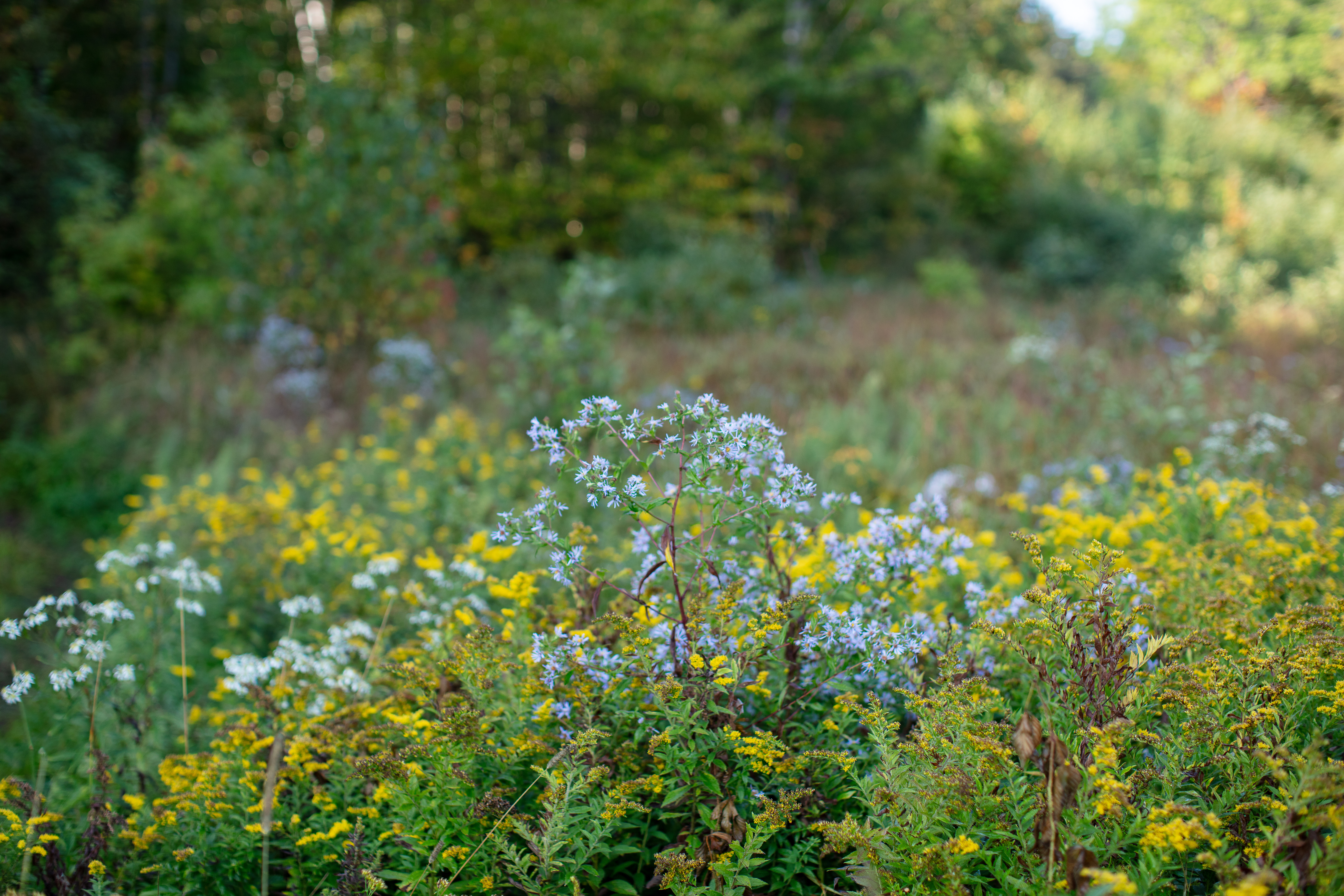
A delicate lavender-blue aster that froths along woodland edges in autumn, offering late nectar to butterflies with its airy sprays of starry blooms.
Ecology
As a late-blooming woodland wildflower, Blue Wood Aster provides vital nectar and pollen for pollinators preparing for winter. It's particularly favored by native bees and skippers, and serves as a **great late-season food source for migrating butterflies** like monarchs and painted ladies (which may stop to sip from its many flowers). Additionally, it's a host plant for some moth larvae and is noted as a "pollinator powerhouse" plant because of the sheer number of insect visitors it supports. Songbirds such as goldfinches and sparrows will occasionally eat the tiny seeds in late fall, and small mammals might nibble tender young foliage in spring. In the ecosystem, Blue Wood Aster often pops up in disturbed ground (e.g., along trails or after a tree fall), helping to quickly cover and stabilize soil with its fibrous roots. It tolerates dry, rocky soils well and thus can grow where many woodland plants cannot, contributing to plant diversity in tough sites. It has moderate shade tolerance, which allows it to persist under shrubs or open forest canopy, though it flowers best with some sun. In urban or developed areas, this aster can even thrive in vacant lots or at woods edges, proving its resilience. By blooming in September - October, it extends the flowering season in forests, which helps sustain late-flying pollinators and adds splashes of color when most other plants have finished for the year.