Overview
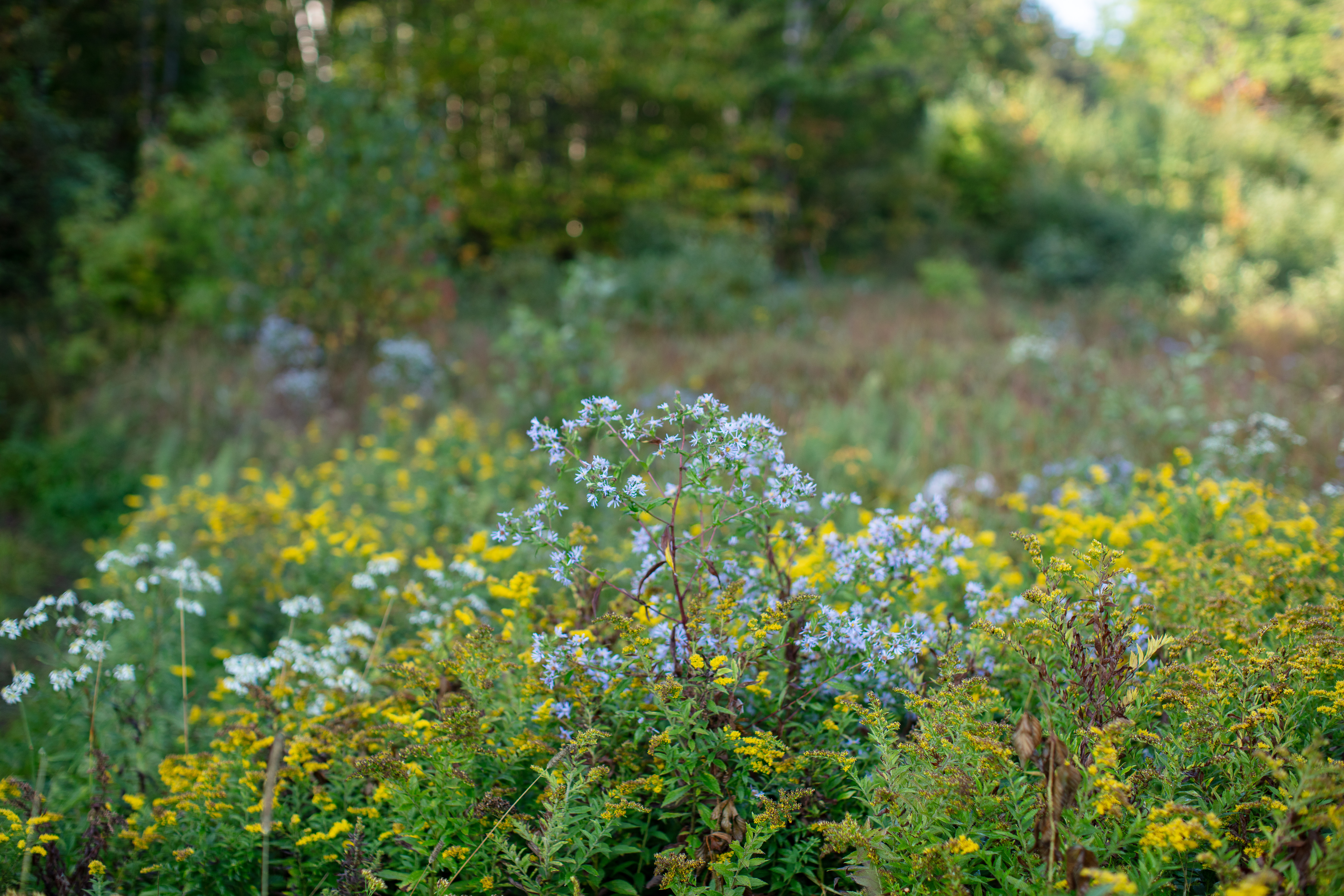
Tall golden plumes that brighten late-summer fields and clearings, serving as a buffet for bees and butterflies.
Ecology
This wildflower is a keystone of late-season ecology. Its abundant pollen and nectar sustain a wide array of insects - bumblebees, solitary bees, honeybees, wasps, flies, beetles, butterflies, and moths all flock to goldenrod blooms. In fact, goldenrods (with asters) support more species of butterflies and moths than almost any other native perennials. After flowering, the seeds are eaten by finches and sparrows, and the dried stalks provide winter cover for insects and spiders. Goldenrod stands also harbor goldenrod gall insects (like gall flies and moths whose larvae overwinter in the stems, providing food for woodpeckers and chickadees). Deer will browse goldenrod foliage occasionally, though it's not their top choice. In nutrient cycling, goldenrod's annual dieback adds organic matter to soil. While highly beneficial for wildlife, its vigorous growth can crowd out more delicate plants - a reason it's sometimes considered weedy. However, within its native range it contributes greatly to biodiversity and soil stabilization on disturbed sites.