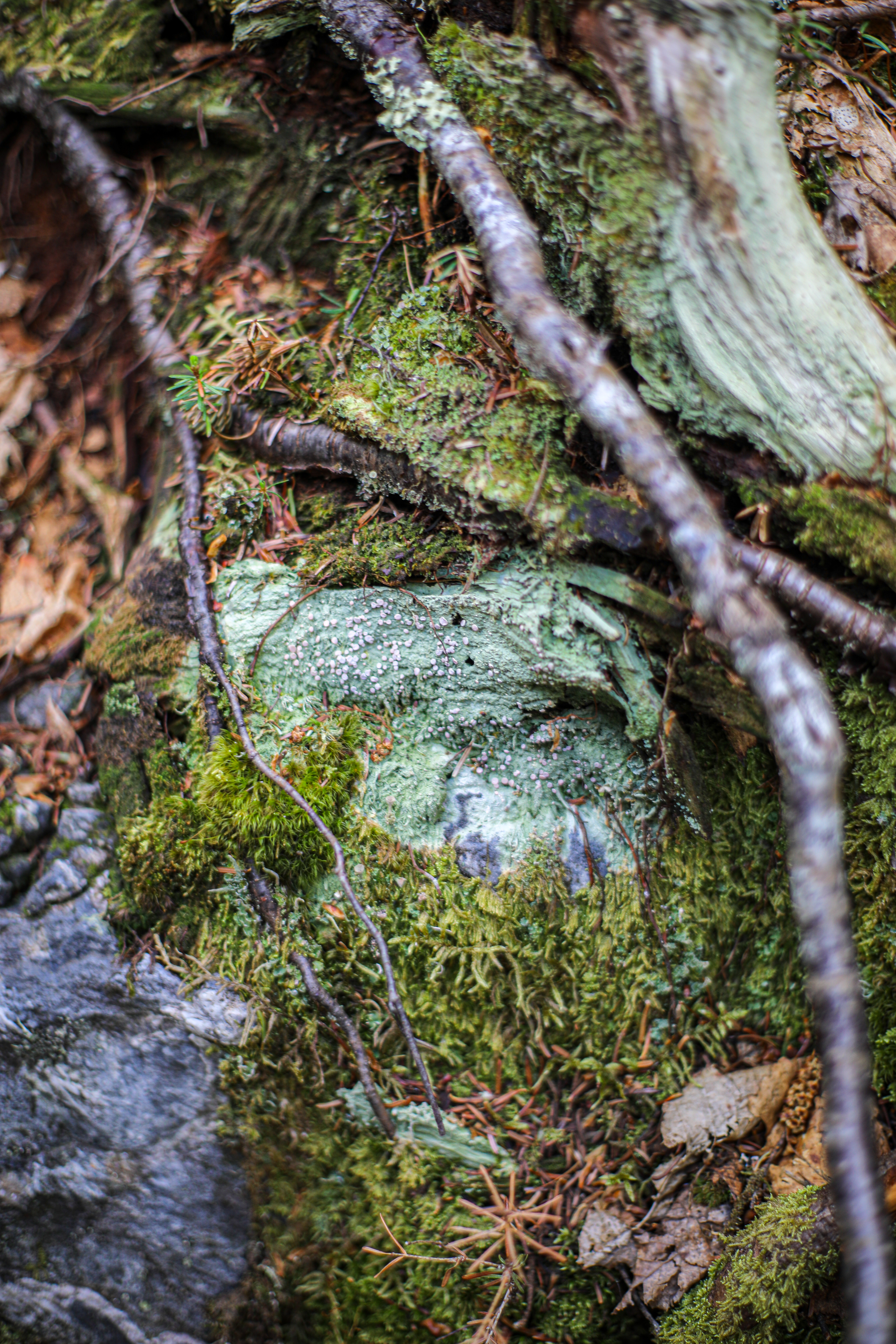
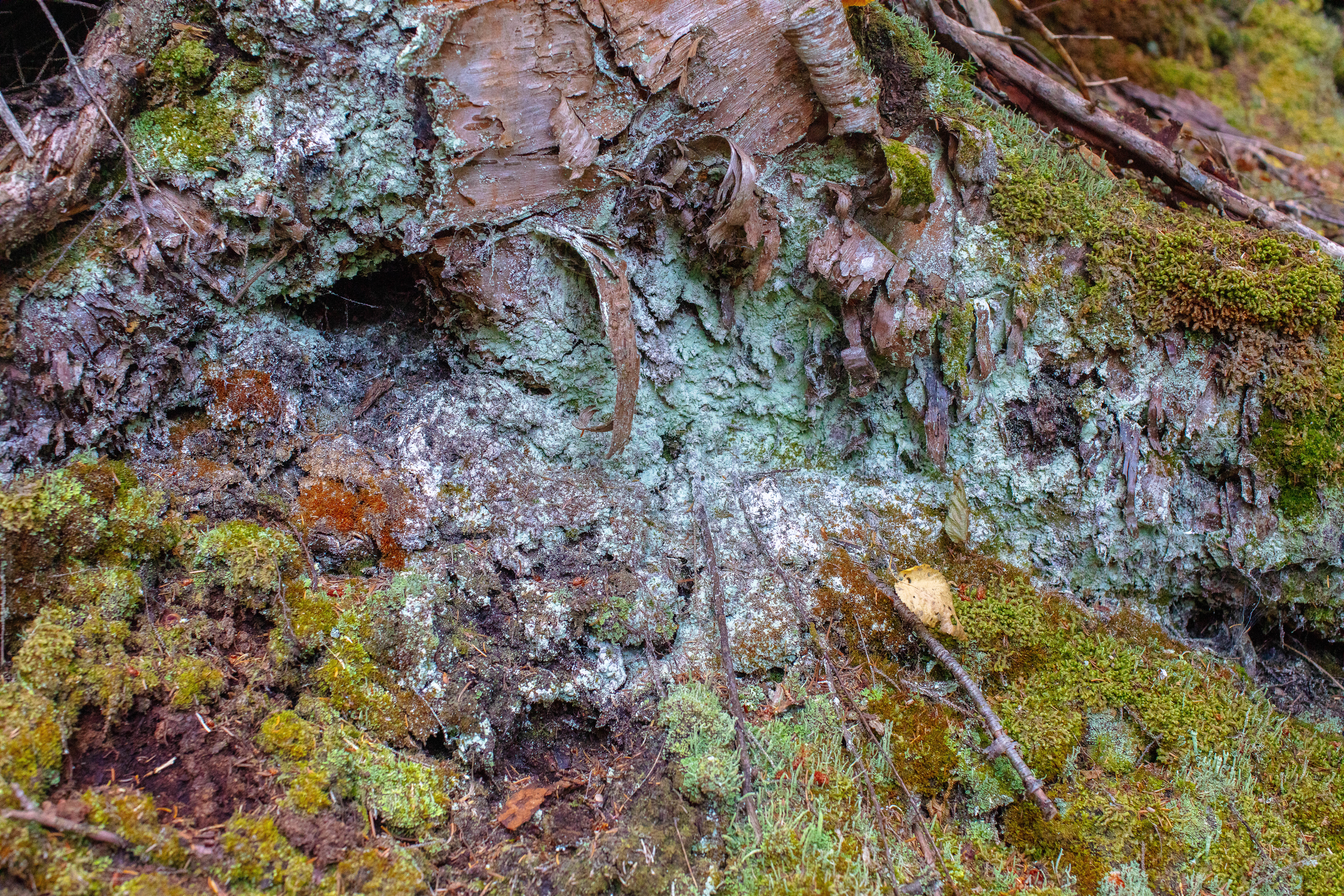
A whimsical forest lichen with a minty green crust that 'pukes' up bubblegum-pink dots - often found adorning rotting logs on the damp forest floor.
A whimsical forest lichen with a minty green crust that 'pukes' up bubblegum-pink dots - often found adorning rotting logs on the damp forest floor.
Icmadophila (Fairy Puke) is found in cool, damp forests, often indicating well-established or old-growth conditions where plenty of logs are decomposing. It "eats" decaying wood in a sense - the fungal partner physically grows through rotten logs, and the algal partner photosynthesizes to feed them both, making it a partial autotroph. It often overgrows mosses on logs; in fact it is described as growing aggressively over mosses on well-rotted wood and peat. By breaking down logs, it contributes to the nutrient cycling in the forest, albeit slowly. It has no known direct economic importance (aside from looking pretty), but it does signal a healthy, moist microclimate. It likely relies on consistent humidity; if a forest is cut and dries out, this lichen can disappear. It does not tolerate pollution well and prefers pristine air and water drip conditions. In the White Mountains, it can occur up into subalpine elevations wherever old stumps persist (for example, krummholz edge where a tree died and rots). Spore dispersal (from those pink apothecia) helps it colonize new logs, but it's not a fast-spreading species. Overall, Fairy Puke lichen plays a subtle role in forest ecology - one of countless organisms quietly decomposing and enriching the soil.