Overview
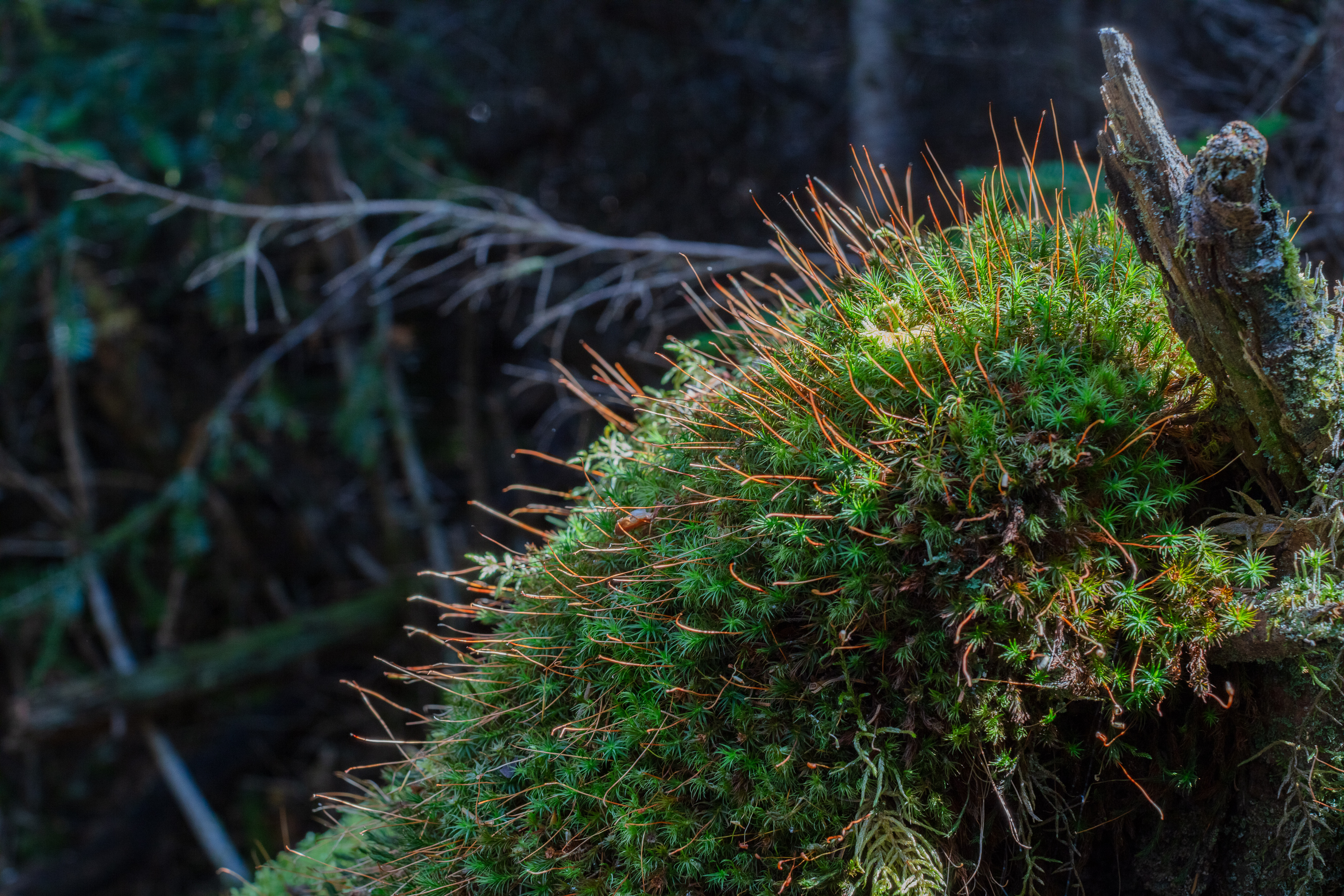
A tall, spiky moss that forms lush green carpets on damp forest floors - its upright stems topped with starry leaves and "hair-capped" spore capsules reaching for the sky.
Ecology
Haircap Moss often acts as a pioneer species on disturbed soil in woodlands and bog edges. Its spores can colonize bare acidic soil quickly, and the emerging moss mats then facilitate succession by collecting moisture and organic debris. This moss provides cover and moist microhabitat for many tiny creatures: springtails and other micro-arthropods are known to live within moss carpets, and salamanders or frogs in damp forests may use moss beds as hiding spots. Birds sometimes gather bits of moss (including haircap) to line their nests, taking advantage of its absorptive and insulating properties. Haircap Moss carpets are adept at retaining moisture - during rainfall, they soak up water like a sponge and then slowly release it, which helps maintain humidity at ground level and can reduce runoff. This contributes to the forest's resilience in dry spells, as the moss will relinquish water to the environment as it dries. In nutrient-poor settings, haircap moss can also trap windblown particles and dust, incrementally improving soil fertility. The species is relatively tolerant of sun compared to many mosses, so it can survive in more open conditions until shaded competitors (like grasses or shrubs) overgrow it. It does prefer at least some shade and moisture - in fully sunny, dry sites it will not thrive. Interestingly, haircap moss and other Polytrichum have specialized internal tissue that conducts water (analogous to primitive vascular tissue), allowing them to grow taller than most mosses. Ecologically, this means haircap moss can outcompete shorter mosses for light in its niche. It's one of the first mosses to colonize after fire in boreal regions, and helps stabilize the soil post-fire. In the White Mountains, you often see it at the edges of mountain bogs or wet ditches, where it forms a transition zone between aquatic sphagnum mats and the drier forest floor. Because it's more tolerant of acidity, it often partners with blueberry bushes, rhododendrons, and other acid-loving plants in the understory. All told, haircap moss contributes significantly to water regulation, soil formation, and providing habitat complexity on the forest floor.