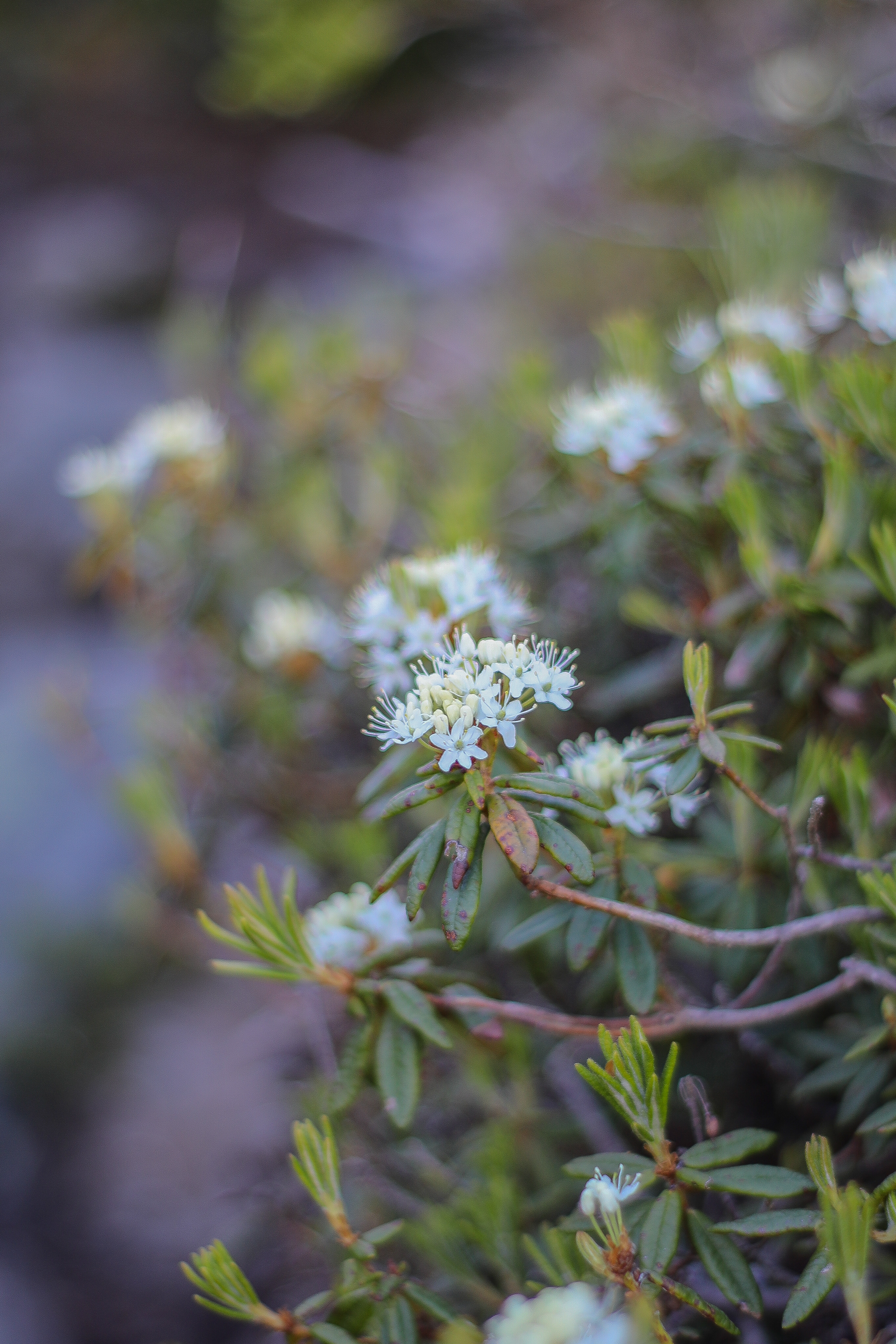
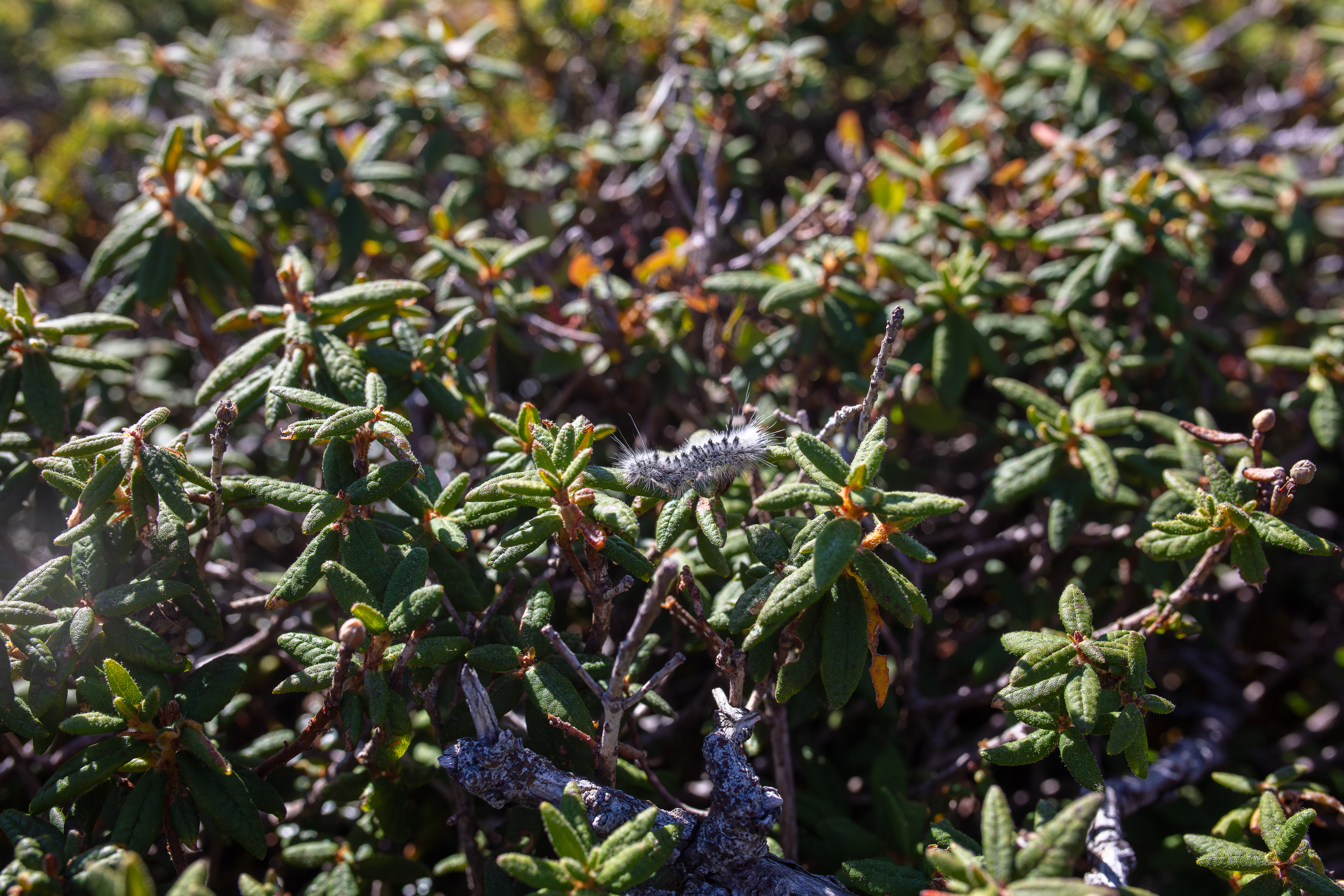
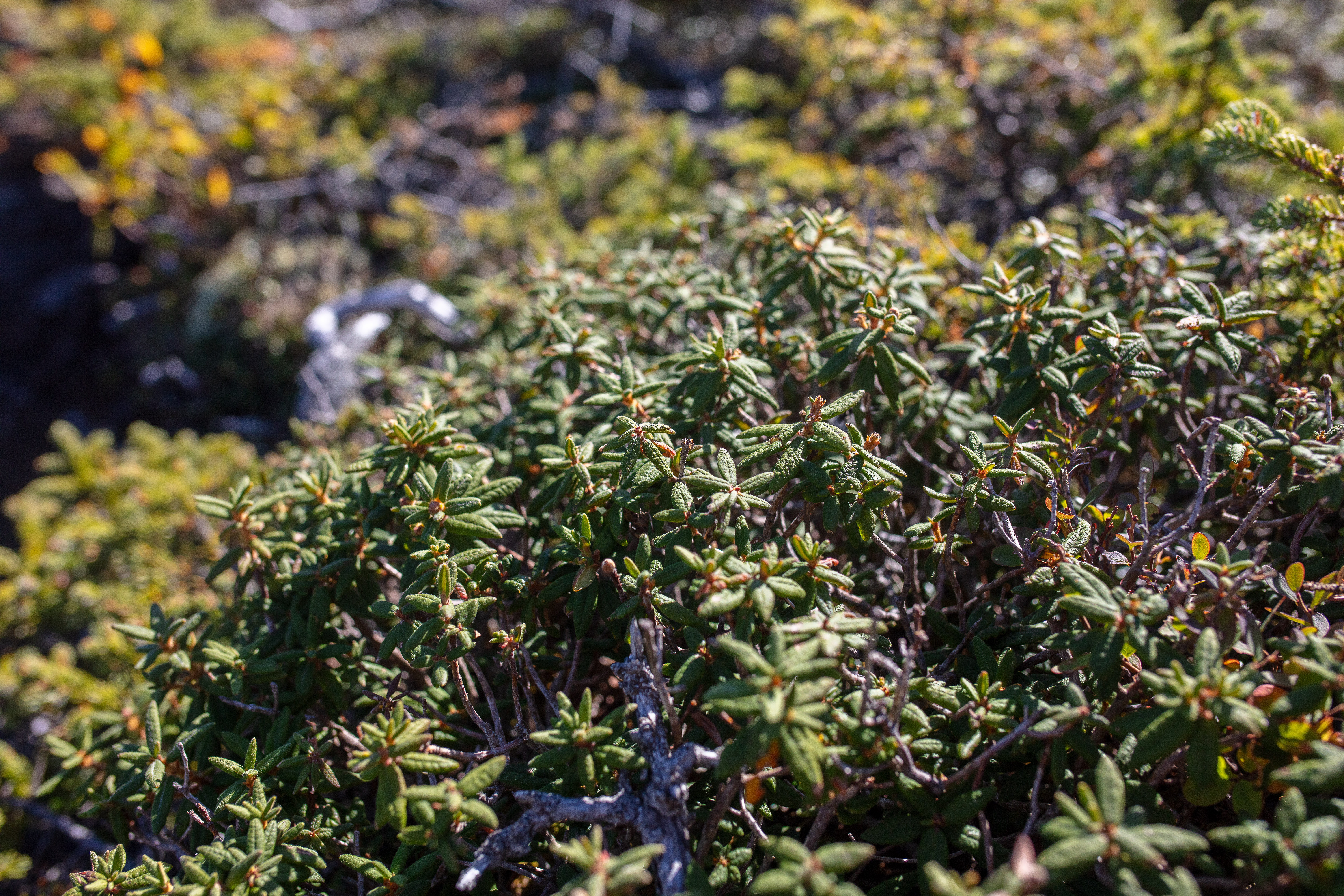
A fragrant bog shrub with fuzzy-backed leaves and white flower clusters, found in peat bogs from lowlands to wind-sheltered alpine nooks.
A fragrant bog shrub with fuzzy-backed leaves and white flower clusters, found in peat bogs from lowlands to wind-sheltered alpine nooks.
A classic component of acidic peat bogs and alpine fens. Labrador Tea thrives on waterlogged, acidic soils, often rooting directly in sphagnum moss. It tolerates cold and nutrient-poor conditions that few other shrubs can. The dense leaf hairs help reduce water loss and may protect against frost and intense sun at high elevations. Its evergreen leaves start photosynthesis as soon as conditions allow, giving it a head-start in the short alpine growing season. Leaves contain toxic alkaloids which deter most herbivores - even moose tend to leave it alone - and thus the plant can dominate peatland shrub layers. In spring, its nectar-rich flowers attract hardy bog pollinators like flies and native bees. Labrador Tea is a pioneer of mossy, disturbed ground as well; after glacial retreat, it helped colonize raw peat. The species is widespread across the boreal world, reflecting its adaptability to cold wetlands.