Overview
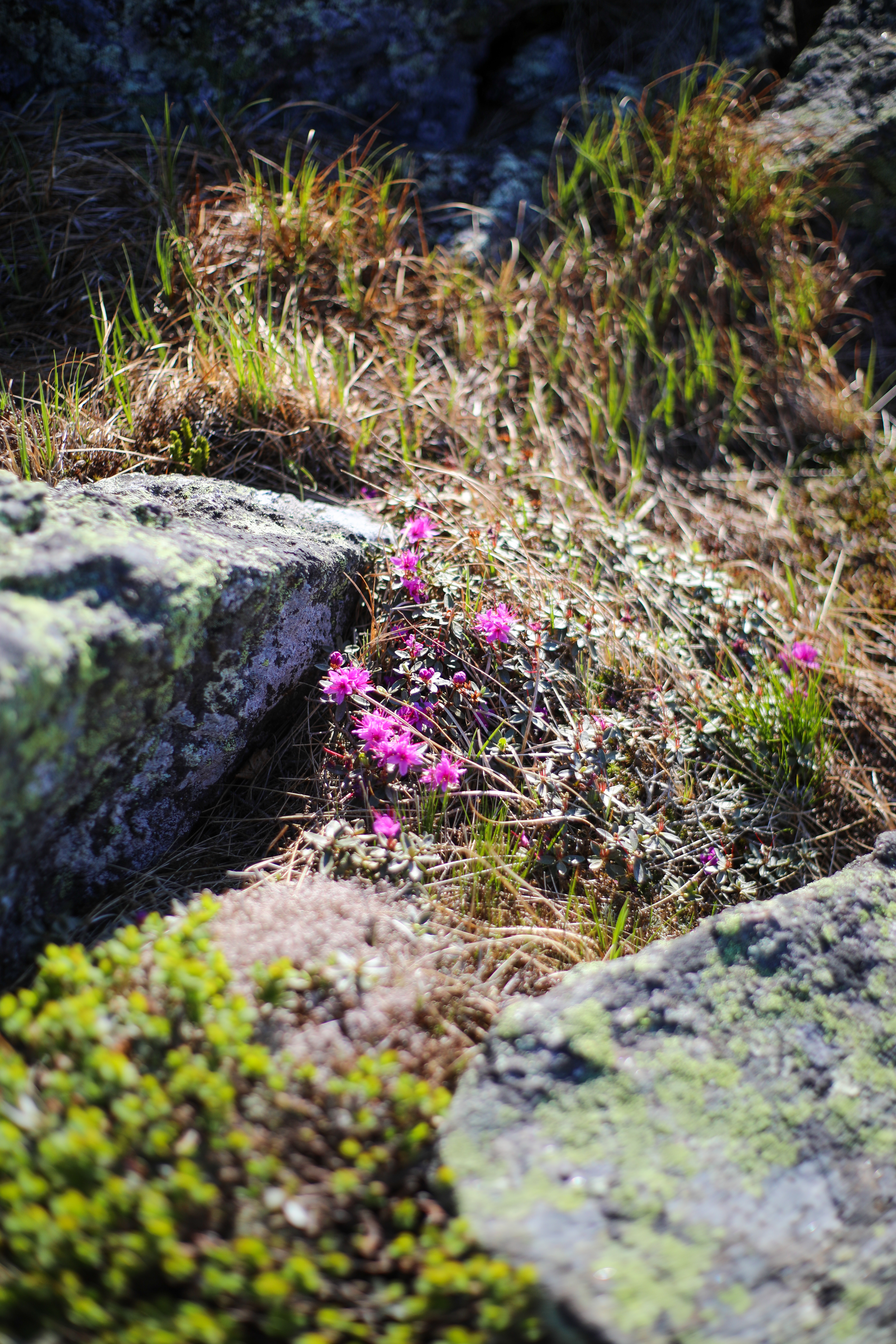
A rare alpine rhododendron hugging White Mountain summits - tiny leathery leaves and a burst of pink-purple blooms in early summer, surviving only in sheltered cracks of the highest, harshest peaks.
Ecology
Lapland Rosebay is an arctic-alpine specialist, found only in isolated high-elevation refugia in NH, Maine, and arctic regions. It has survived since the last ice age on these wind-scoured summits. Ecologically, it occupies the most barren alpine barrens and cliffs, finding microhabitats where a bit of moisture and protection allow survival. It often grows on the leeward side of boulders or in slight depressions that trap soil and snow. The plant's evergreen, hair-coated leaves conserve water and withstand freezing, while its low stature avoids the worst of the winds. By blooming very early (often while snowbanks still linger), it likely ensures pollination by the first hardy insects of spring - its vivid flowers providing an important nectar source for alpine bumblebees and flies. Seeds are wind-dispersed across the rockscape, but successful germination is rare. It often grows with other cushion plants like diapensia and alpine azalea, forming a unique community on frost-heaved talus. Snow cover in winter actually benefits it by insulating from desiccating winds; the challenge comes in summer when the sun can bake the thin soil - hence it stays in cooler crevices. Overall, Lapland Rosebay's presence signals a relatively undisturbed alpine environment and a direct link to the flora of far northern tundras.