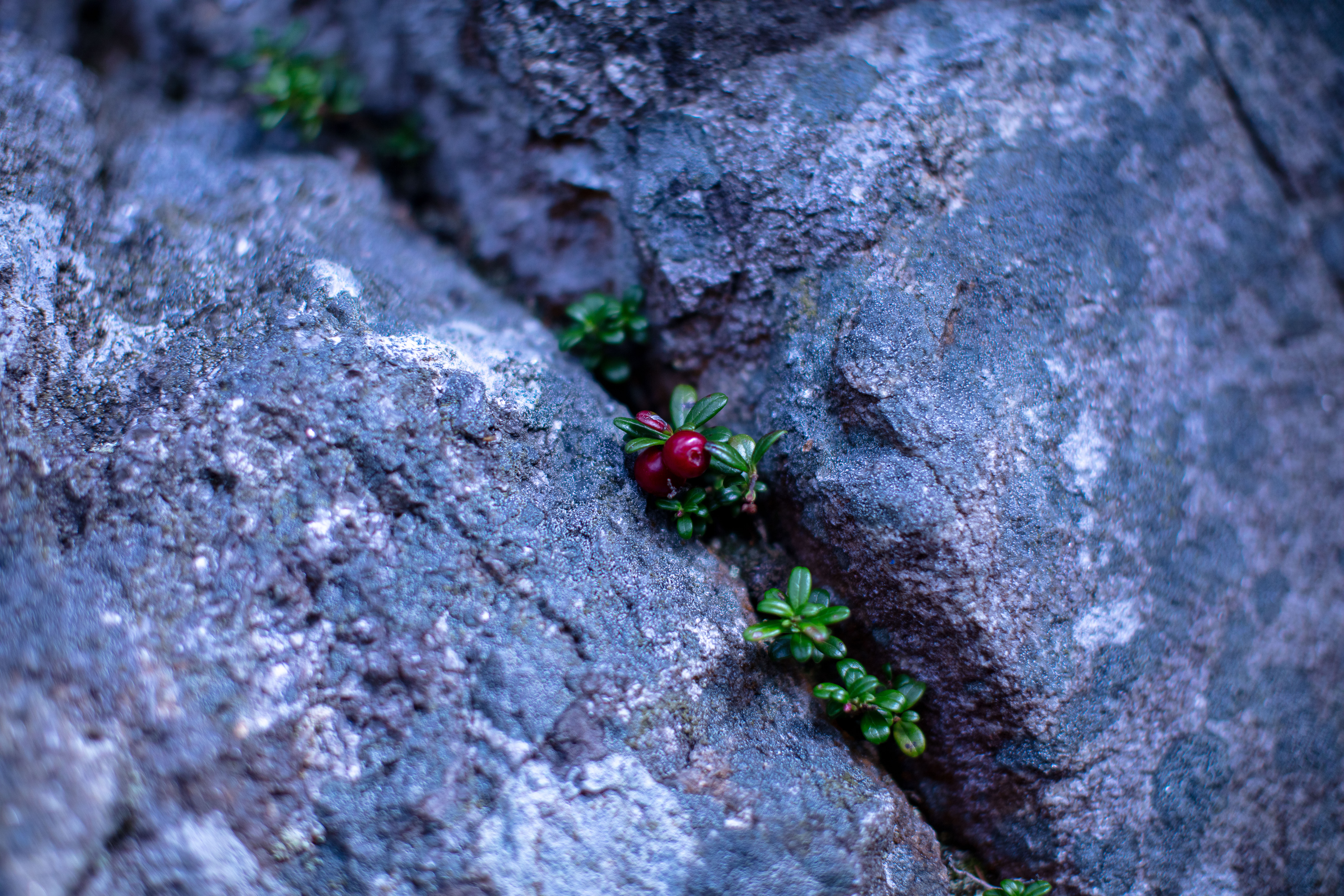
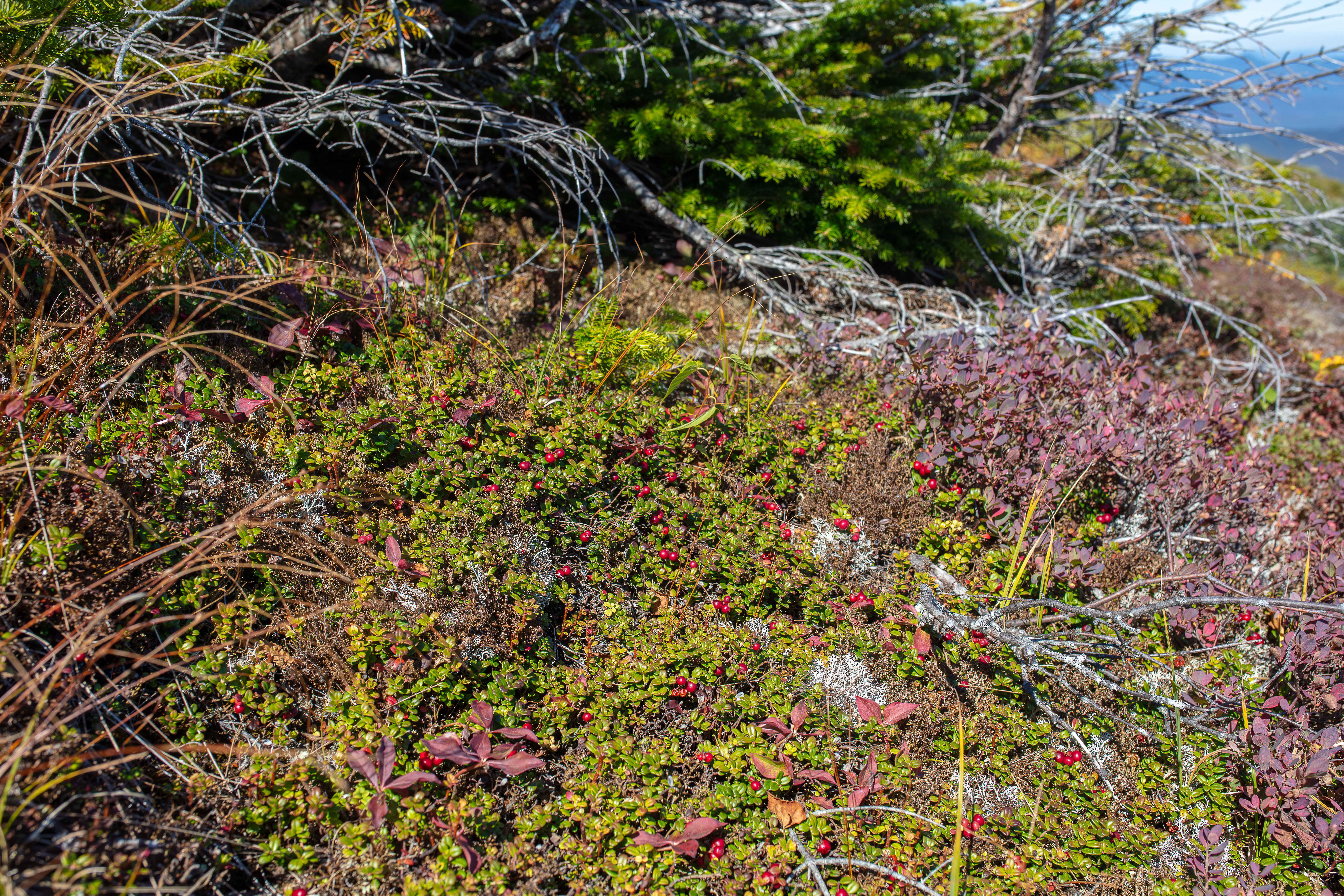
A mat-forming alpine cranberry (lingonberry) with waxy evergreen leaves and bright red edible berries, carpeting windswept ridges and bogs alike.
A mat-forming alpine cranberry (lingonberry) with waxy evergreen leaves and bright red edible berries, carpeting windswept ridges and bogs alike.
An alpine evergreen strategy allows this plant to photosynthesize as soon as conditions permit in spring, giving it an advantage in the short alpine summer. Its creeping growth stabilizes thin soils and cushions the ground, creating microhabitats for insects and other seedlings. The bright red berries are a critical food source for alpine birds (like grouse and ptarmigan) and small mammals, who in turn disperse the seeds in their droppings. Mountain Cranberry often grows in association with sphagnum moss in bogs and with lichens and sedges in alpine meadows. It prefers acidic, nutrient-poor soils and can tolerate extreme cold and desiccating winds by staying low-profile. Under winter snowpack, its leaves endure freezing temperatures and then quickly resume function come snowmelt. Because it occupies both low bogs and high summits, it may be somewhat resilient to climate shifts, though shrinking alpine zones could limit its high-elevation range.