Overview
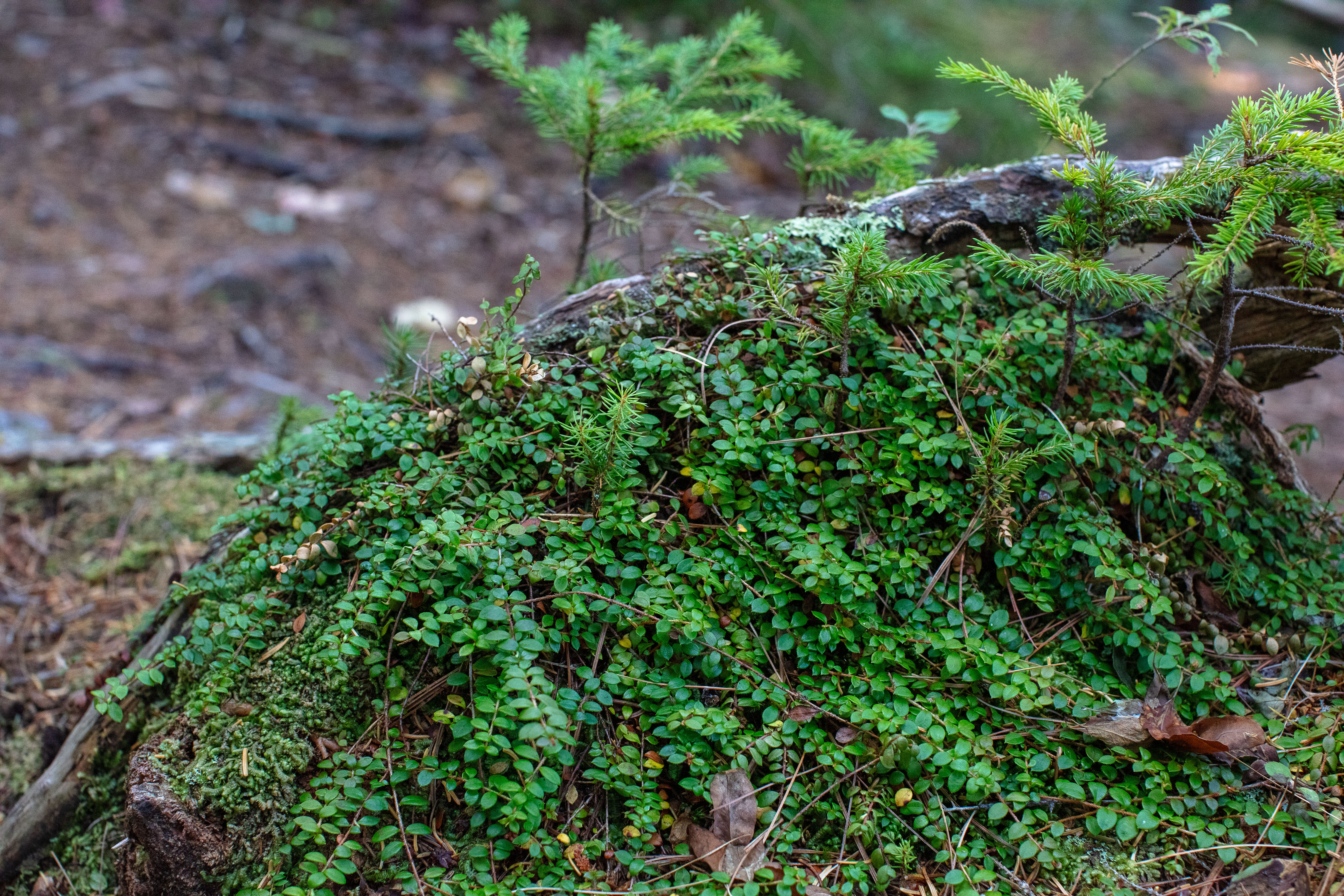
A tiny evergreen vine that carpets the forest floor with glossy paired leaves and bright scarlet berries, quietly decorating the woods year-round.
Ecology
Partridgeberry plays a modest but steady role in forest ecosystems. Its bright red berries are edible for wildlife (though almost tasteless to humans). Many birds and mammals consume them opportunistically: Ruffed Grouse, Wild Turkeys, and quail will peck at the berries, and small mammals like white-footed mice, red squirrels, and foxes eat them too, although these fruits make up only a small fraction of their diet. Because the berries persist into winter, they can provide a mid-winter snack when other foods are scarce. The evergreen leaves are not a preferred food for deer, but deer may nip them occasionally if other browse is limited. As a groundcover, Partridgeberry helps stabilize the soil and retains moisture in the leaf litter layer. Its creeping vines intermix with mosses and help prevent erosion on forest floors, especially on slight slopes. The dense mats also offer microhabitats - small insects and spiders may shelter under its leaves, and amphibians like salamanders might find humid refuge in patches of Partridgeberry. The white flowers are fragrant and produce nectar, attracting small bees and moths. Interestingly, each plant has flowers of one of two forms ("dimorphic heterostyly") - a mechanism to encourage cross-pollination by insects. Ecologically, Partridgeberry is a low-light specialist, thriving in the filtered light under a closed canopy where few other flowering plants can survive. It does not tolerate open, hot conditions well, so it is a good indicator of intact, mature forest understories with minimal disturbance.