Overview
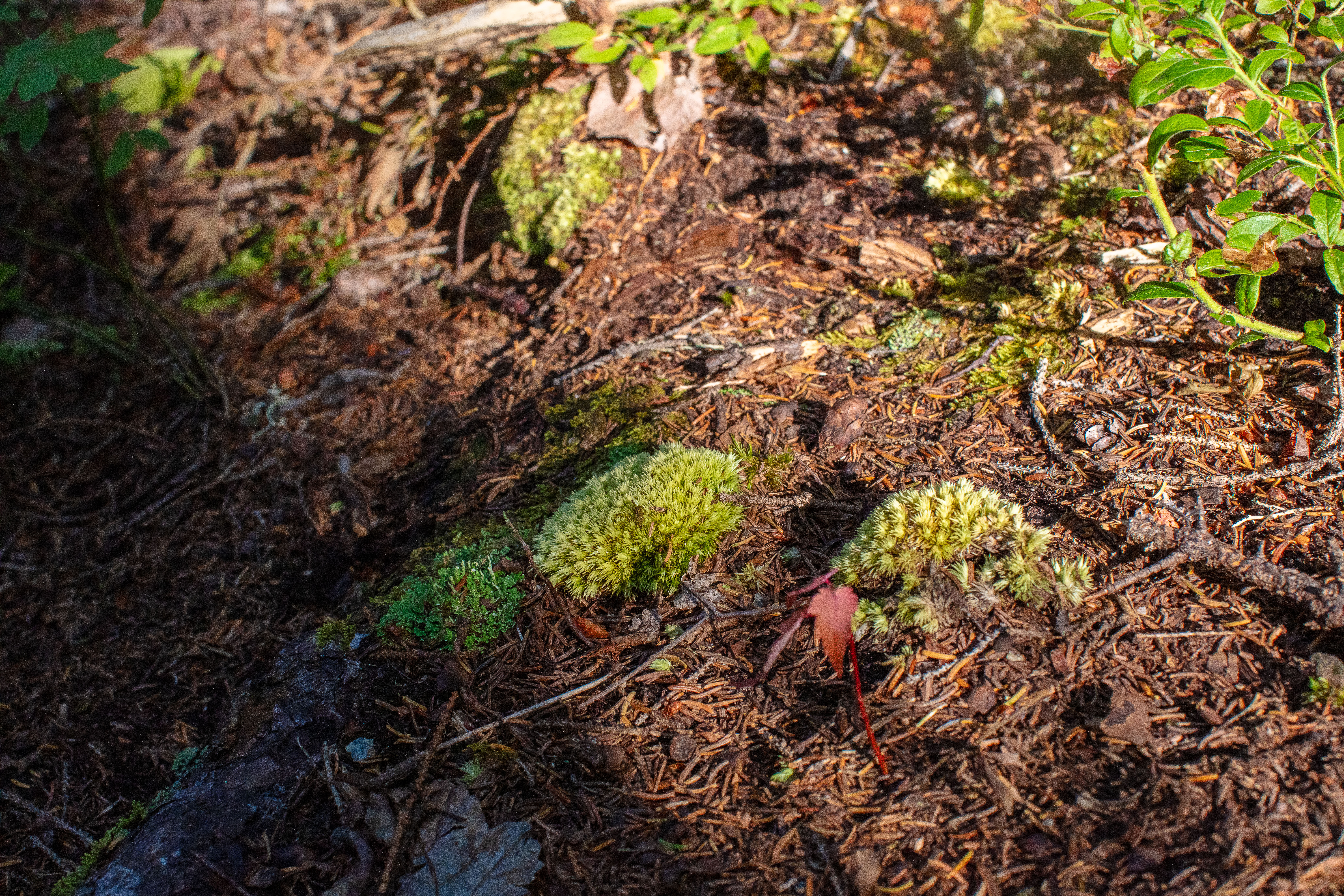
A cushiony bright-green moss that forms velvety mounds on the forest floor - like little pillows of living sponge soaking up rain in the woods.
Ecology
Pincushion Moss is an ecosystem engineer in miniature. By forming thick, cushiony mats, it helps **retain moisture** on the forest floor - the sponge-like colonies can absorb and hold significant amounts of water from rain and fog, slowly releasing it back to the environment and thereby moderating the microclimate. This water-holding capacity also means the moss can sustain itself through dry periods, rehydrating quickly when conditions improve. The cushions also trap falling debris (like pine needles and dust), contributing to soil formation underneath them over time. They often grow on thin soil or directly on rock surfaces where higher plants can't establish, and by gradually accumulating organic matter, they prepare the site for other plants to eventually root - a classic pioneer role for mosses. Pincushion Moss clumps provide habitat for tiny soil invertebrates (springtails, mites, etc.) and shelter for nematodes and protists in the moist interior. Certain insects might lay eggs in the safe microenvironment of the cushions, and salamanders have been found nestled in mossy areas to keep moist. The moss itself primarily gains nutrients from rainwater, dust, and decaying matter caught in it. It can tolerate acidic conditions and even absorb some pollutants or metals from the environment, acting as a bioindicator of air quality (some studies note mosses accumulate heavy metals). In the White Mountains, its sheer commonality makes it a fundamental part of the forest ground cover - one reason the understory in many mature woods remains damp and spongy. Additionally, by covering exposed soil, Pincushion Moss helps reduce erosion on slopes during heavy rains. It's also largely immune to browsing; few animals feed on moss in quantity. So, its ecological role is more about habitat creation, water regulation, and soil development than as part of the food web. All in all, Pincushion Moss quietly underpins the forest ecosystem, doing the slow work of building and protecting soil that taller plants will use.