Overview
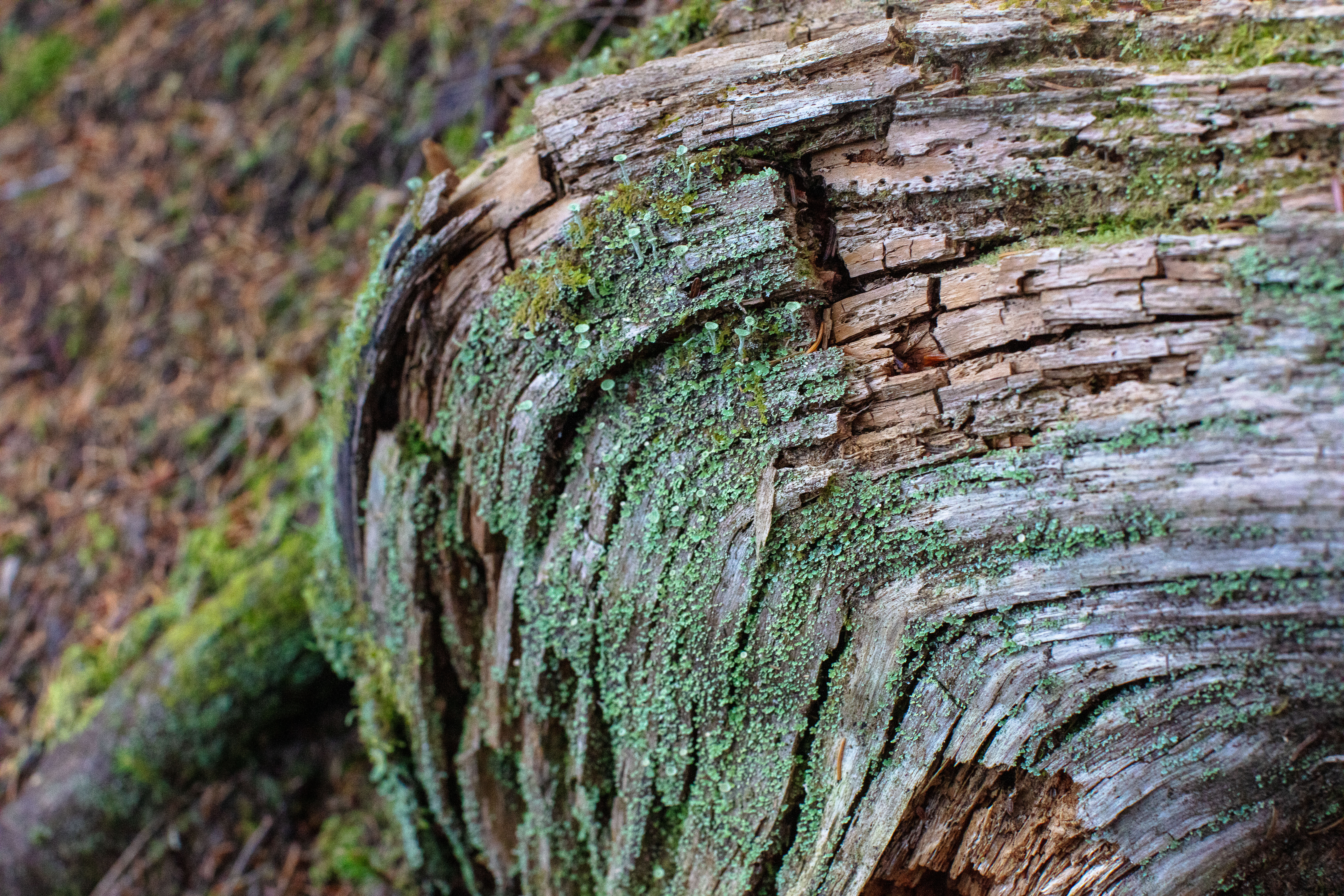
A whimsical lichen sprouting tiny trumpet-shaped cups from mossy logs and soil - as if a fairy left behind a set of little green goblets in the woods.
Ecology
Pixie-cup Lichen contributes to the slow breakdown of wood and the creation of soil. Lichens like this can colonize bare wood or soil surfaces, and by secreting certain acids they help erode their substrate - for example, aiding in decaying a stump into soil over years. They also trap moisture and provide a foothold for other small organisms. These lichens are part of forest nutrient cycles: when they eventually die, they add organic matter and minerals (accumulated from rainfall and dust) to the soil. Pixie-cups often grow intermingled with mosses (as seen in the photos), and likely benefit from the moisture the moss holds. They, in turn, may protect the moss from drying out by shading the surface slightly. As a symbiotic organism, the alga in the lichen photosynthesizes and provides food for the fungus, while the fungus provides structure and protection - an arrangement that allows pixie-cup lichens to live in nutrient-poor niches. A few creatures utilize these lichens: some snails and slugs will graze on lichens including Cladonia (the soft tissues and algae are a source of nutrients), and certain mites or springtails might feed on the fungal or algal components. Lichen-feeding insects (like some Lepidoptera larvae) might occasionally include Cladonia in their diet, though pixie-cups are small. There are also specialized lichenicolous fungi (fungi that parasitize lichens) that can infect pixie-cup lichens, though this is not easily observed without a lens. In terms of succession, pixie-cup lichen is somewhat of a transitional colonizer - it often appears after mosses on a dead log and will flourish until the wood becomes too decomposed and soil accumulates, at which point higher plants or thicker moss might take over. Cladonias are also indicators of good air quality; they do not thrive in polluted air (sulfur dioxide, for instance, can kill them). So healthy populations of pixie-cup lichen in a forest suggest a relatively unpolluted environment. On a whimsical note, their fairy-goblet appearance has led to folklore that they are used by pixies or forest fairies for drinking cups, which, while fanciful, reflects the charm they add to the forest micro-landscape. They create a **miniature ecosystem** on each stump, complete with its own cycle of growth and decay, contributing to the forest's diversity at a tiny scale.