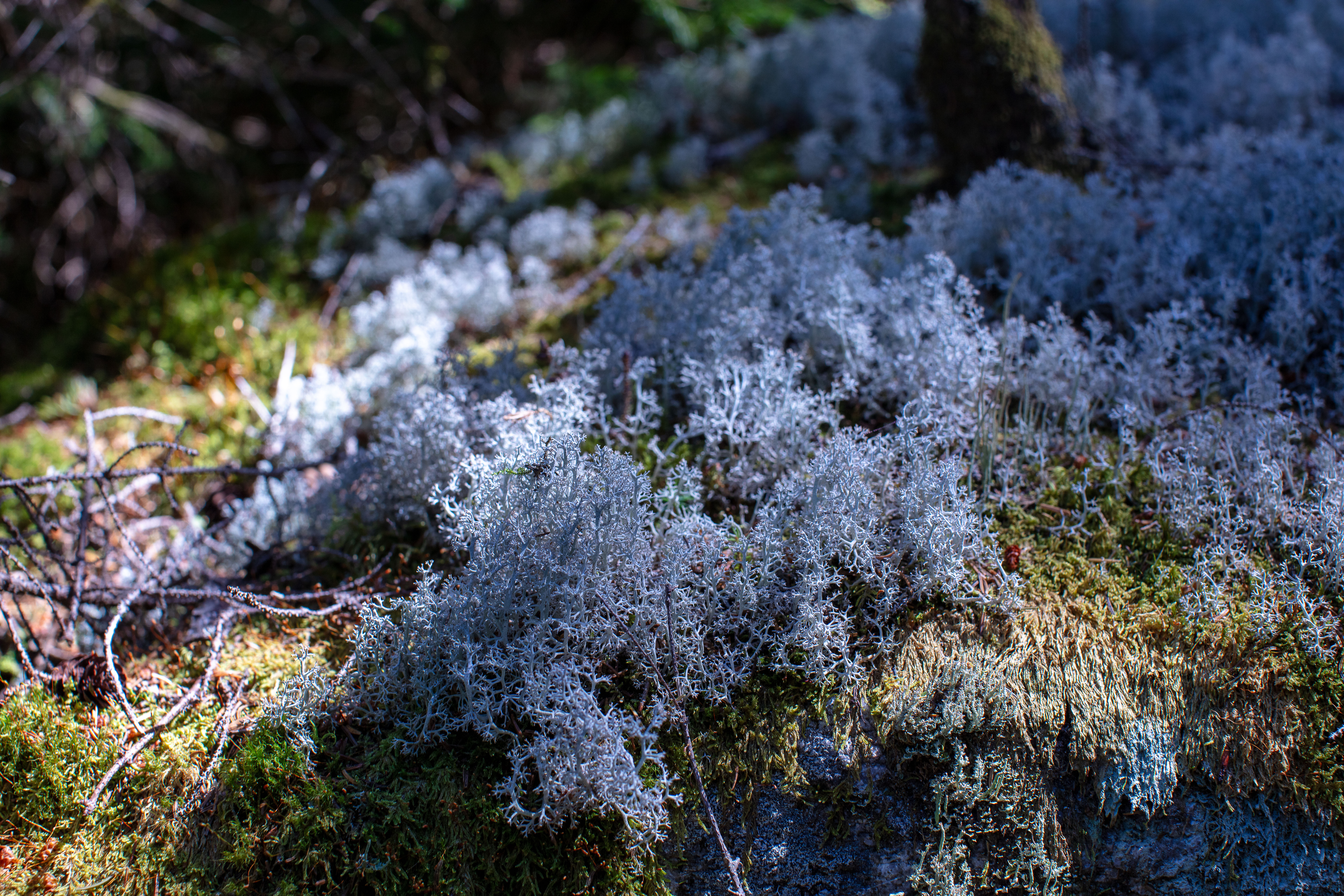
Overview
A pale gray, branching lichen that forms crunchy mats over alpine rocks and barrens - famously known as "reindeer moss" and vital in arctic ecosystems.
Ecology
Reindeer Lichen is a **pioneer species in harsh, barren landscapes**. It can colonize bare rock or mineral soil, secreting acids that slowly help break down rock into soil - thus facilitating later plant succession. It has no roots; it absorbs water and nutrients from rain and air across its surface, which means it's very sensitive to air quality (sulfates or smog can kill it). In alpine and subalpine zones, its mats help retain a bit of moisture and reduce erosion by covering soil. It grows extremely slowly (only a few millimeters per year) and can take decades to recover after disturbance. This lichen provides critical winter food for caribou/reindeer in subarctic regions, though in NH the woodland caribou are long gone. Still, micro-fauna like insects or spiders may use its tangle for shelter, and birds sometimes pick lichen for nest lining. Its presence on White Mountain summits links these peaks to far northern tundra ecosystems. Because it is so slow-growing, trampling by hikers can eliminate it from heavily used alpine trail edges - hence the importance of walking carefully on rocks where possible. Globally, Cladonia rangiferina is common (NatureServe "Secure"), but locally it benefits from alpine zone conservation efforts.