Overview
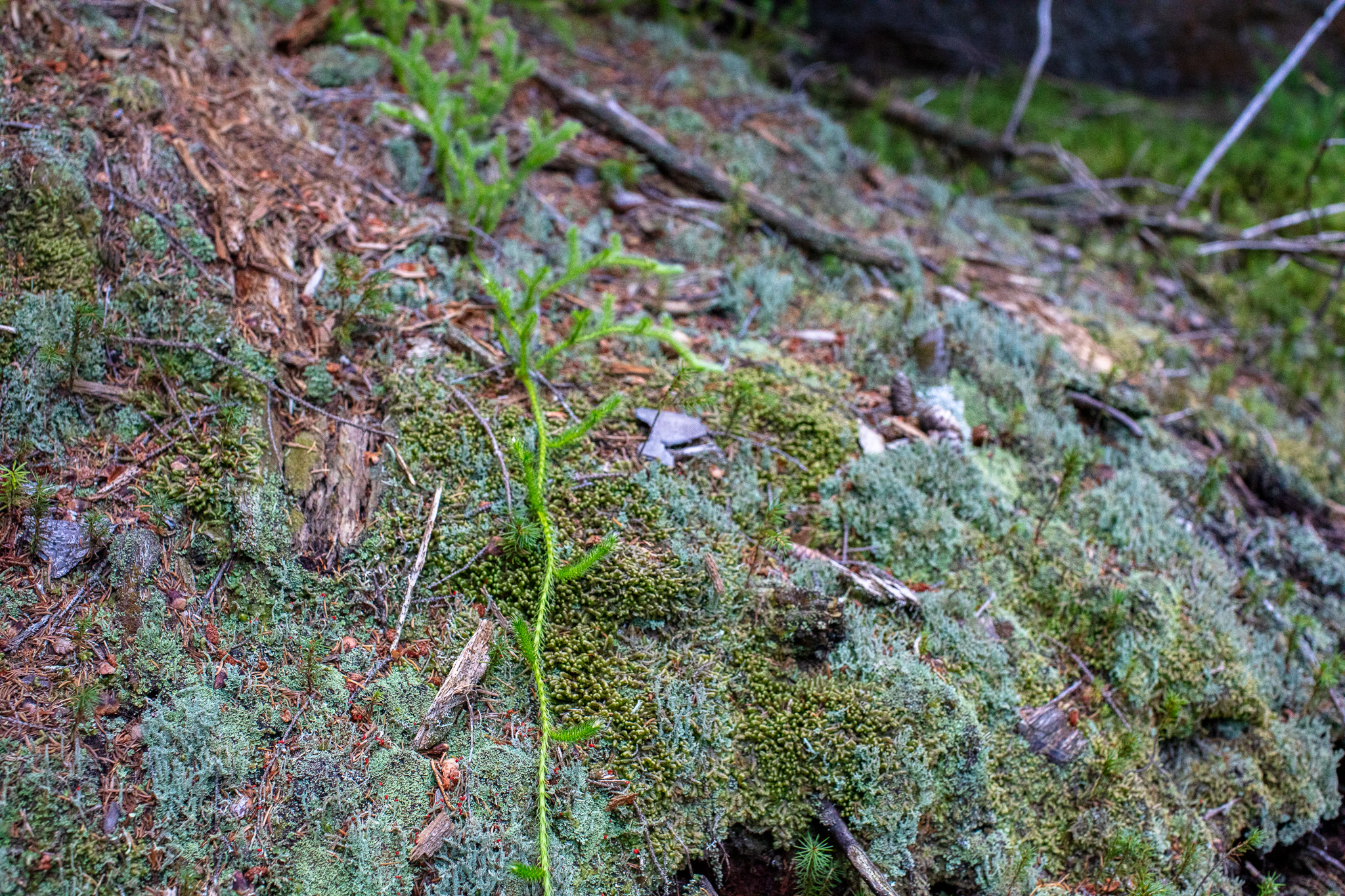
A primitive, fern-like plant carpeting the forest floor with trailing, "pine branch" stems - an ancient evergreen that reproduces by spores instead of flowers.
Ecology
Running Clubmoss is a survivor from an ancient lineage, and it fills a modest ecological niche in modern forests. As a groundcover in upland woods, it helps prevent erosion by carpeting the soil, especially on slopes or embankments. Its dense mats can suppress other small plants, which is one reason it often forms a singular layer in acidic, nutrient-poor soils where competition is limited. It prefers undisturbed sites - it often disappears from areas that are regularly trampled, farmed, or burned. The plant's spores are highly flammable (once used as flash powder in old photography), but in nature the fine spores likely travel only short distances; the main spread is vegetative, creeping outward each year. Clubmoss provides minor cover for tiny forest floor fauna - salamanders or insects may hide under its runners. It is not a significant food source due to its high content of unpalatable compounds; deer or rodents generally avoid eating it. Interestingly, the sprawling mats can act as "nurse plants" by retaining moisture in their microhabitat, creating slightly cooler, damper conditions at ground level which might aid seedling survival of some trees or support mosses and fungi in their midst. Historically, humans have used Lycopodium powder (the spores) as a water-repellent dust (for medical gloves, etc.) and in magic tricks for fire effects, but these uses have diminished. Ecologically, Running Clubmoss is often a pioneer on the forest floor after glaciation or in new soils - but being slow-growing, it requires stable conditions. It often indicates an area of relatively long undisturbed ground. In sum, it's a quiet presence - a living fossil that knits the forest floor together and reminds us of the primeval past.