Overview
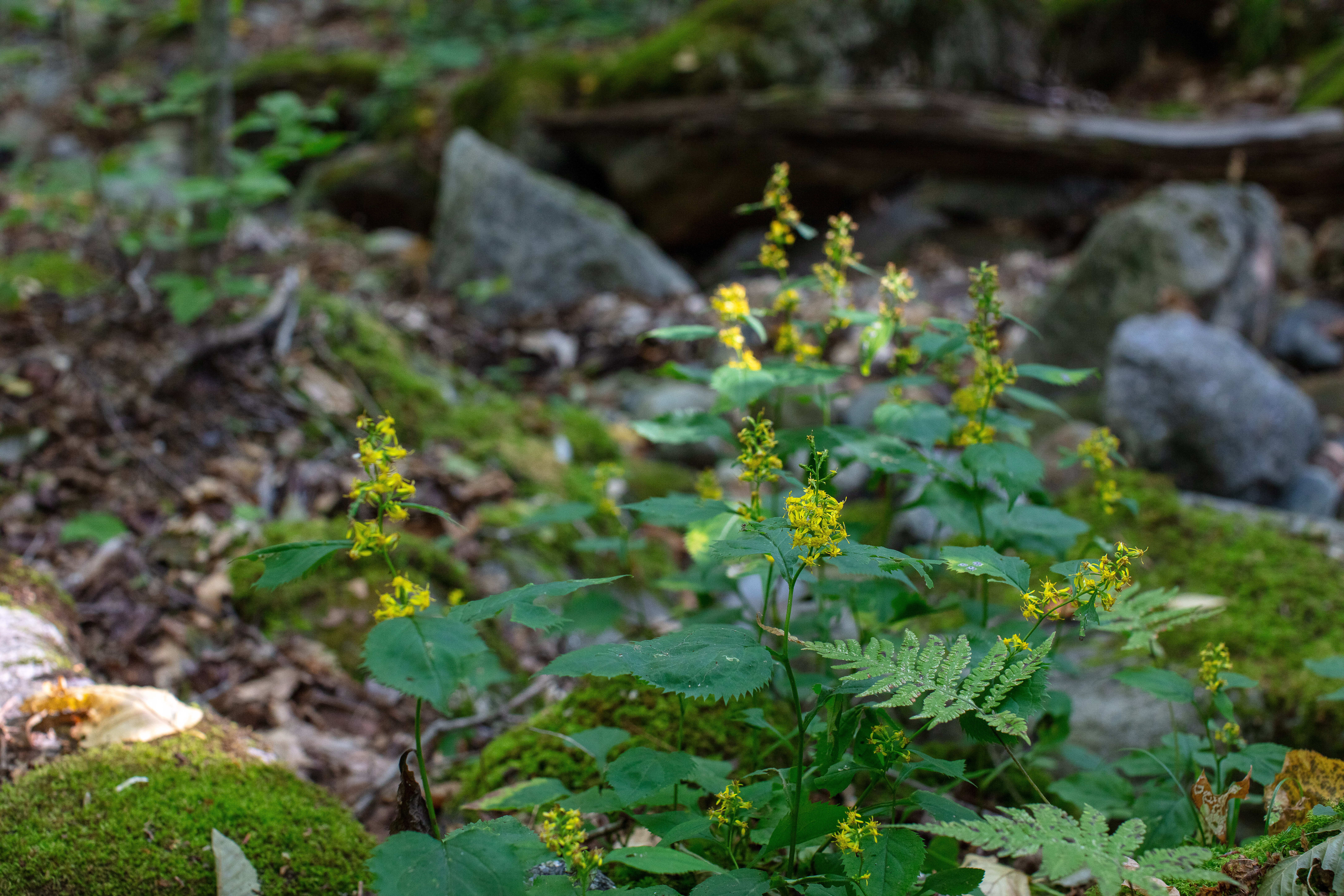
A shade-loving goldenrod with broad, toothed leaves and a kinked stem, sprinkling yellow blossoms through late-summer woodlands.
Ecology
As one of the few fall-blooming wildflowers in deep woods, Zigzag Goldenrod is important for forest pollinators. Its nectar feeds late-season butterflies (like commas and tortoiseshells) and native bees seeking sustenance in September. Caterpillars of some moths (such as the Broad-winged Spanworm moth) feed on goldenrod foliage in the understory. Because it tolerates heavy shade and clay-rich soils, it often grows in rich sugar maple or maple-oak forests, contributing to the herb layer diversity. Deer and rabbits may nibble the leaves, but generally it's not heavily browsed thanks to mild bitterness. Interestingly, Zigzag Goldenrod has been exonerated from causing hay fever - its showy flowers rely on insects, and the plant even supports goldenrod-specialist insects like gall midges (though galls are rarer on this species than on field goldenrods). Ecologically, it helps stabilize soil on wooded slopes with its rhizomes and adds organic matter as its leaves die back each year. And in fall, its little sprays of gold extend the blooming season in habitats where most plants have finished flowering, thus sustaining pollinator networks for a few extra weeks.