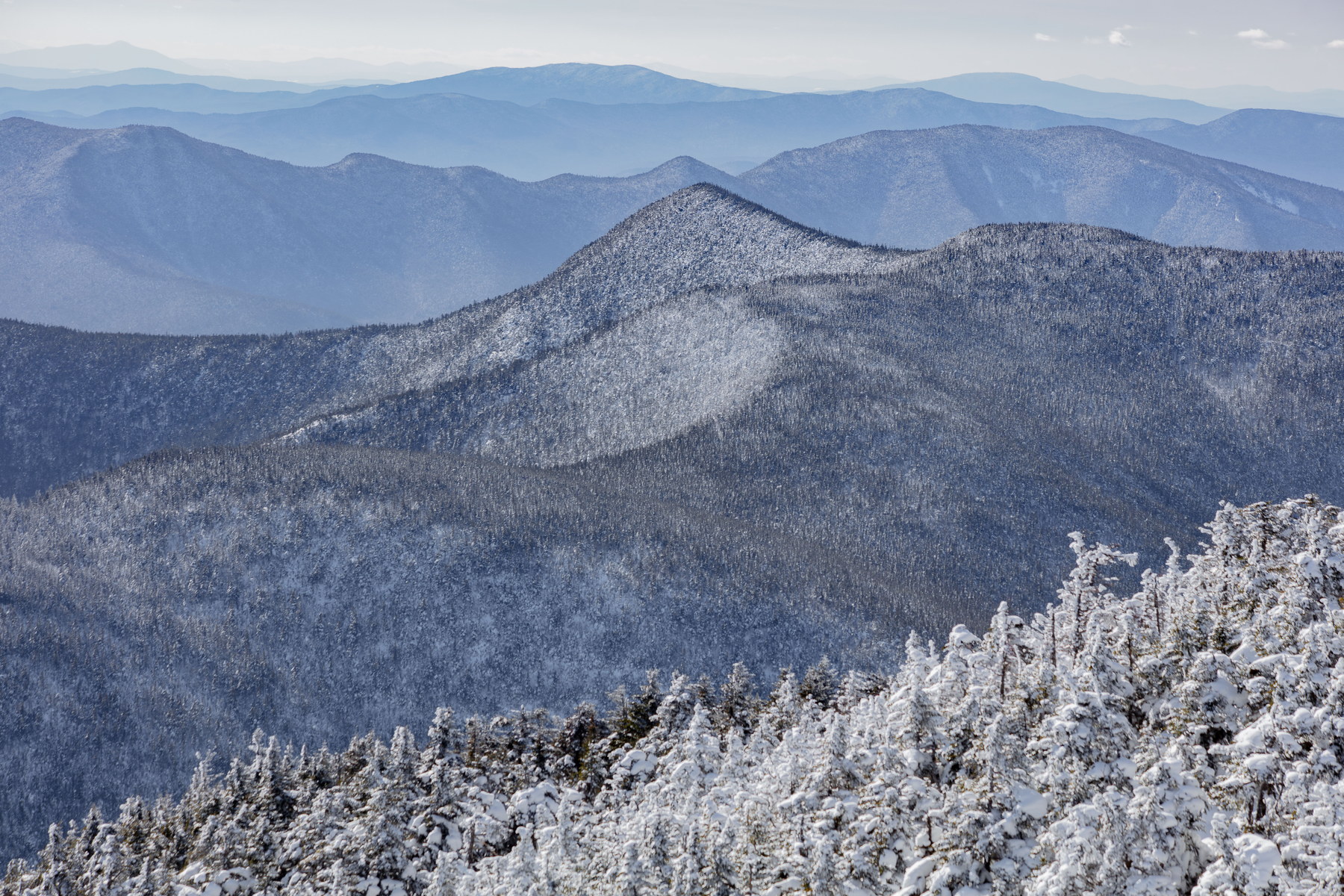
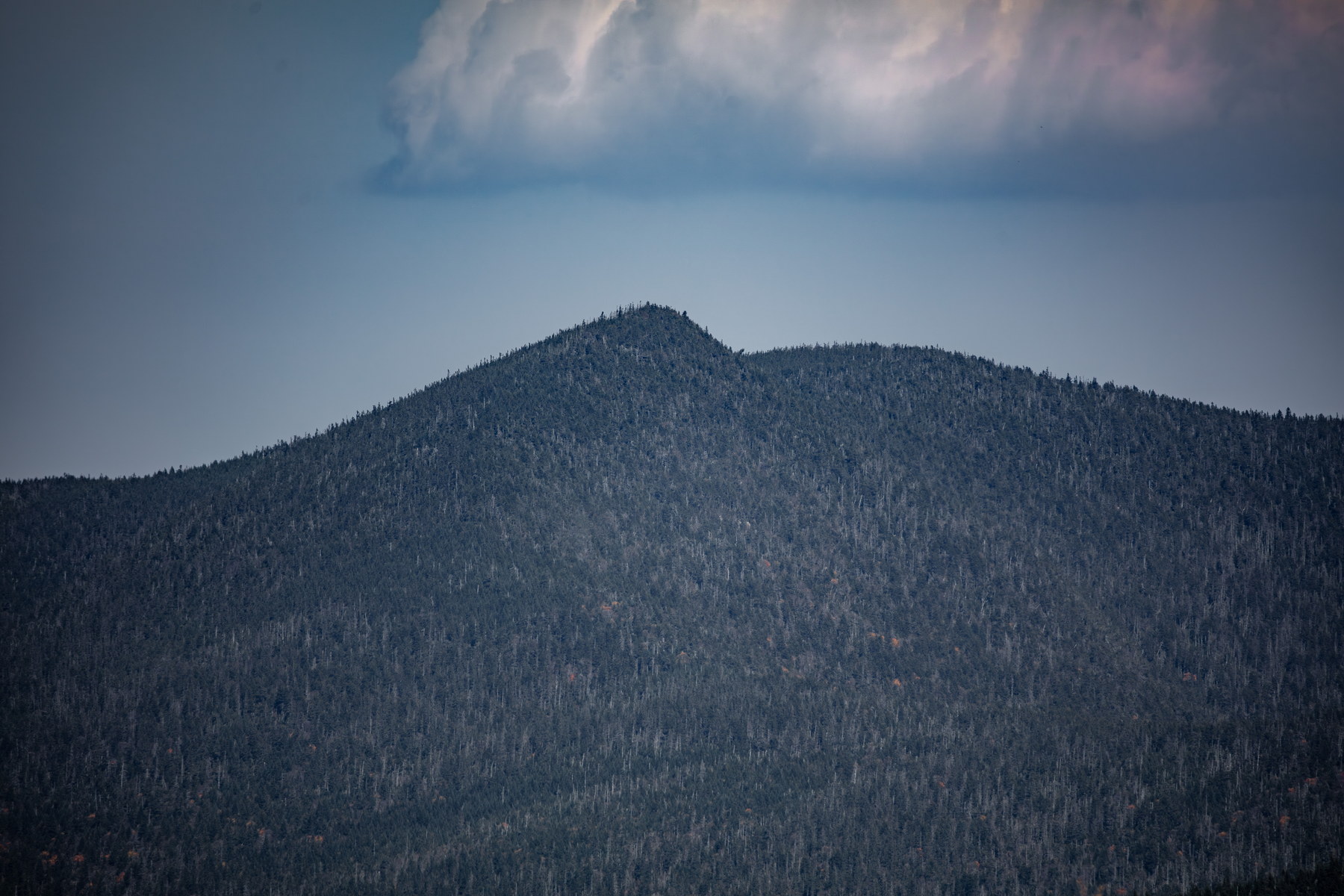
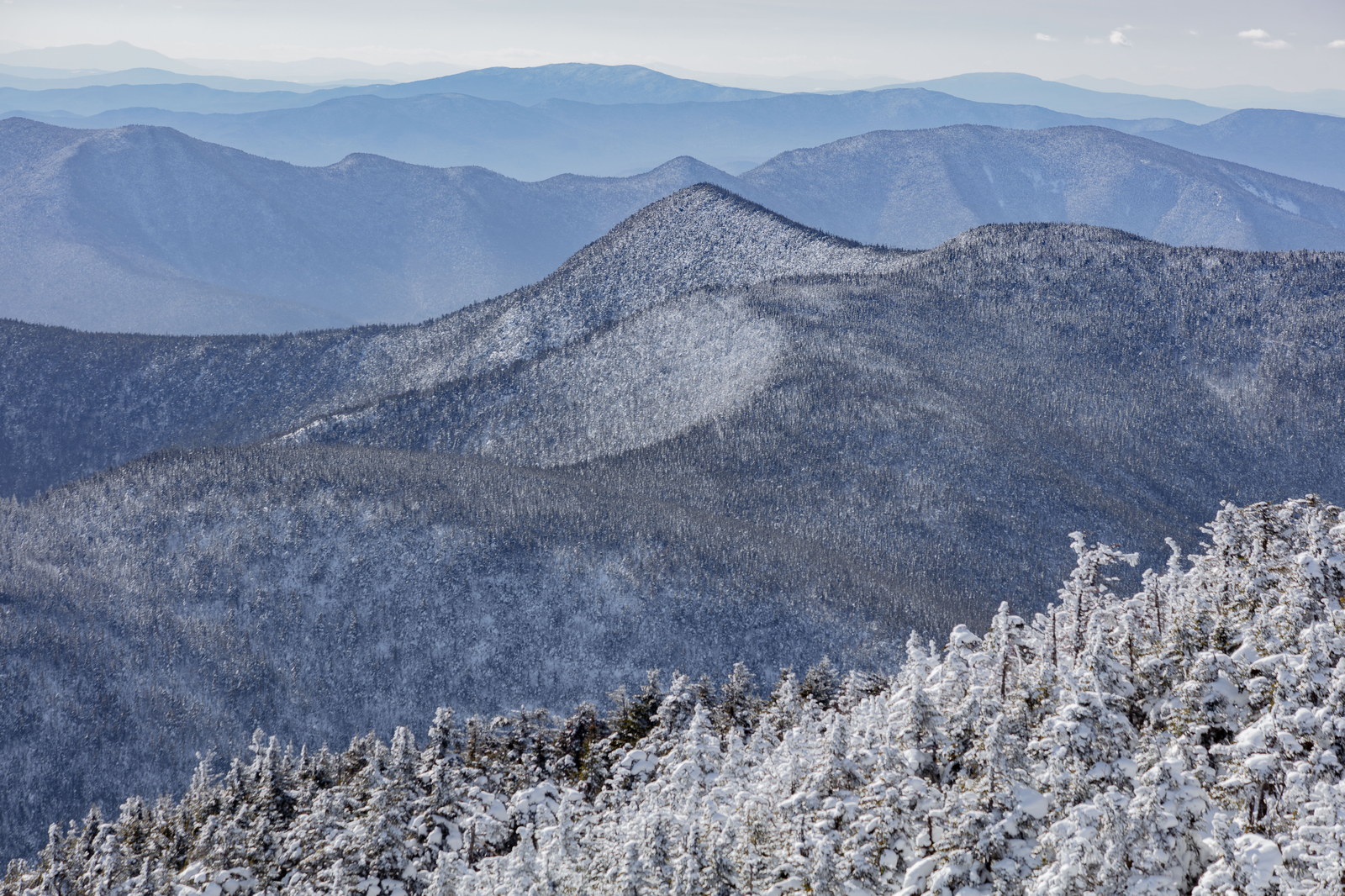
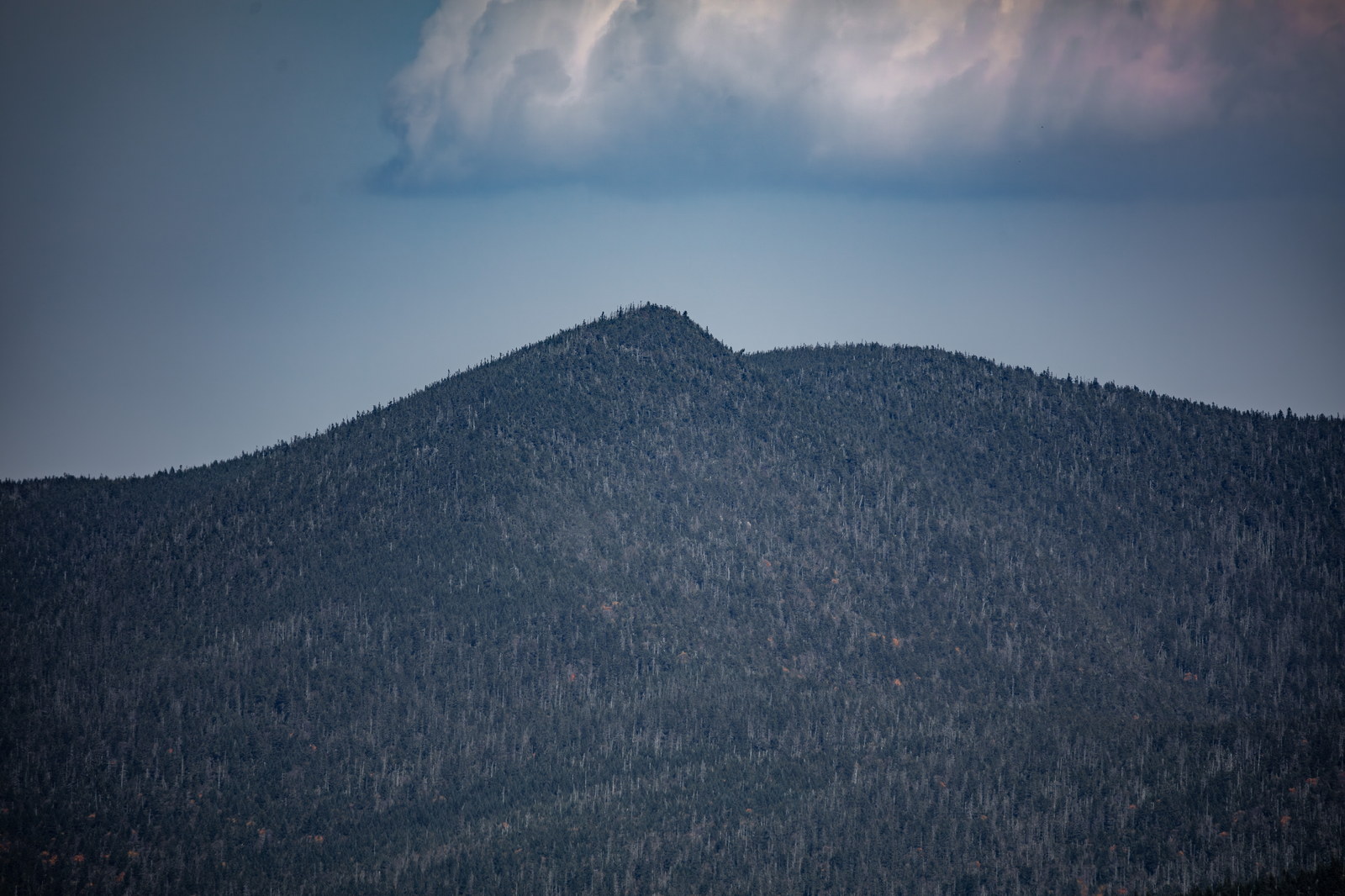
South Hancock is a 4,319-foot peak in Grafton County, New Hampshire. It is the south peak of Mount Hancock, located in the Pemigewasset Wilderness of the White Mountains. Although it has its own name for listing purposes, South Hancock is a subsidiary summit of Mount Hancock, connected by a ridge and col that drops just over 200 feet, which allows it to qualify as a separate 4,000-footer. The wooded summit of South Hancock offers limited views, but a short distance below the peak there are outlook points with nice views of the Hancock Range and the Arrow Slide on Mount Hancock’s north peak. South Hancock is the southern sub-peak of Mount Hancock, connected to the main summit by a ridge and shallow col. Although it is slightly lower than North (main) Hancock, it qualifies as a separate 4,000-footer due to enough topographic prominence. The peak is named, like its parent mountain, for John Hancock, one of America’s Founding Fathers and the first signer of the Declaration of Independence. The name “Hancock” was assigned to this area by mid-19th-century mapmakers (likely influenced by Surveyor General Philip Carrigain’s 1816 map which marked a “Hancock” in the Whites, though perhaps not exactly on today’s peak). During the great logging era around 1900, the Hancock region was extensively logged by the East Branch & Lincoln Railroad operations. In fact, the saddle between North and South Hancock was completely denuded of trees by J.E. Henry’s timber crews, who then sent logs down the steep south branch via chute to the East Branch river. After the logging, the area was left to recover for decades. A firewarden’s trail was cut up Hancock in the 1940s to watch for fires in the regrowing forest (since a few small fires did ignite in slash around 1947), but no permanent tower was built on Hancock. By the 1970s, the Forest Service established the current Hancock Loop hiking trail. South Hancock’s summit today is wooded and unremarkable (marked by a small sign); however, just a short distance below, along the loop trail, an open spot provides views of the Hancock Range and the scar of the “Arrow Slide” on North Hancock’s face. Those slides are products of the historic torrential rains (likely from the 1927 floods or 1938 hurricane) and serve as natural reminders of the mountain’s dynamic landscape.