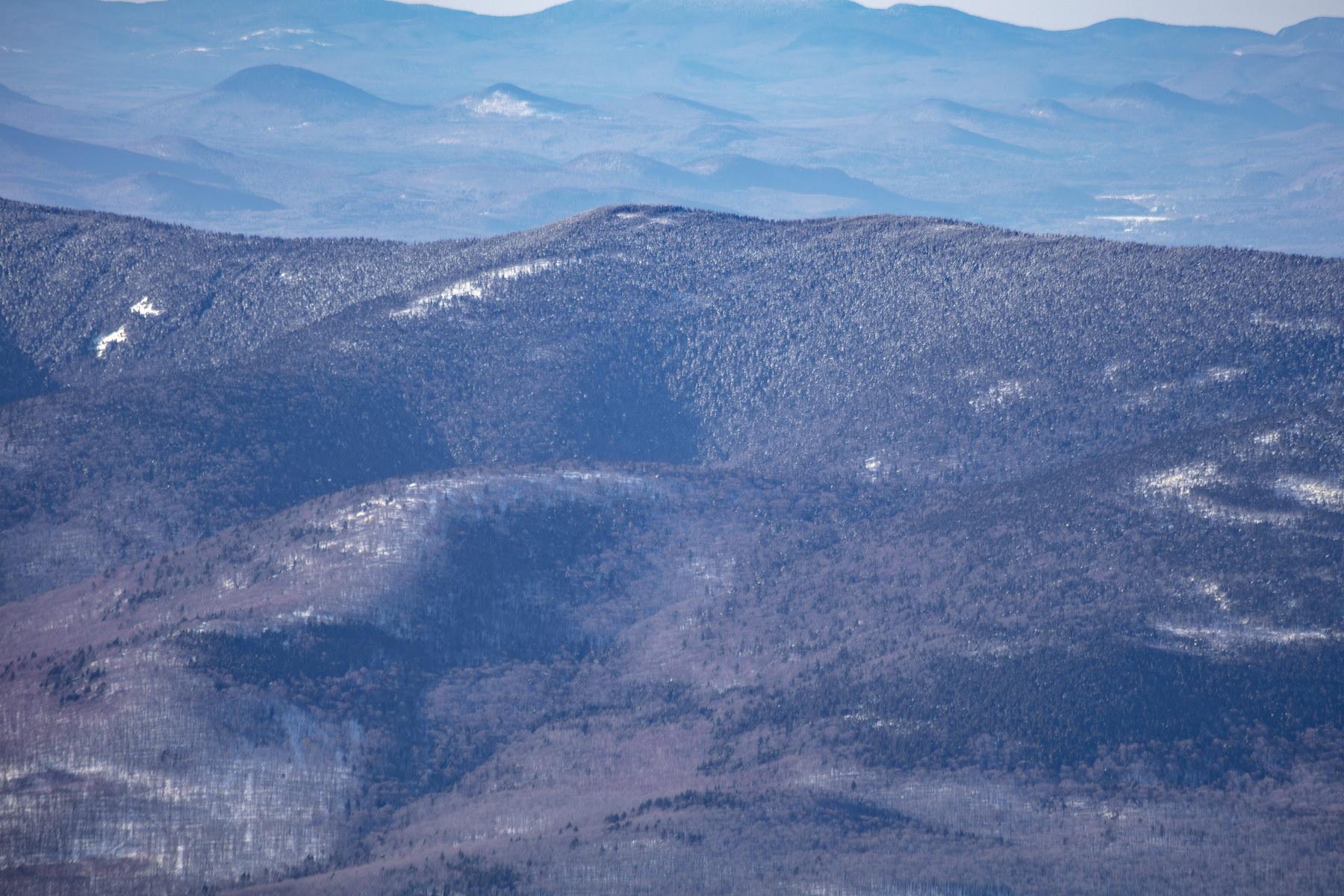
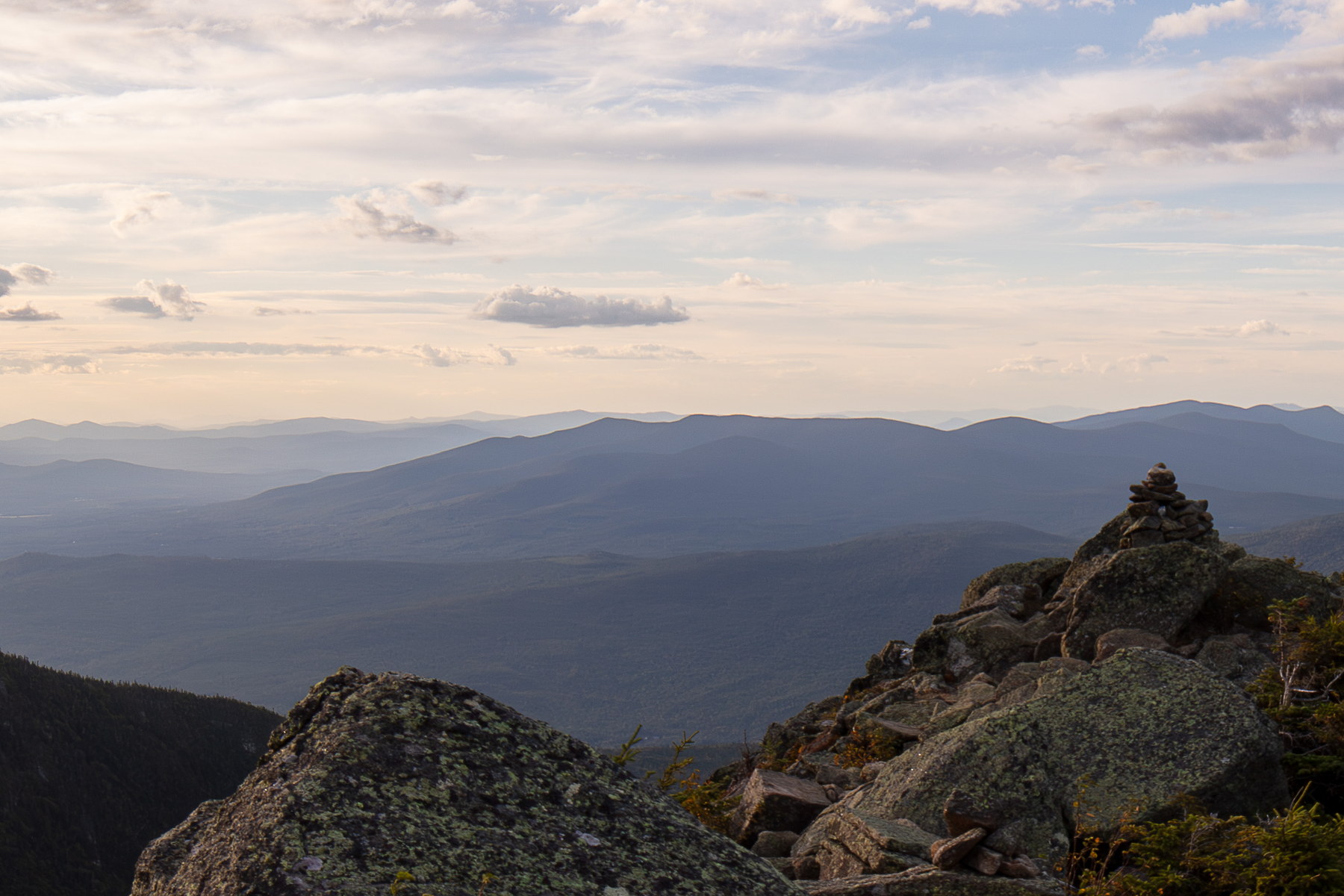
Mount Waumbek is a 4,006-foot mountain in Coös County, New Hampshire. It is part of the Pliny Range in the northern White Mountains and is the third-highest peak in that range (after Mount Starr King, which is on the same ridge, and Mount Cabot to the east). Mount Waumbek is typically hiked via a trail that passes over Mount Starr King. The summit of Waumbek is wooded, with a limited clearing that provides a restricted view towards the Presidential Range. Being one of the northernmost 4,000-footers, Mount Waumbek is often one of the last peaks hikers climb to complete the NH48 list. The mountain’s name “Waumbek” comes from an Abenaki word, often interpreted to mean “white rock” or “snowy” (perhaps referencing its snowy winters). Mount Waumbek is a peak in the Pliny Range of northern New Hampshire, and it is the third-highest peak in that range (after two unnamed points on neighboring Mount Starr King’s ridge). The name “Waumbek” is of Abenaki origin, and it’s often said to mean “white rock” or “snowy mountain.” In fact, the Abenaki referred to the entire White Mountains range as “Wôbanakik” or specifically called the Presidential peaks Waumbek Methna (“Snowy Foreheads”). The term waumbik in Algonquian can mean “white (rock)”, likely referencing the lighter-colored granite or the snow that caps these peaks. Over time, the name Waumbek came to be attached to this specific mountain, perhaps through early map usage in the 19th century (it appears on maps by 1853). In the 1800s, the Pliny Range was largely inaccessible wilderness, but one event put Waumbek on the map of history: around 1808, a road (the Starr King road) was cut nearby, and settlers moved into Jefferson, NH. In 1882, in the spirit of the tourism boom, the Star King Hotel opened in Jefferson and began offering guided hikes up Mount Waumbek via Starr King. Hikers could ride burros partway and then hike – it was quite an adventure. The mountain was appealing for its views of the Presidential Range. The fire lookout era touched Waumbek as well: around 1911, a crude log fire tower was built on Mount Starr King (the peak one must cross on the way to Waumbek). Later, in the 1930s, the CCC improved it to a steel tower. While that tower was removed in the 1960s, the old warden’s cabin (built 1939) still sits on Starr King’s summit, slowly deteriorating. Mount Waumbek’s summit itself is wooded and had no structures, but a small clearing just beyond the high point provides a framed western view – notably, it often showcases the snow-capped Presidentials in winter, a fitting tribute to the name “Waumbek.” Among peakbaggers, Waumbek has a bit of a reputation as being “anti-climactic” as the last of the NH48 (since its summit is forested). In fact, many hikers do choose Waumbek as their final peak when finishing the 48, precisely for that relaxed finish. On such occasions, the summit might not be visually dramatic, but the knowledge of Waumbek’s Abenaki roots and the realization that one stands on a mountain named “Snowy Forehead” – with Mt. Washington’s snowy cap often visible – gives the moment a special cultural resonance.