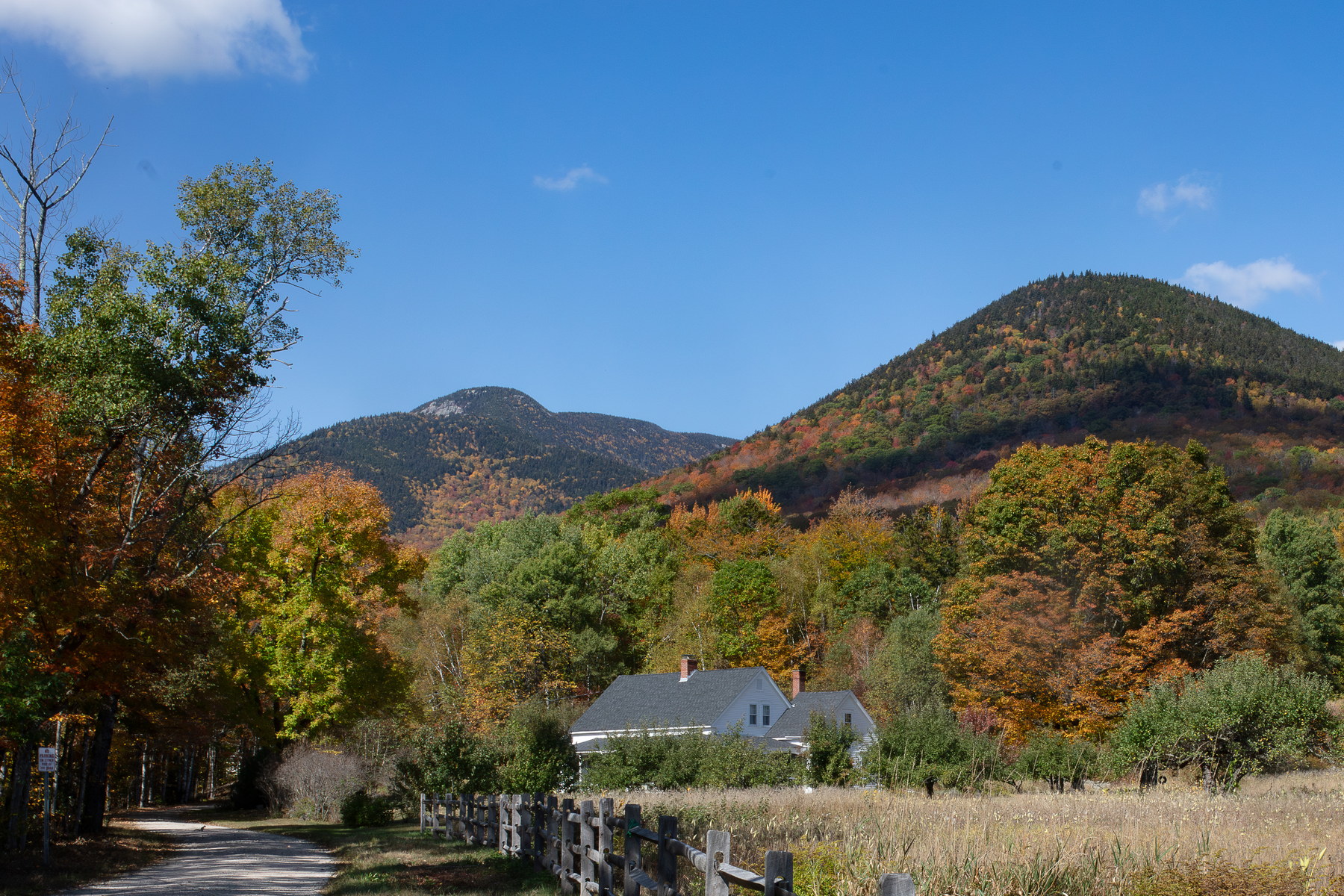
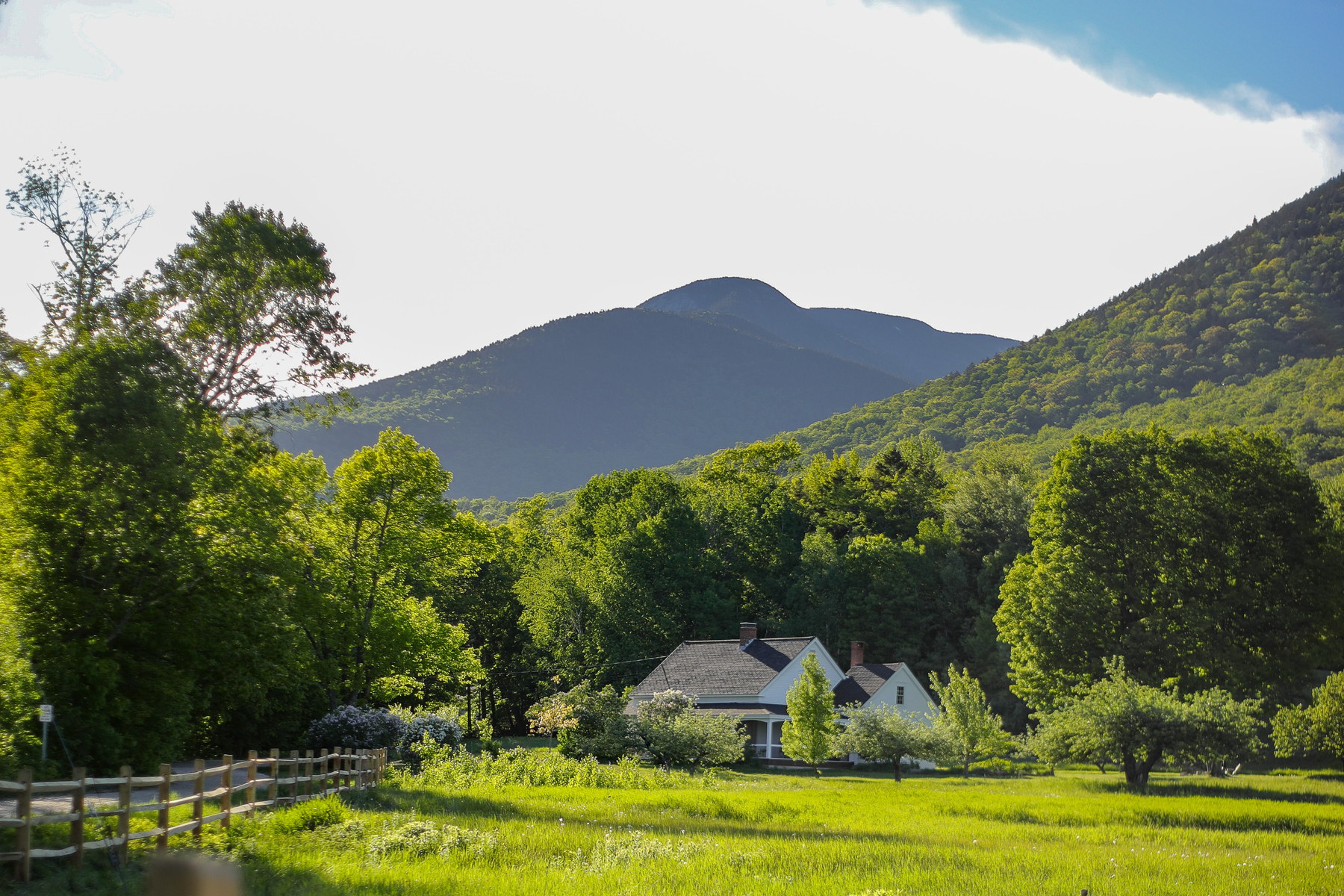
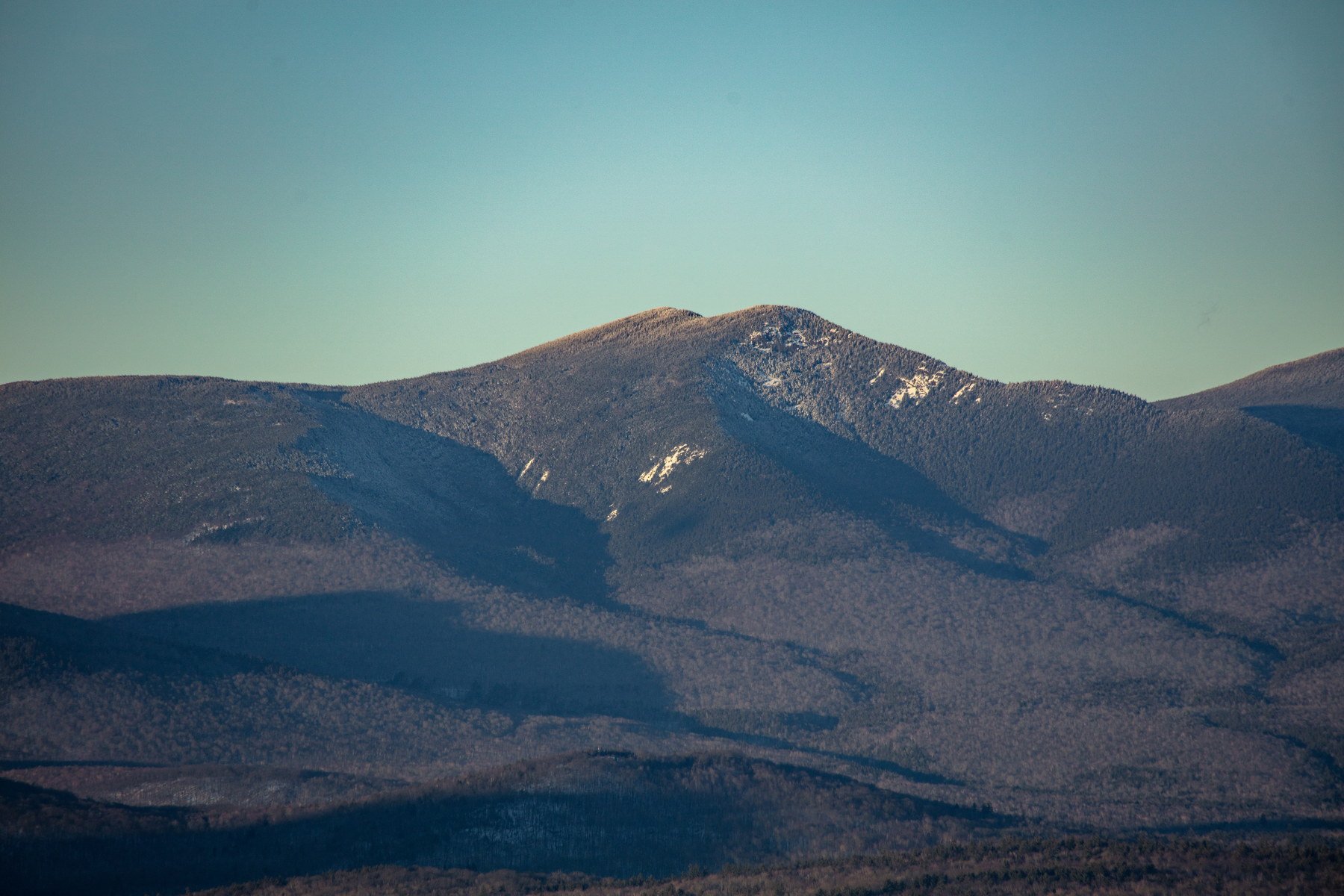
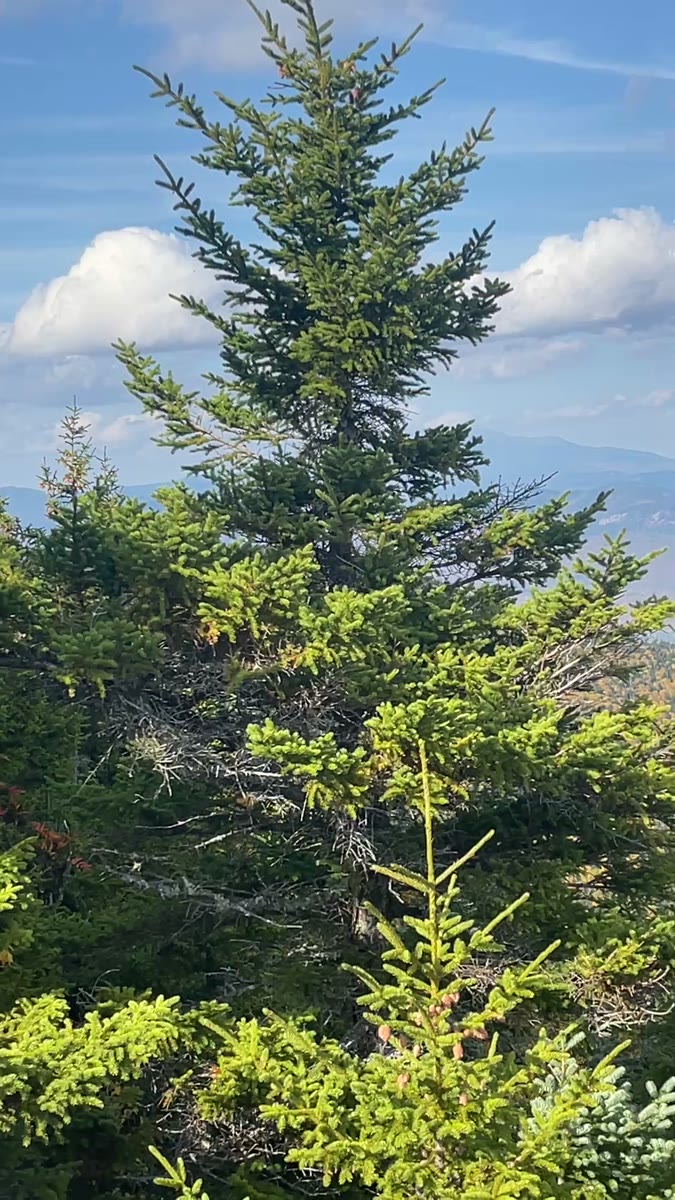
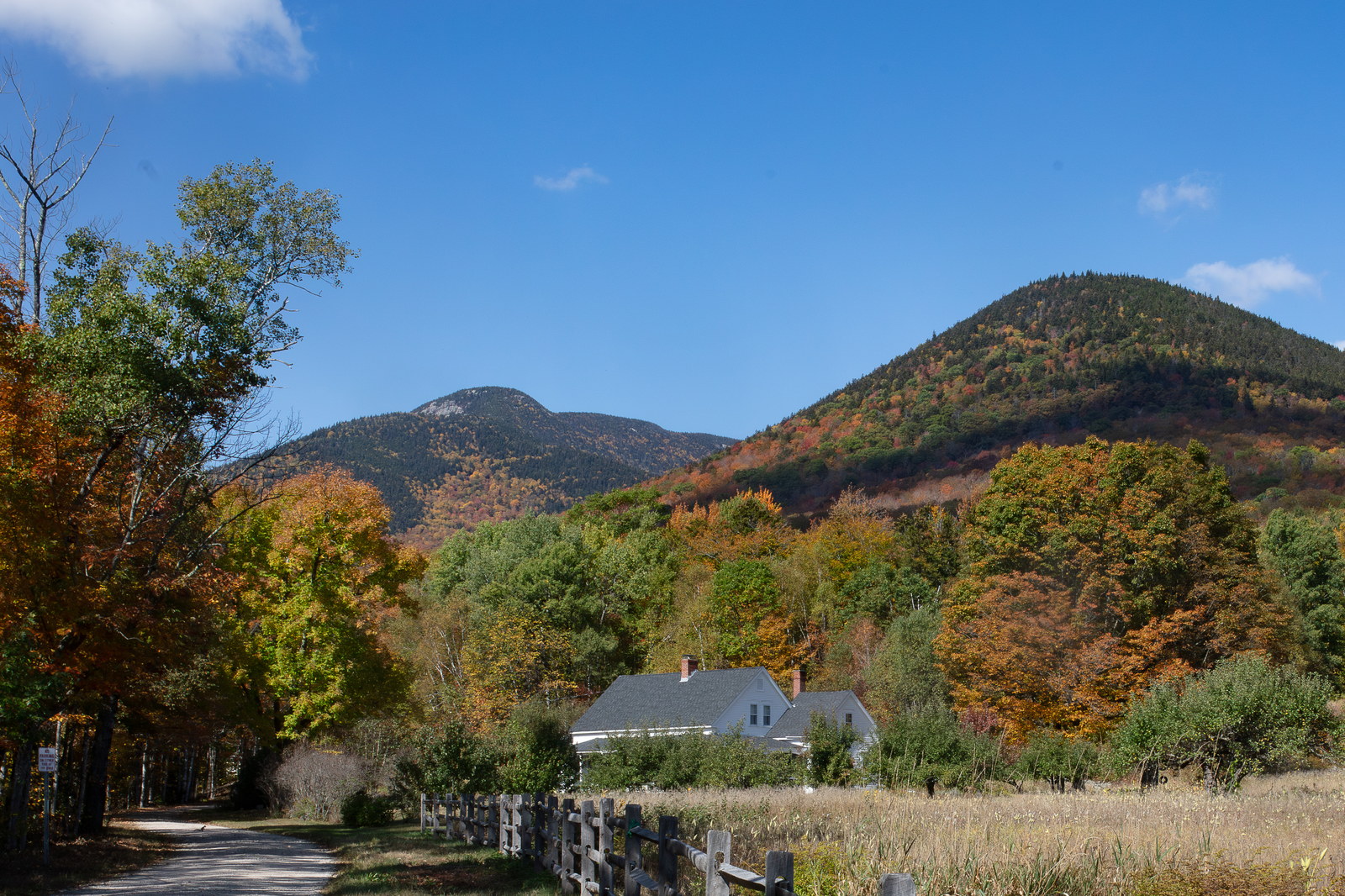
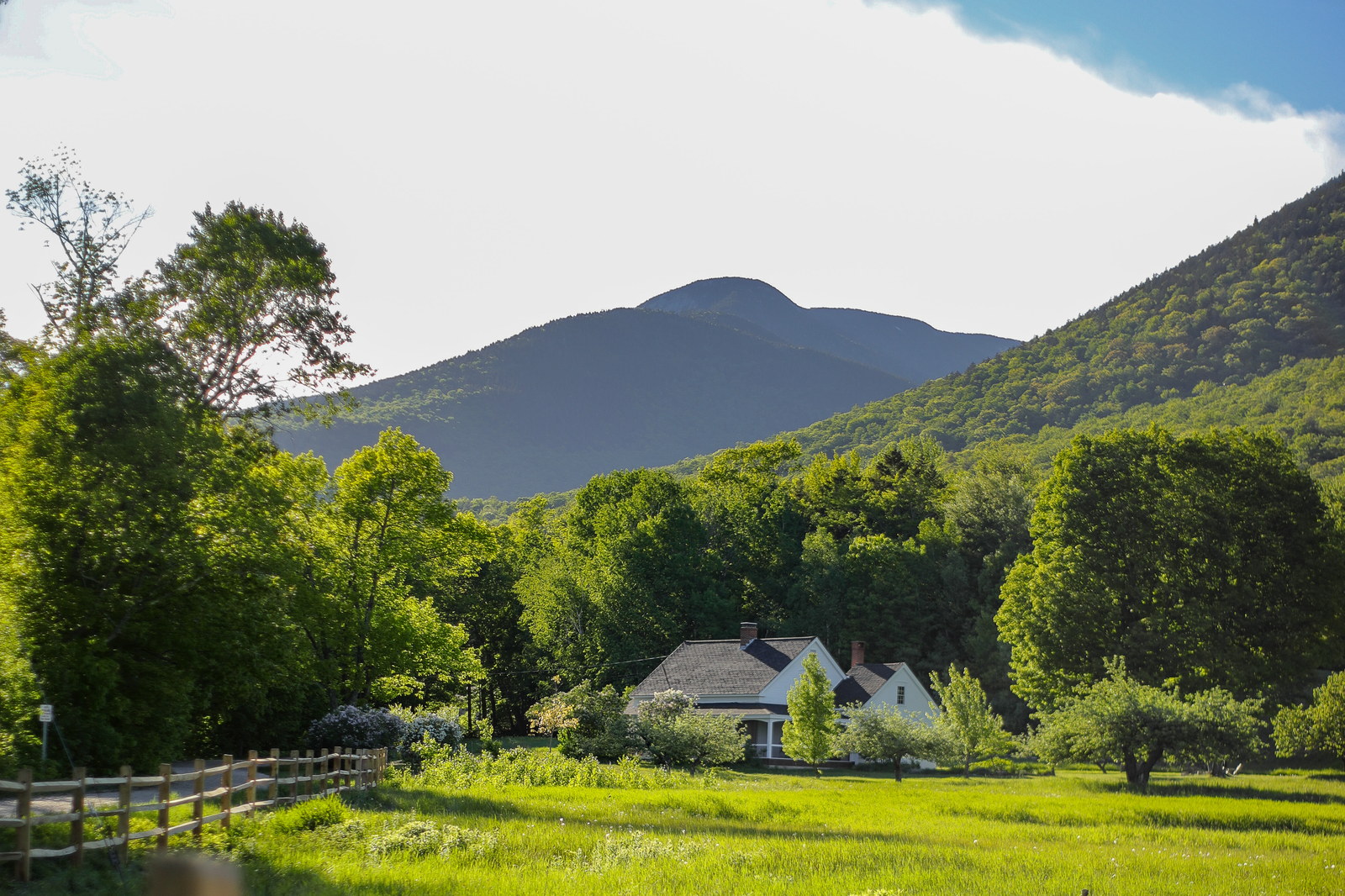
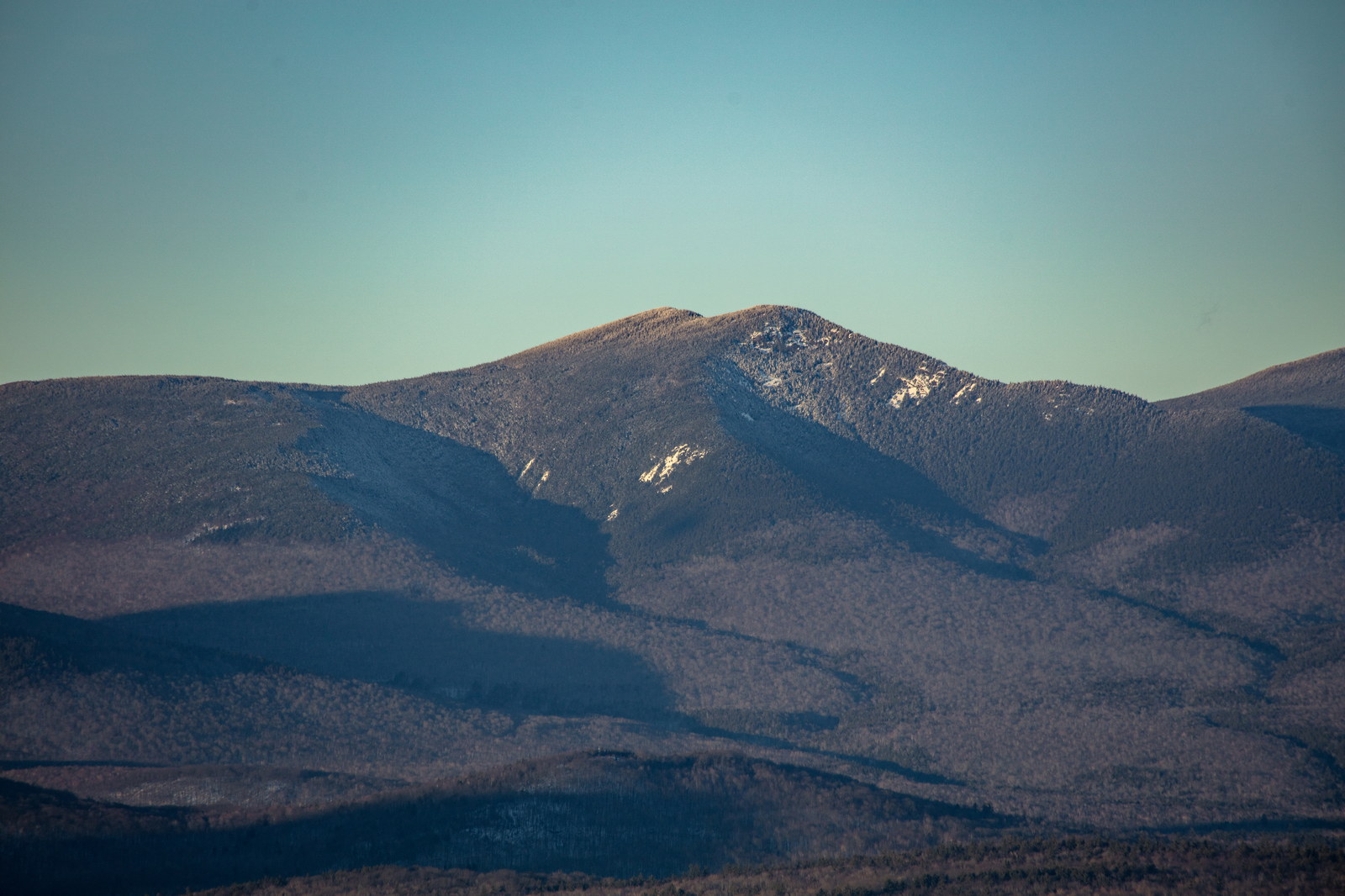
Mount Whiteface is a 4,020-foot mountain in the Sandwich Range of the White Mountains, straddling the border of Grafton and Carroll counties in New Hampshire. The mountain is named for the large white granite cliff on its southeast face. Mount Whiteface’s summit is wooded and marked by a cairn just off the trail with limited views, but just below the summit, open ledges on the Blueberry Ledge Trail provide expansive views south and east, including Lake Winnipesaukee and the Ossipee Range. Mount Whiteface is often climbed together with Mount Passaconaway to its north, and both peaks lie within the White Mountain National Forest’s Sandwich Range Wilderness. Mount Whiteface is a prominent peak in the Sandwich Range on the southern edge of the White Mountain region. The mountain takes its name from the large, pale granite cliff on its southeastern face – a feature so conspicuous that early settlers in the region referred to the mountain simply as “White Face.” The cliff, visible for miles (including from Lake Winnipesaukee), was a landmark for Native Americans and colonists traveling through the area. Mount Whiteface’s summit is wooded and marked by a modest cairn just off the trail, but just below the summit are open ledges (along the Blueberry Ledge Trail) that provide expansive views south and east, including Lake Winnipesaukee and the Ossipee Range. Historically, the Sandwich Range was one of the last sections of the White Mountains to be developed: in 1876 the “Sandwich and Waterville Railroad” was chartered but never built, so logging remained horse-and-sled based and was patchy. Some logging occurred around Whiteface in the late 1800s (especially the Drakes Brook drainage), but the steep cliffs protected much of the upper mountain. The area between Whiteface and Passaconaway, known as “The Bowl,” was never logged and today is an old-growth forest preserve. The first known ascent of Mount Whiteface was by Professor J.S. Woodman in 1832; he was scouting a route for a road (which never materialized). The Appalachian Mountain Club built the Blueberry Ledge Trail in 1899, opening the summit to hikers. At the same time, the Wonalancet Outdoor Club (founded 1892) created a network of trails on the mountain’s southern side. An interesting bit of human history on Whiteface: near the mountain’s foot was the homestead of Samuel “Sam” Livermore, a 19th-century hermit who lived there for 14 years (1820s–1830s) and claimed to have visions on the mountain – he’s sometimes called the “Sage of Whiteface.” Today, Mount Whiteface lies within the federally designated Sandwich Range Wilderness (since 1984), ensuring its cliffs and forests remain untouched. Hikers often combine Whiteface with Passaconaway in a single day – a route that traces the circumference of The Bowl. They may not realize it, but by doing so they circumnavigate one of New England’s most significant tracts of virgin timber, gazing out from Whiteface’s ledges on a landscape that, except for the absence of wolves and presence of distant farms, looks much as it did centuries ago.