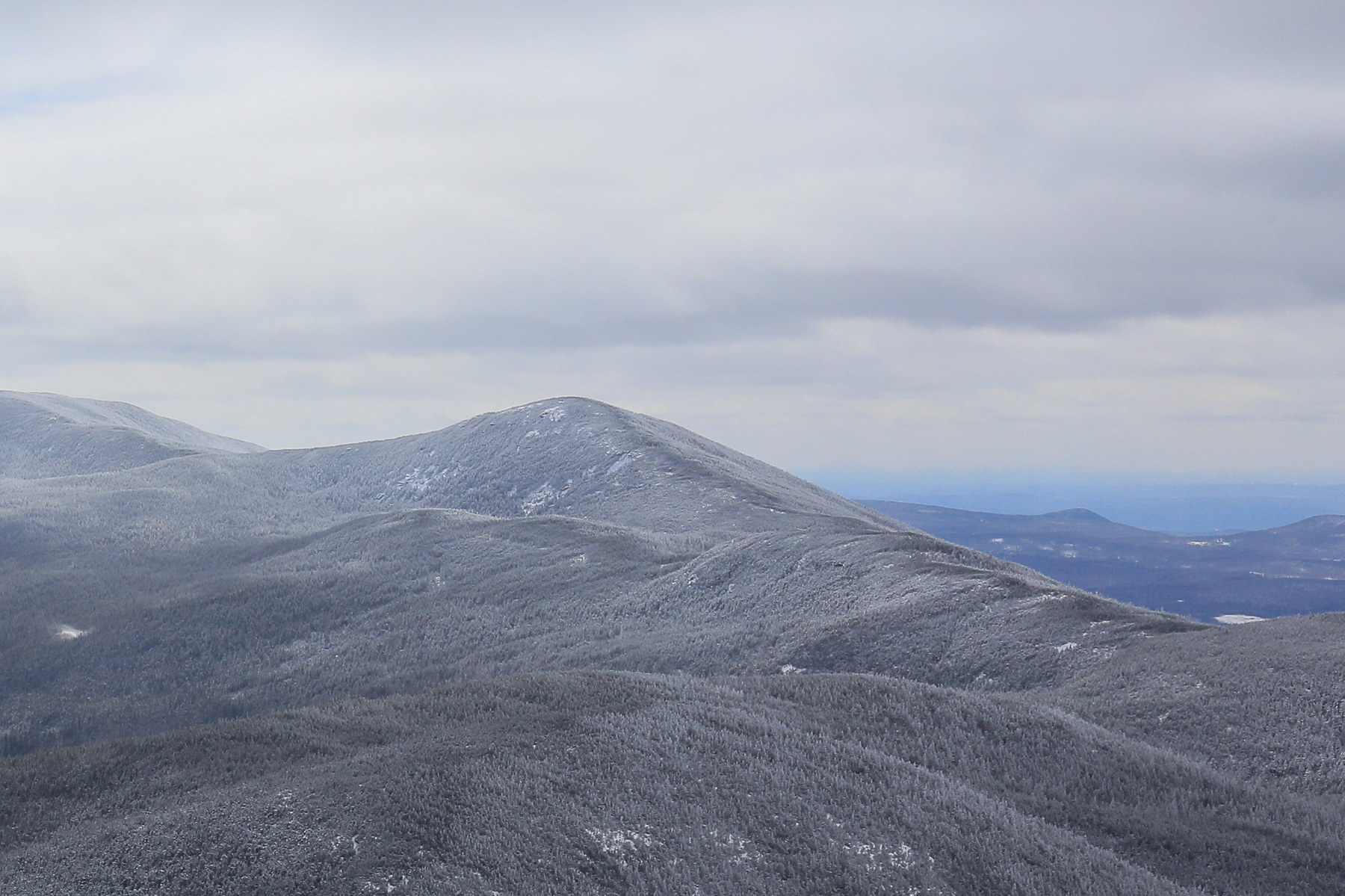
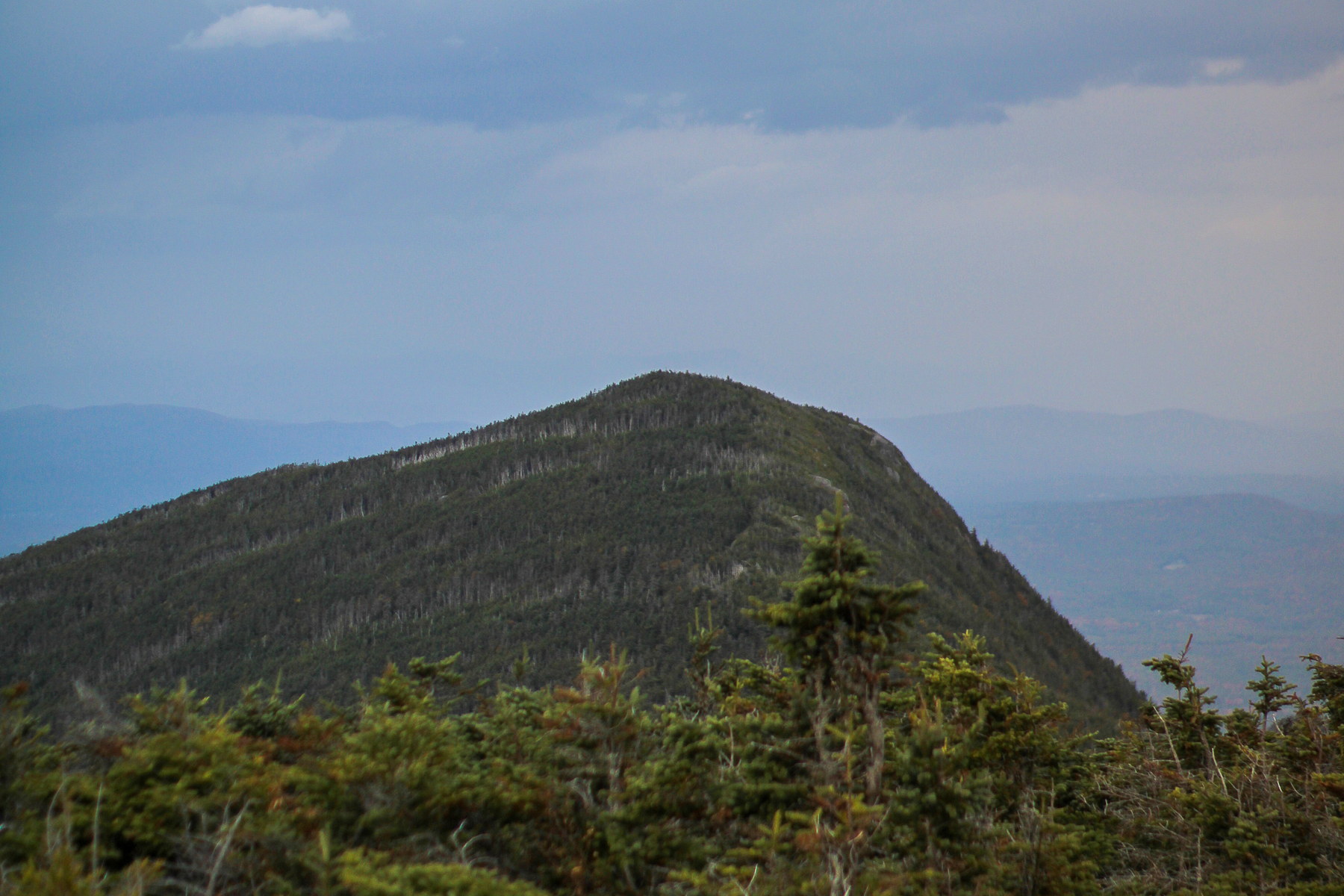
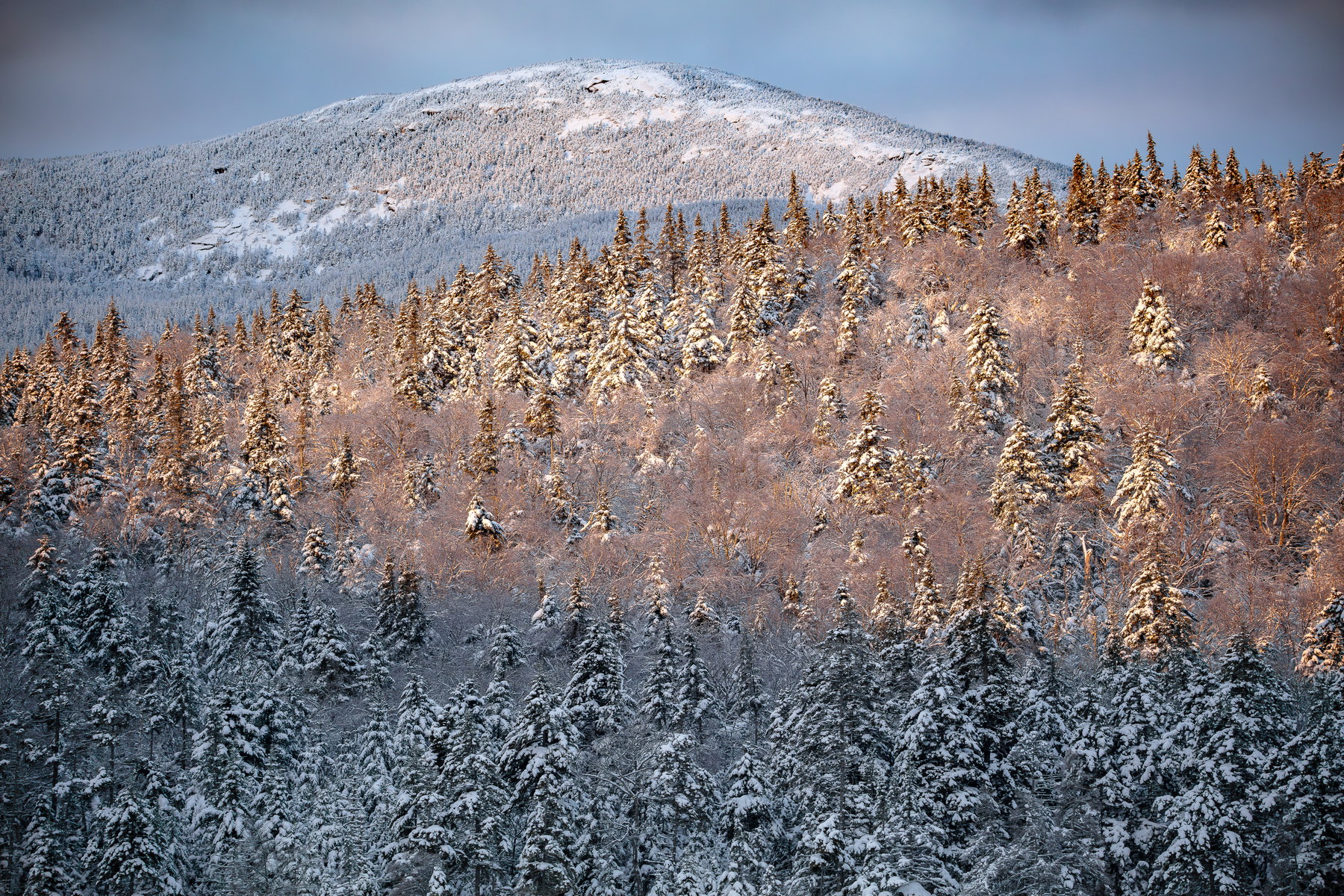
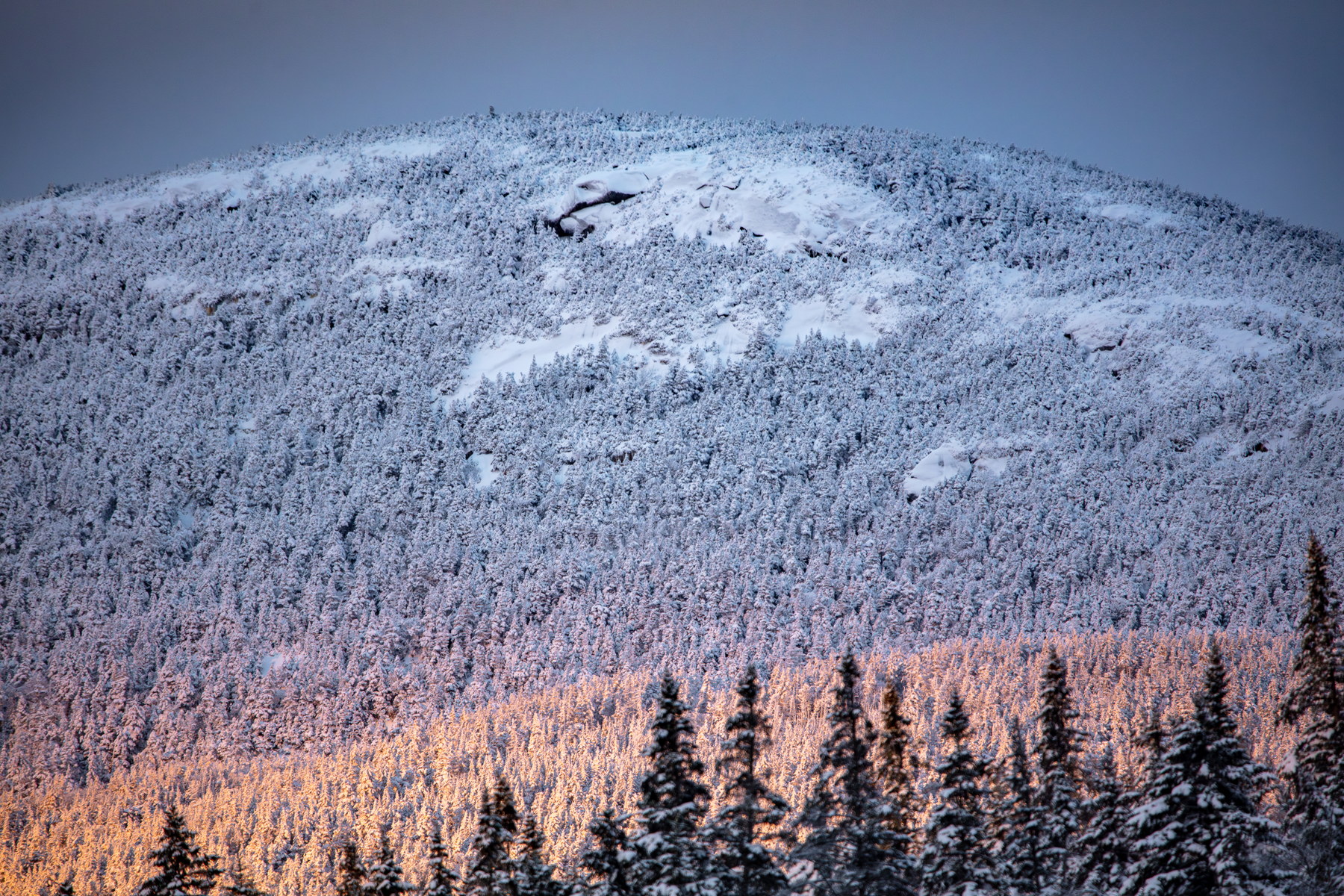
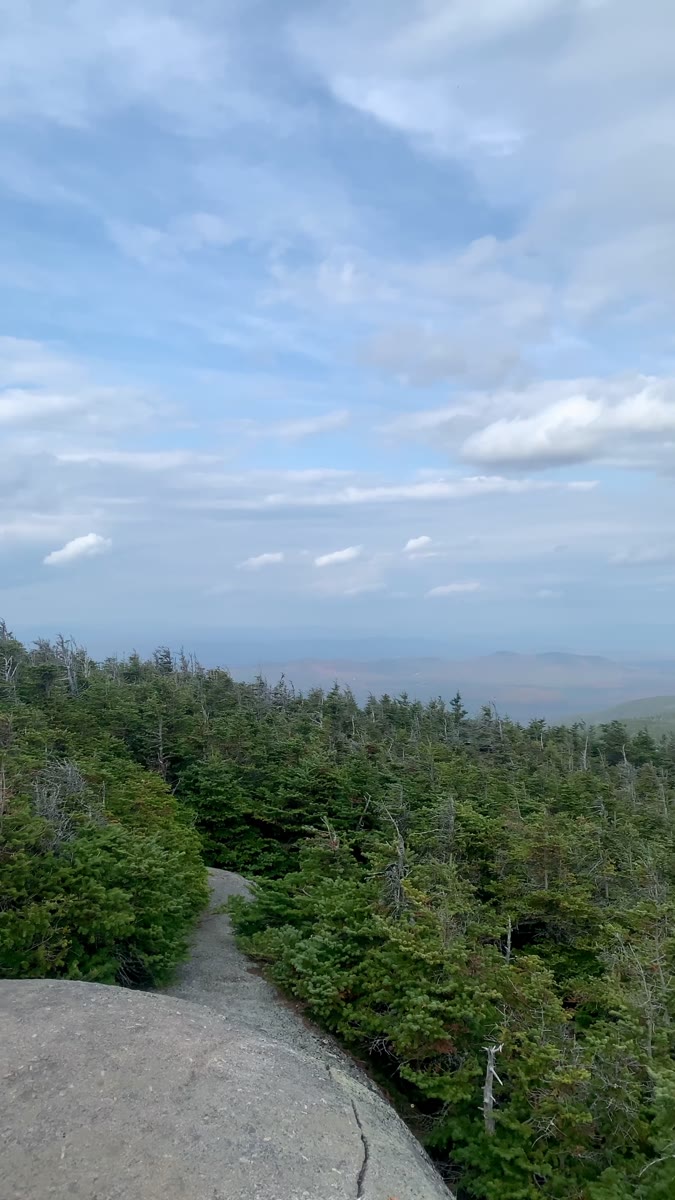
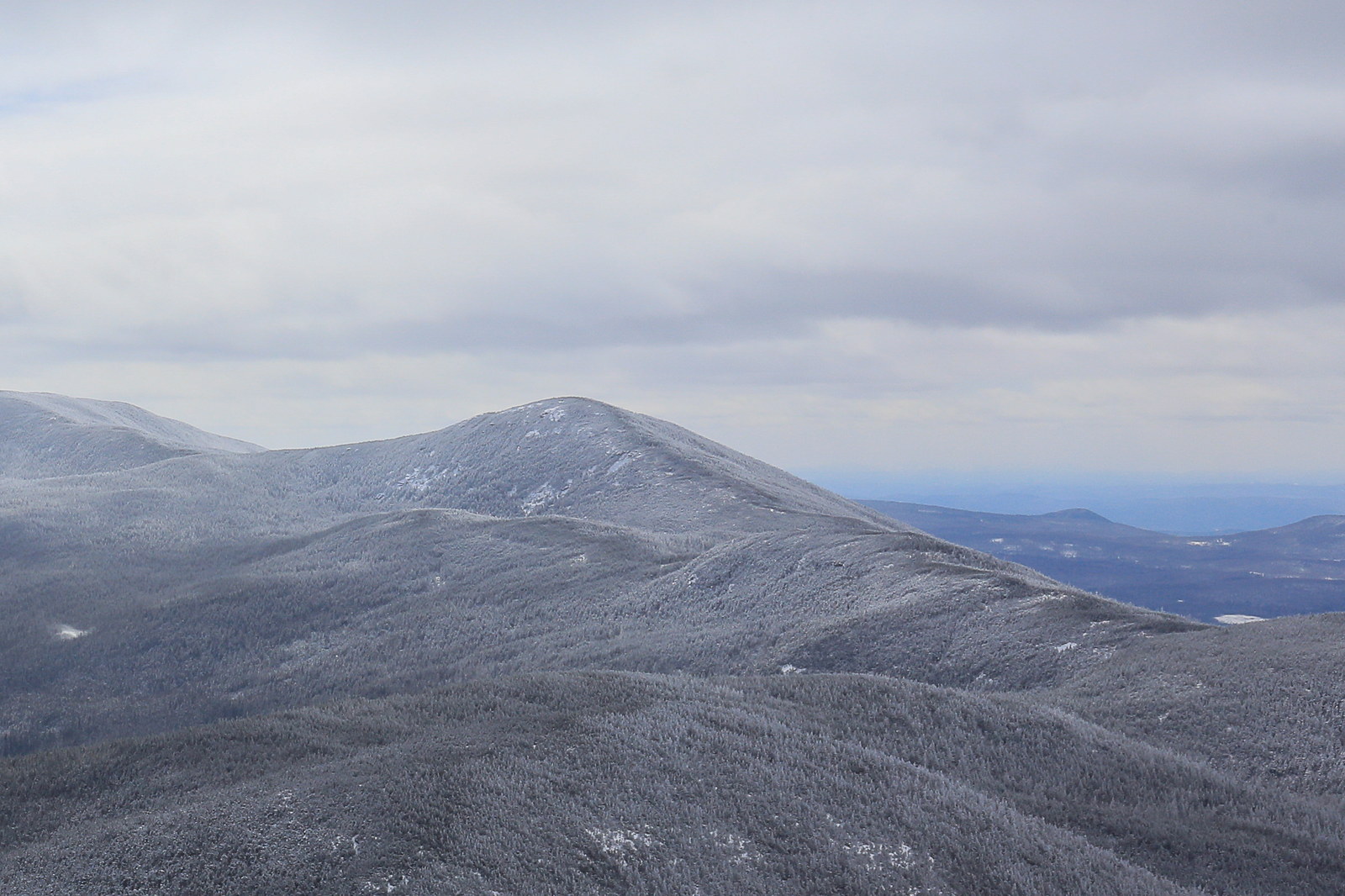
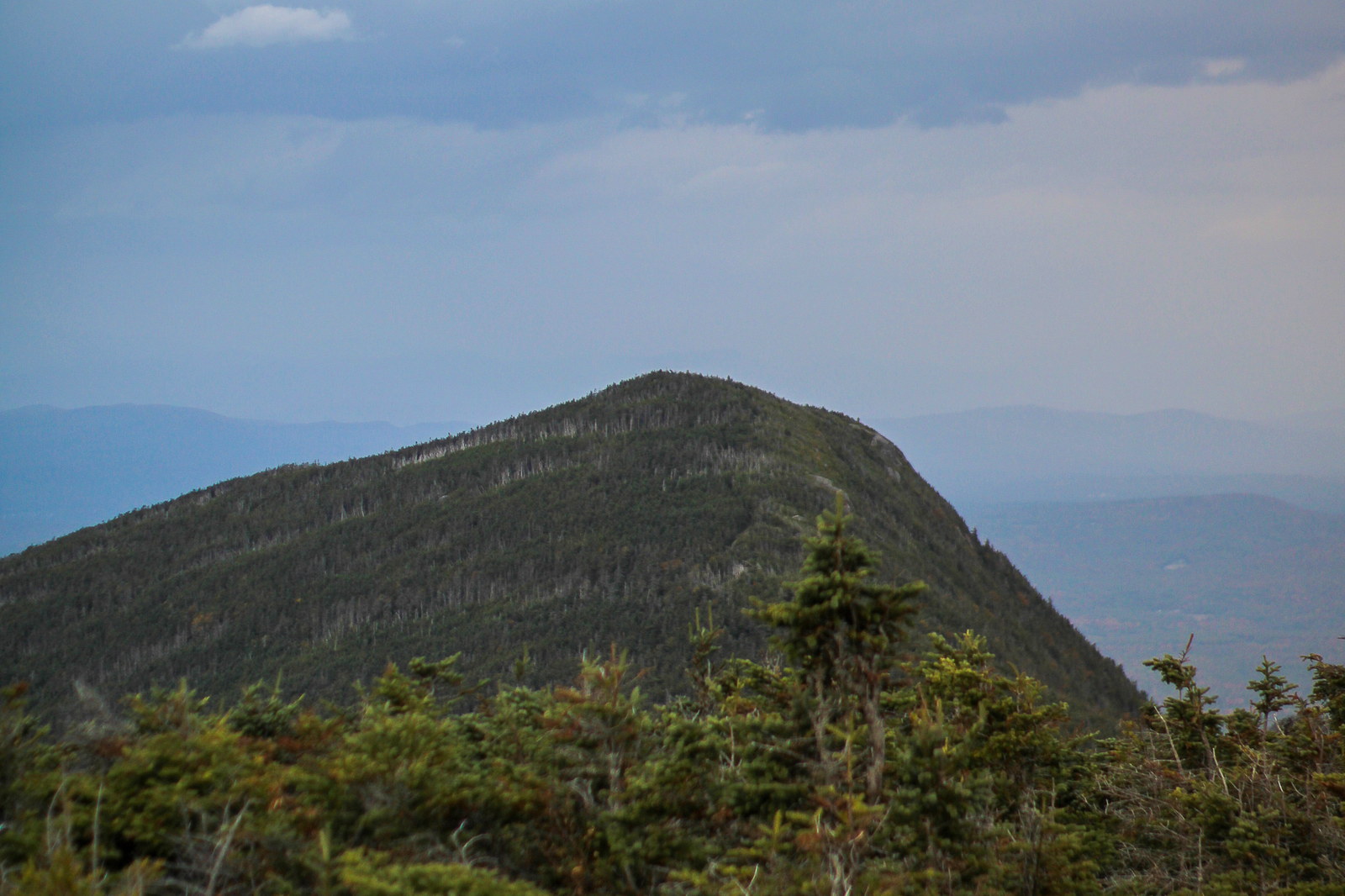
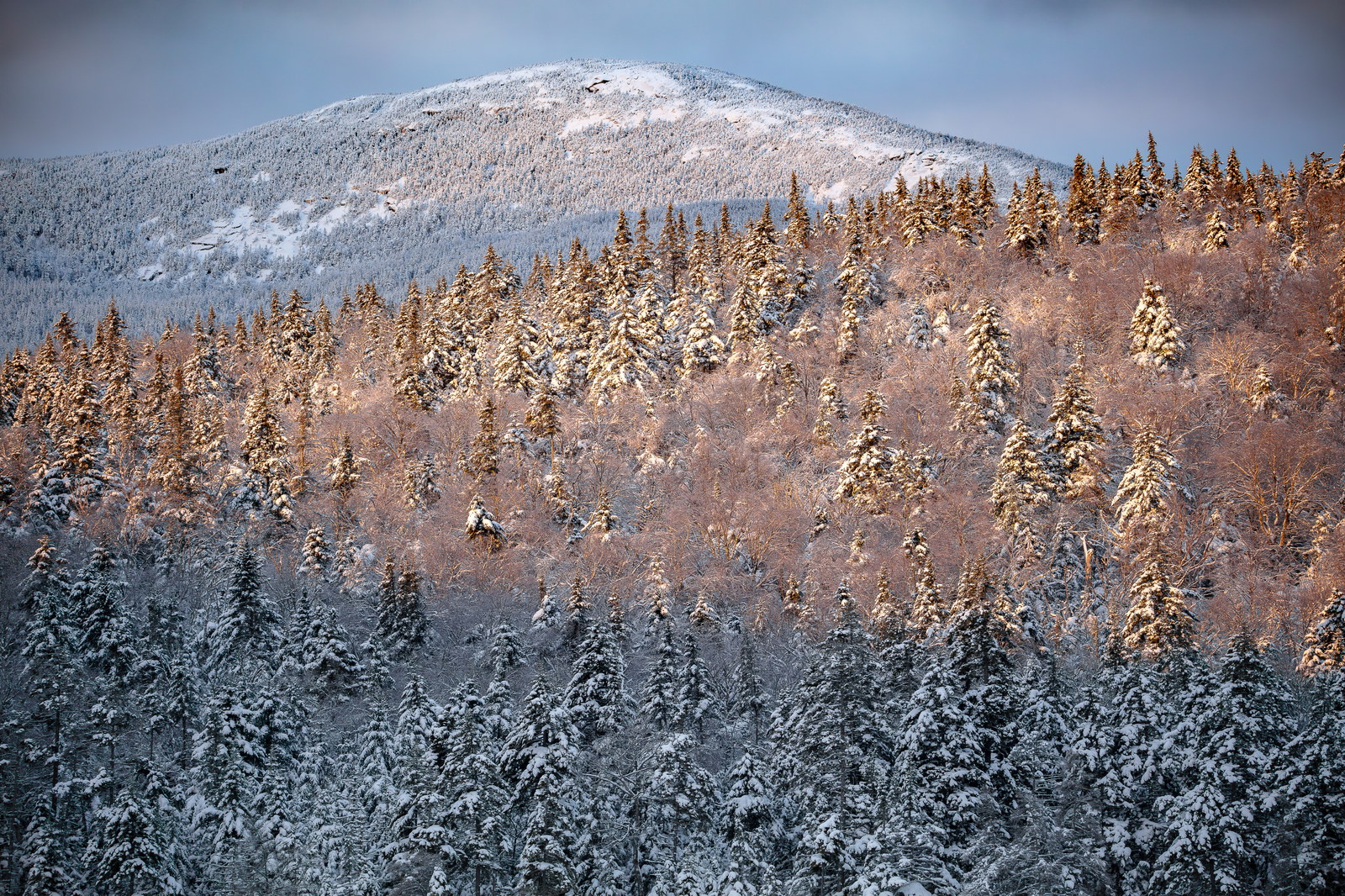
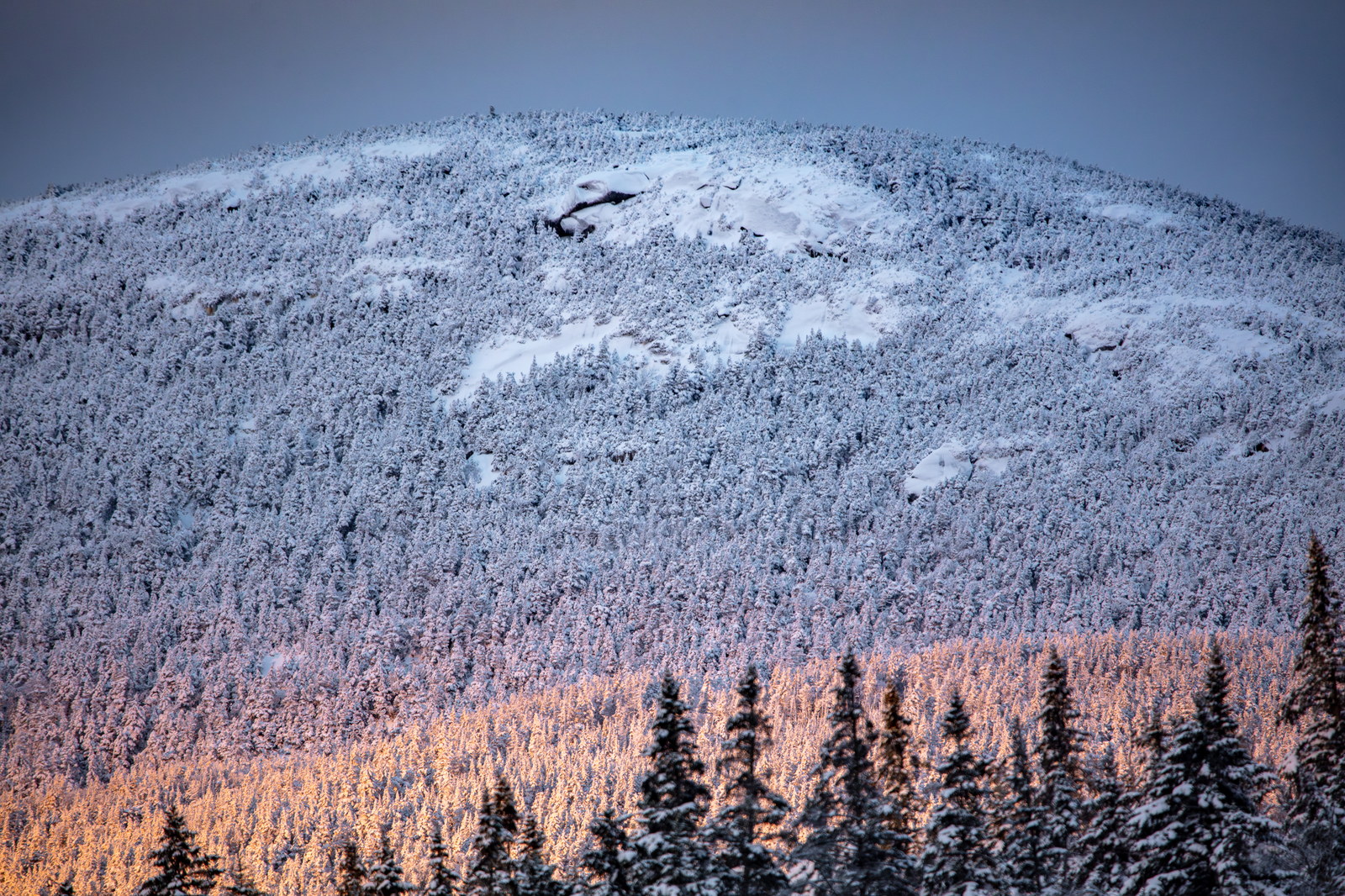
North Kinsman Mountain is a 4,293-foot peak in the Kinsman Range of the White Mountains, in Grafton County, New Hampshire. It is the lower of the two main summits of Kinsman Mountain (South Kinsman being higher). North Kinsman qualifies as a separate 4,000-footer due to the prominence between it and South Kinsman. The summit of North Kinsman is wooded and lacks a view, but a short bushwhack to ledges just east of the top reveals excellent views, including of Kinsman Pond below, South Kinsman nearby, and the opposing Franconia Ridge across the valley. North Kinsman is the lower of the two main Kinsman peaks, located just north of South Kinsman. It qualifies as a separate 4,000-footer due to the substantial drop between the summits. Both Kinsman Mountain peaks are named for Nathan Kinsman, an early settler of the area (specifically, the Kinsman family that settled in Easton, NH in the late 18th century). The name was in local use by the early 1800s; for example, Kinsman Notch to the south appears on maps by 1810, likely referencing the same family. North Kinsman’s summit is wooded and lacks a natural view, but hikers have long ventured a few yards off-trail to an open ledge that reveals a stunning vista. Below lies Kinsman Pond, and across the valley stands Franconia Ridge with the sheer cliffs of Cannon Mountain. This viewspot was known even to 19th-century travelers who took the stage through Franconia Notch – they could look up and see the Kinsman cliffs and slides resulting from early logging. The area around Kinsman Pond was logged around the turn of the 20th century via the Kinsman Notch Railroad (built 1909) and the Kinsman Pond Camps provided shelter for loggers. By 1916, the logging was done and the forest began regrowth under the Forest Service. In the 1930s, the Civilian Conservation Corps built the first Kinsman Pond Shelter for hikers, establishing North Kinsman as a destination on the AT (the Appalachian Trail ran over Kinsman until the 1950s). Today, North Kinsman sees steady traffic from hikers doing the “Kinsman Ridge Traverse.” While its summit sign and small cairn sit in quiet woods, just a short scramble away one can contemplate two centuries of change – from pioneer homesteads, to logging, to wilderness – all visible in the panorama from that ledge.