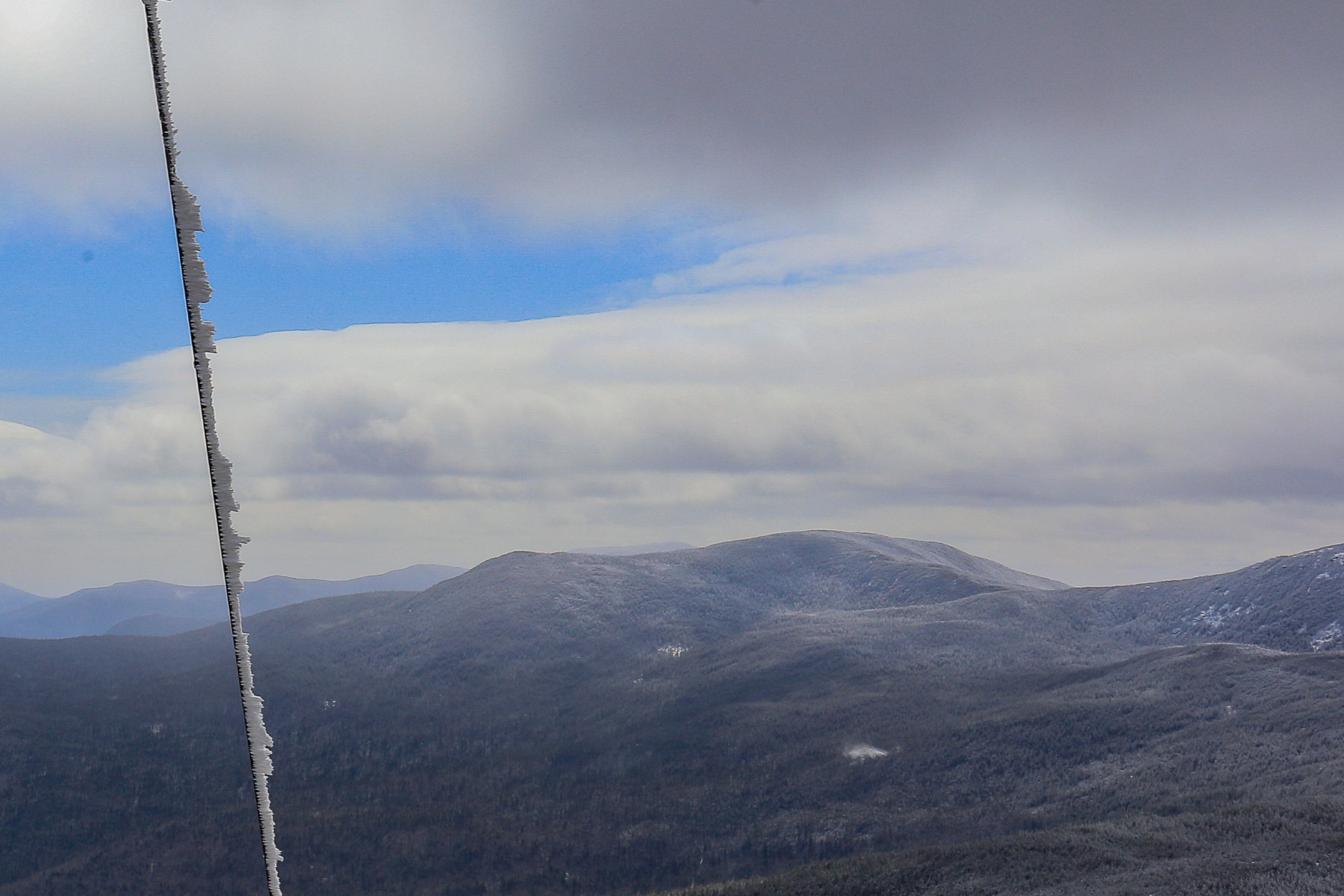
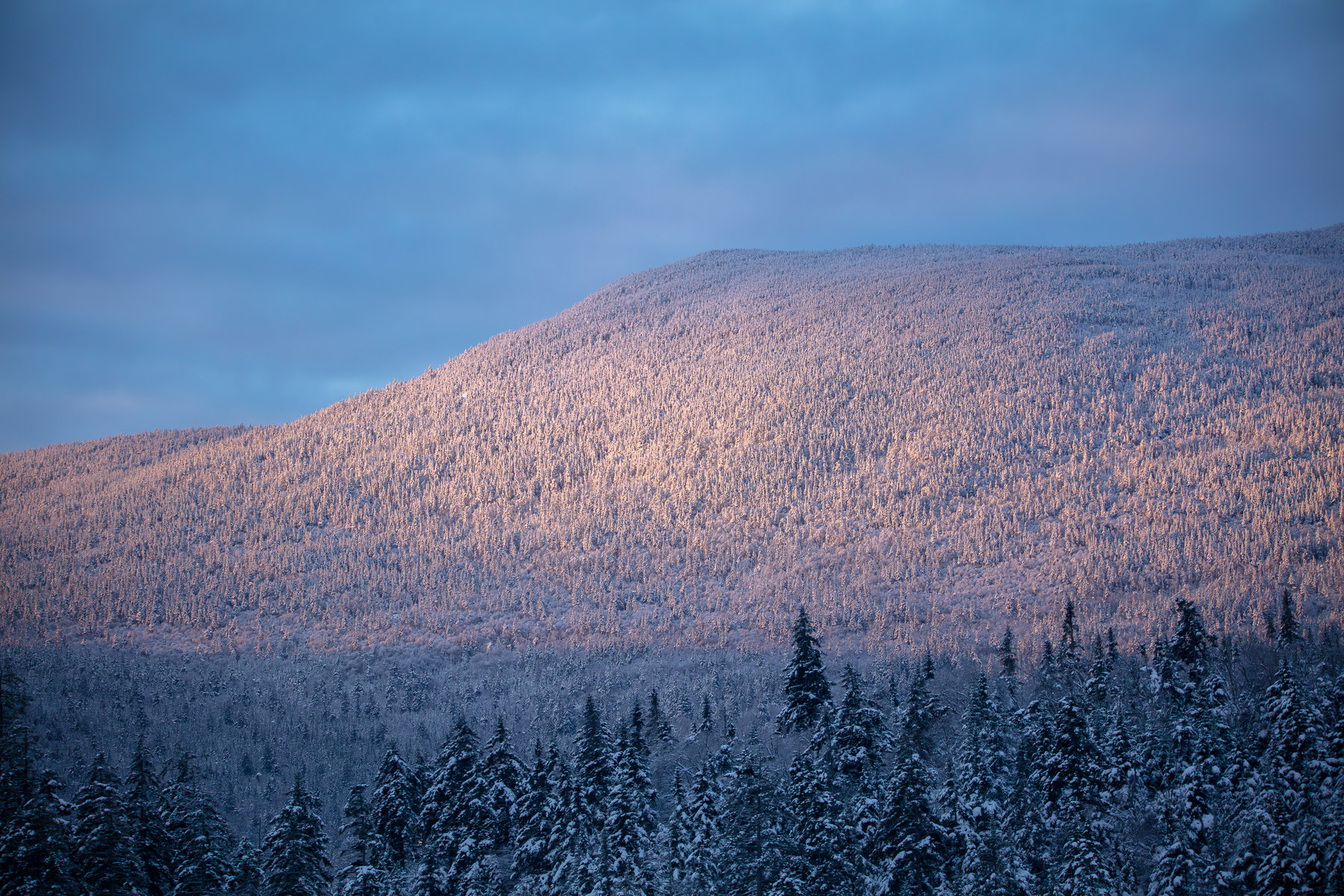
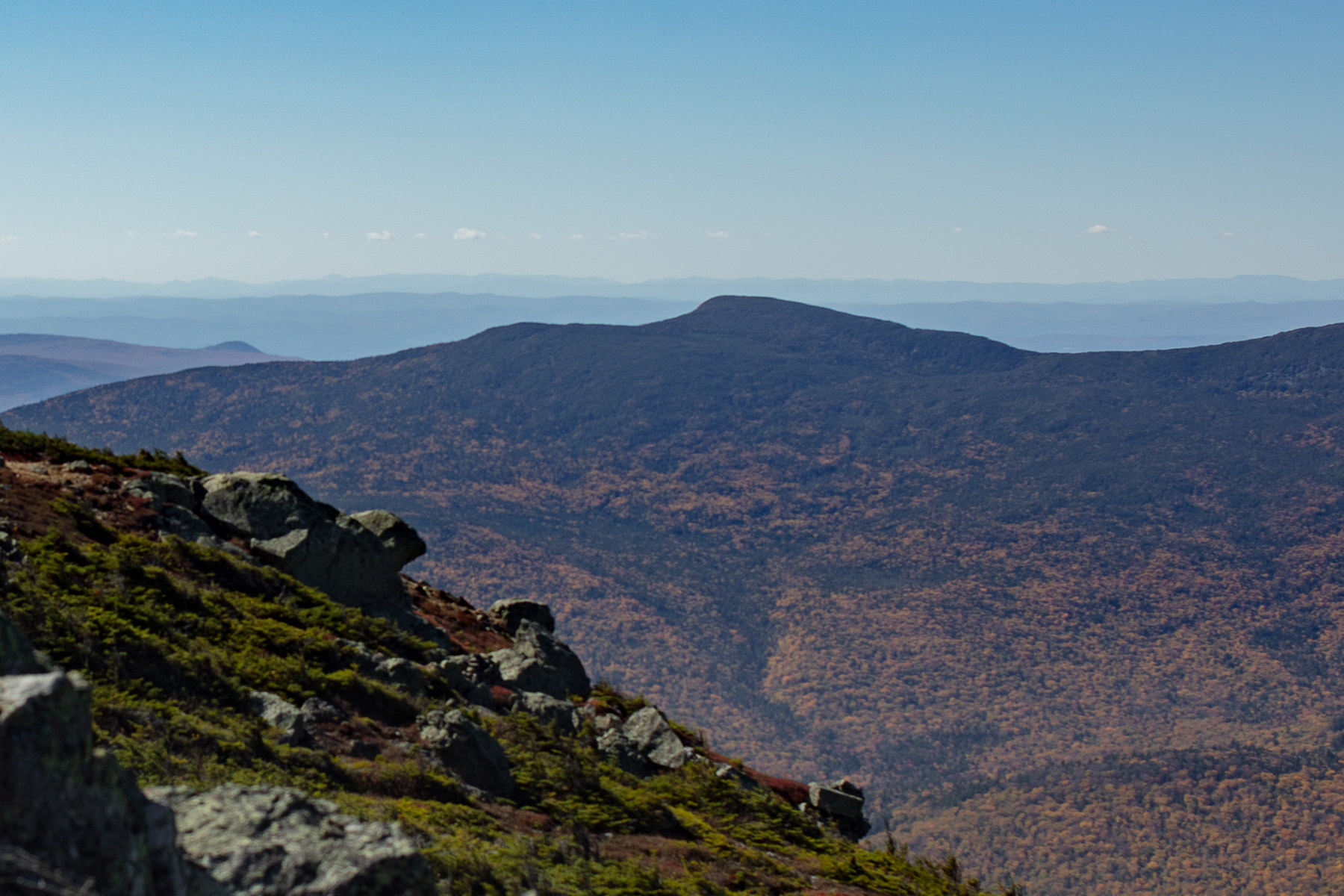
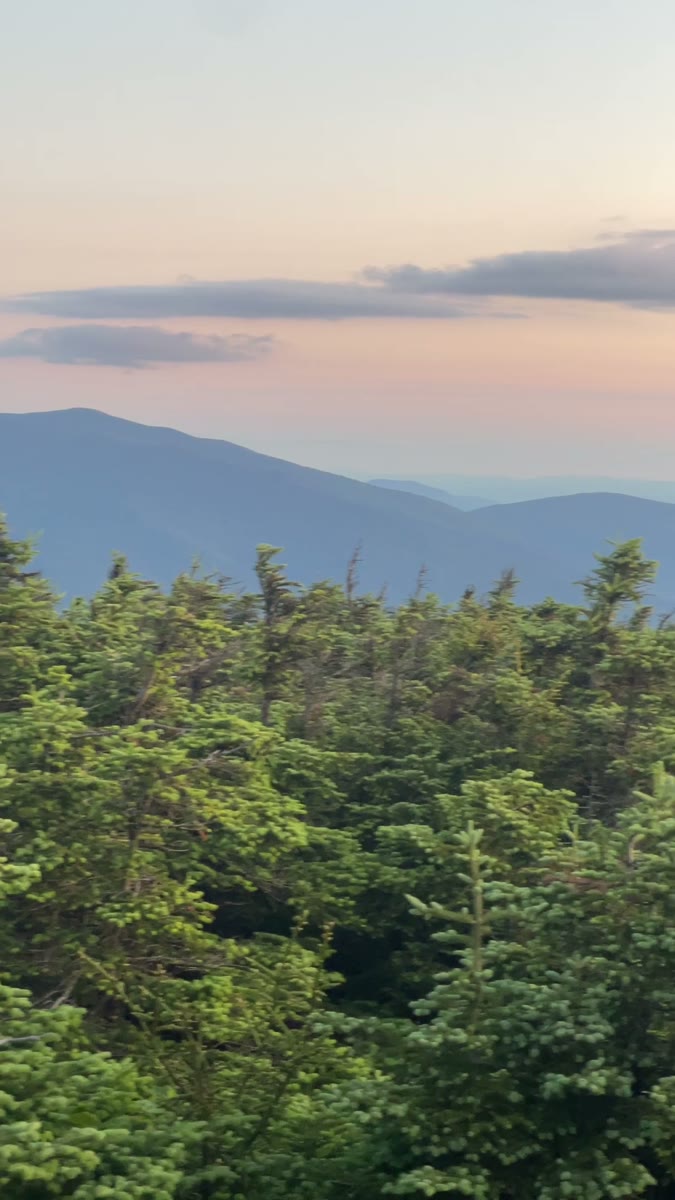
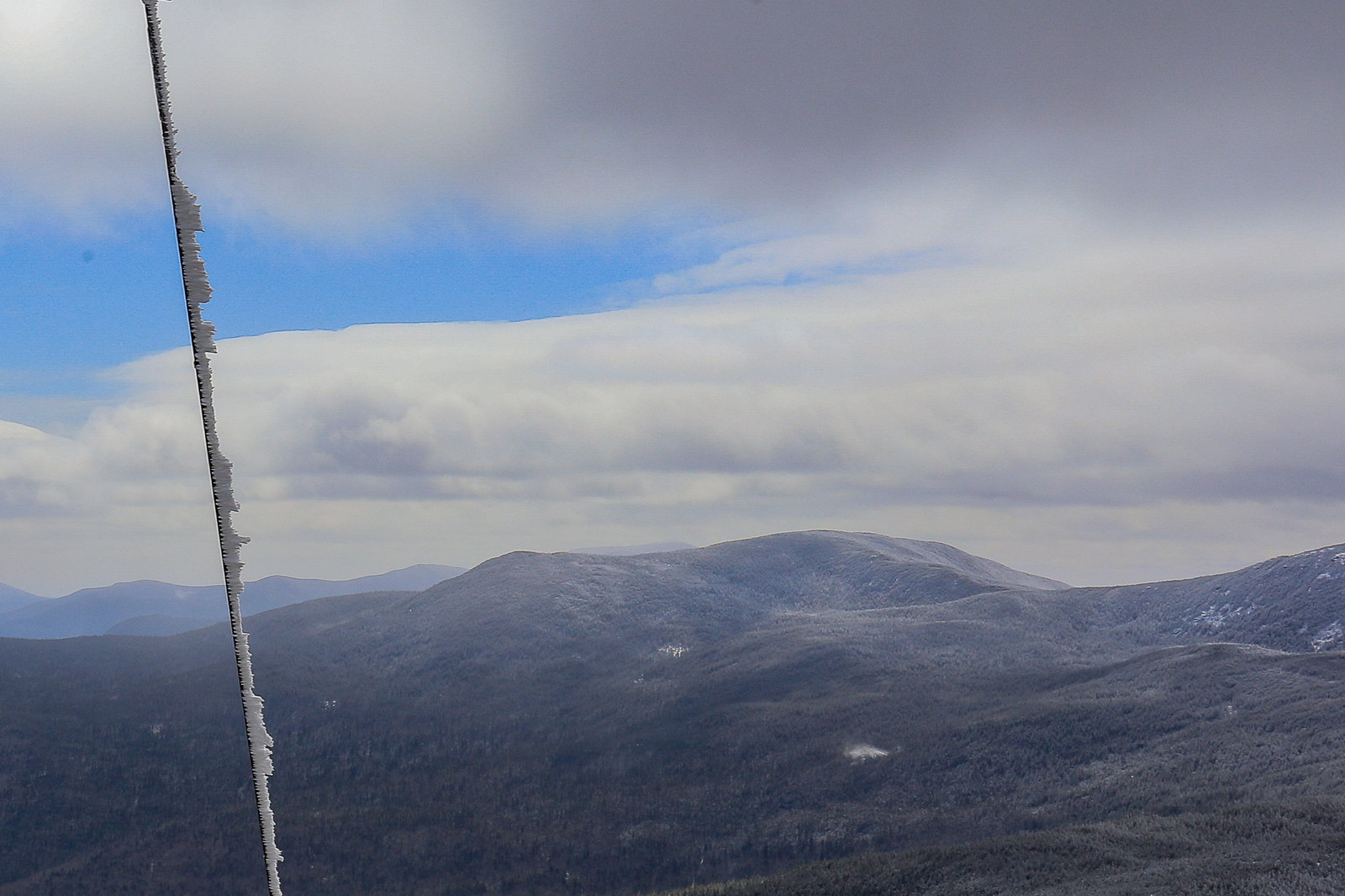
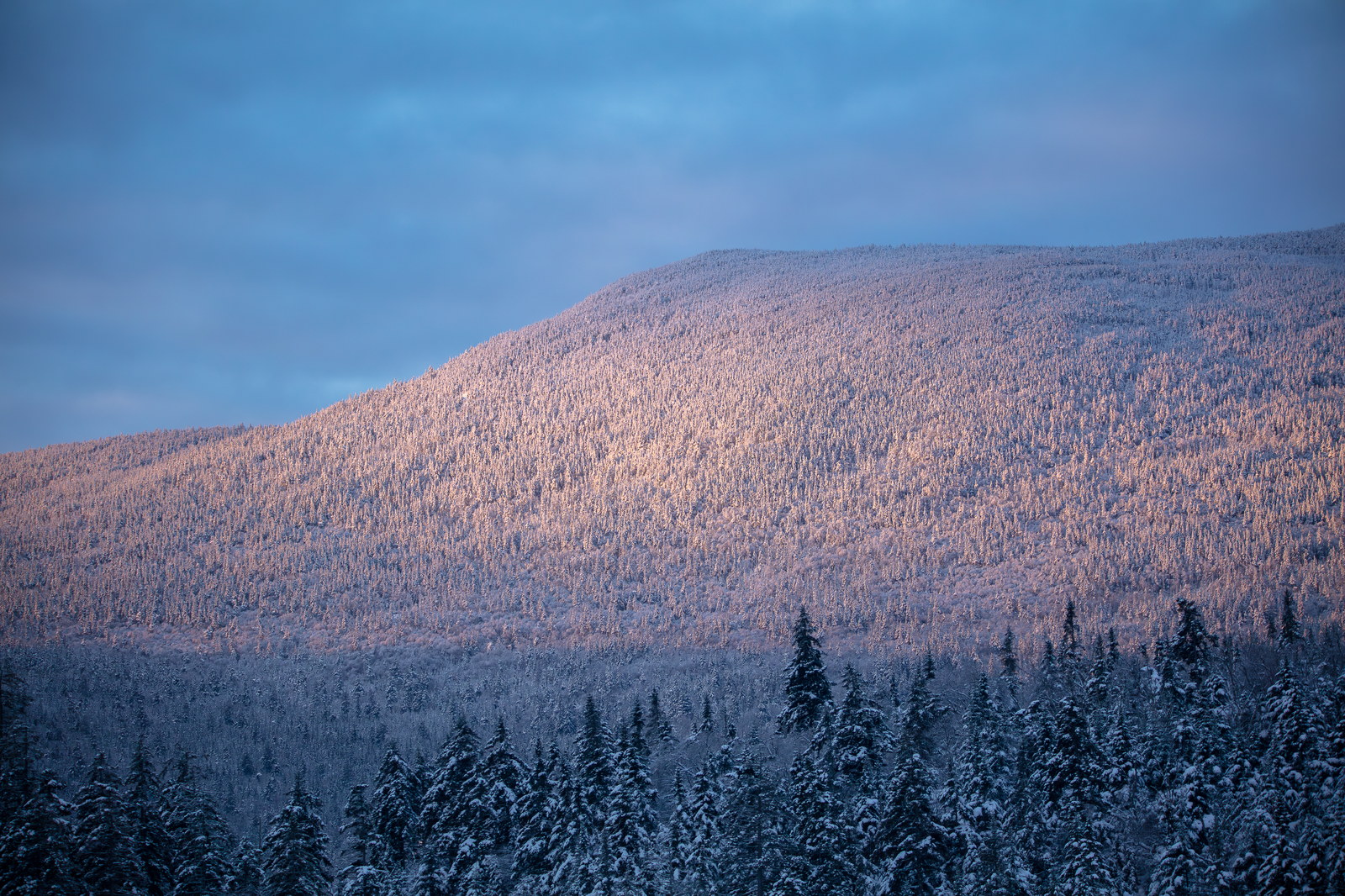
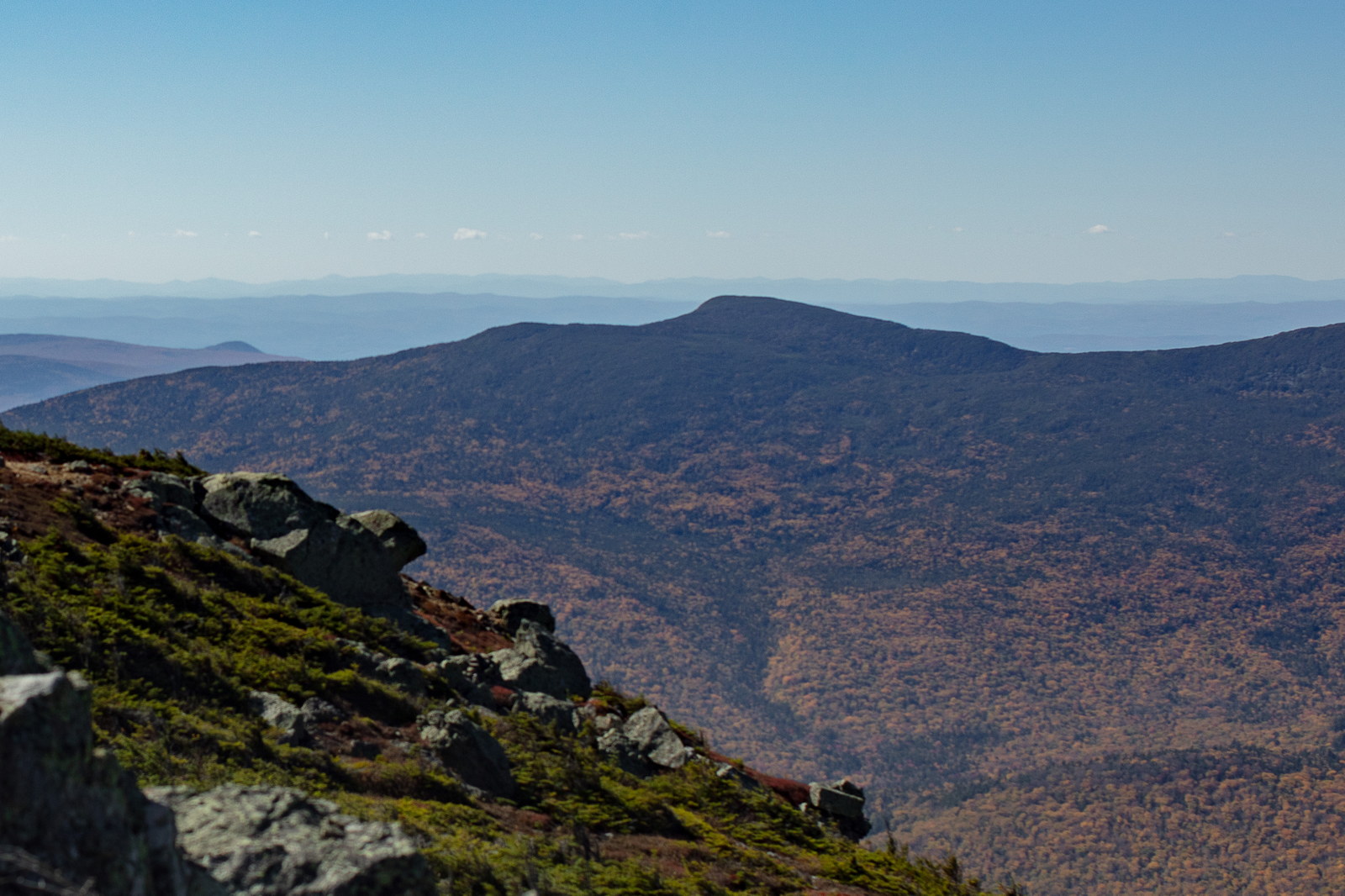
South Kinsman Mountain is a 4,358-foot mountain in Grafton County, New Hampshire. It is the higher of the two main peaks of Kinsman Mountain, which is part of the Kinsman Range in the White Mountains. South Kinsman is the sixth most prominent peak in the White Mountains and marks the highest point between Franconia Notch and Kinsman Notch. The summit is mostly open with scrub vegetation, offering expansive views westward and into the Franconia Range. South Kinsman, together with North Kinsman, is considered one of the New Hampshire 4,000-footers since the two peaks are separated by enough elevation drop to qualify individually. South Kinsman is the higher of the two main peaks of Kinsman Mountain, which straddles the towns of Lincoln and Easton west of Franconia Notch. The Kinsman peaks are named for Nathan Kinsman, an early 19th-century resident of Easton, New Hampshire. The Kinsman family were among the first settlers in that area (Easton was once known as “Kinsman” after Nathan’s family). South Kinsman’s expansive cone is mostly open rock and scrub, offering excellent views westward into Vermont and south along the Blue Ridge of New Hampshire. The mountain also marks the highest point between Franconia Notch and Kinsman Notch. Historically, a bridle path existed in Kinsman Notch as early as the 1830s (the route of today’s Lost River Gorge road), but the Kinsman peaks themselves remained trailless until the early 1900s. In 1902, the AMC constructed the Kinsman Ridge Trail, linking the Kinsmans to Cannon Mountain. South Kinsman was a highlight of this new ridge route. Logging reached high on the mountain’s sides in the late 19th century – especially on the west (Easton) side, where the copper mines of Loon Mountain needed lumber for smelting, and on the east side around Cascade Brook. But the summit ridge’s hardy krummholz was never cut. One interesting historical footnote: in the mid-20th century, the Forest Service considered placing a fire tower on South Kinsman due to its commanding view, but opted for a lower site. Instead, South Kinsman remained wild, and in 1974, the nearby Kinsman Pond Shelter was built to host overnight hikers, reinforcing the peak’s role as a backcountry destination. Today, those who climb South Kinsman can reflect on how the Kinsman name links colonial settler history with the natural history of the mountains.