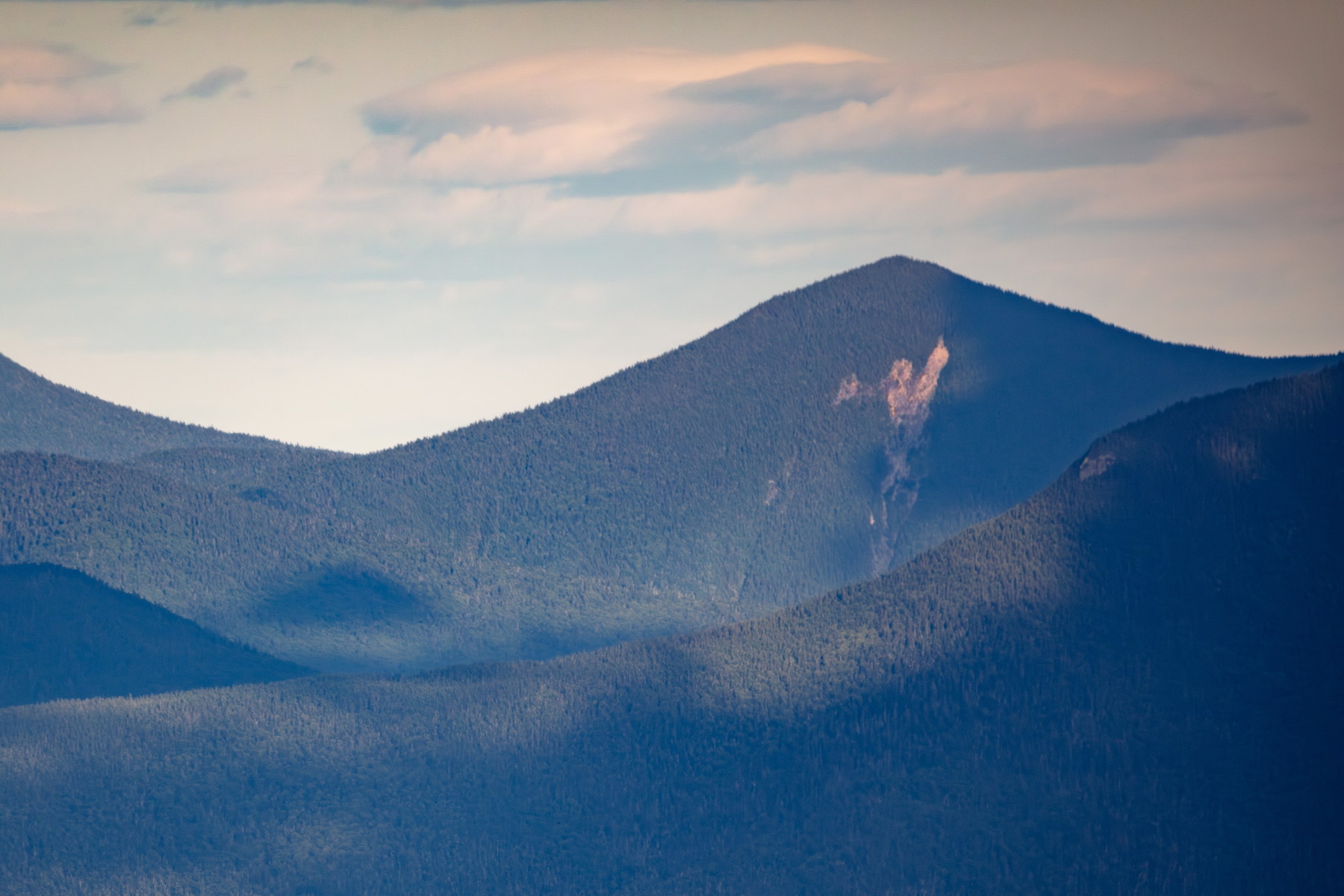
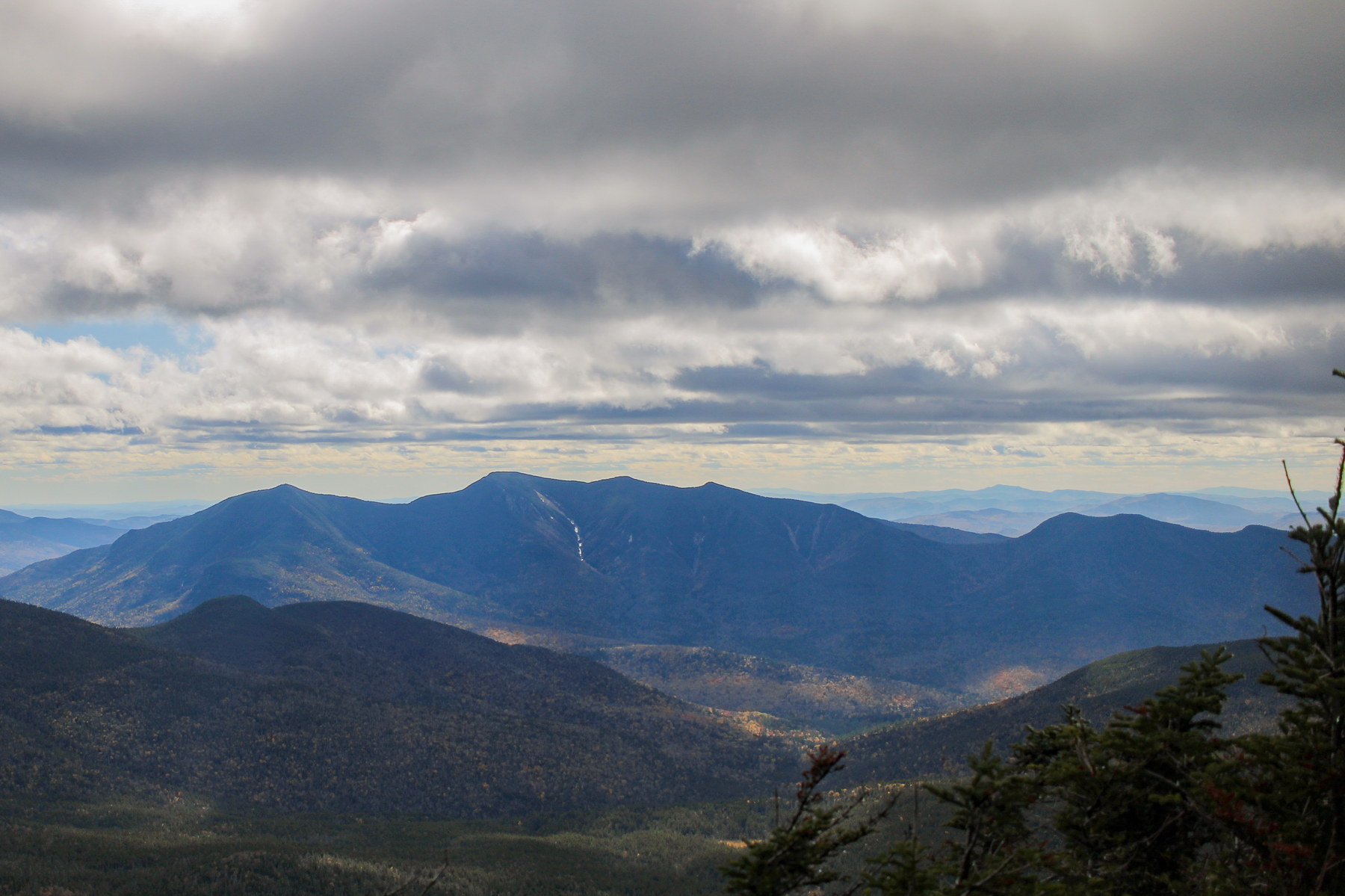
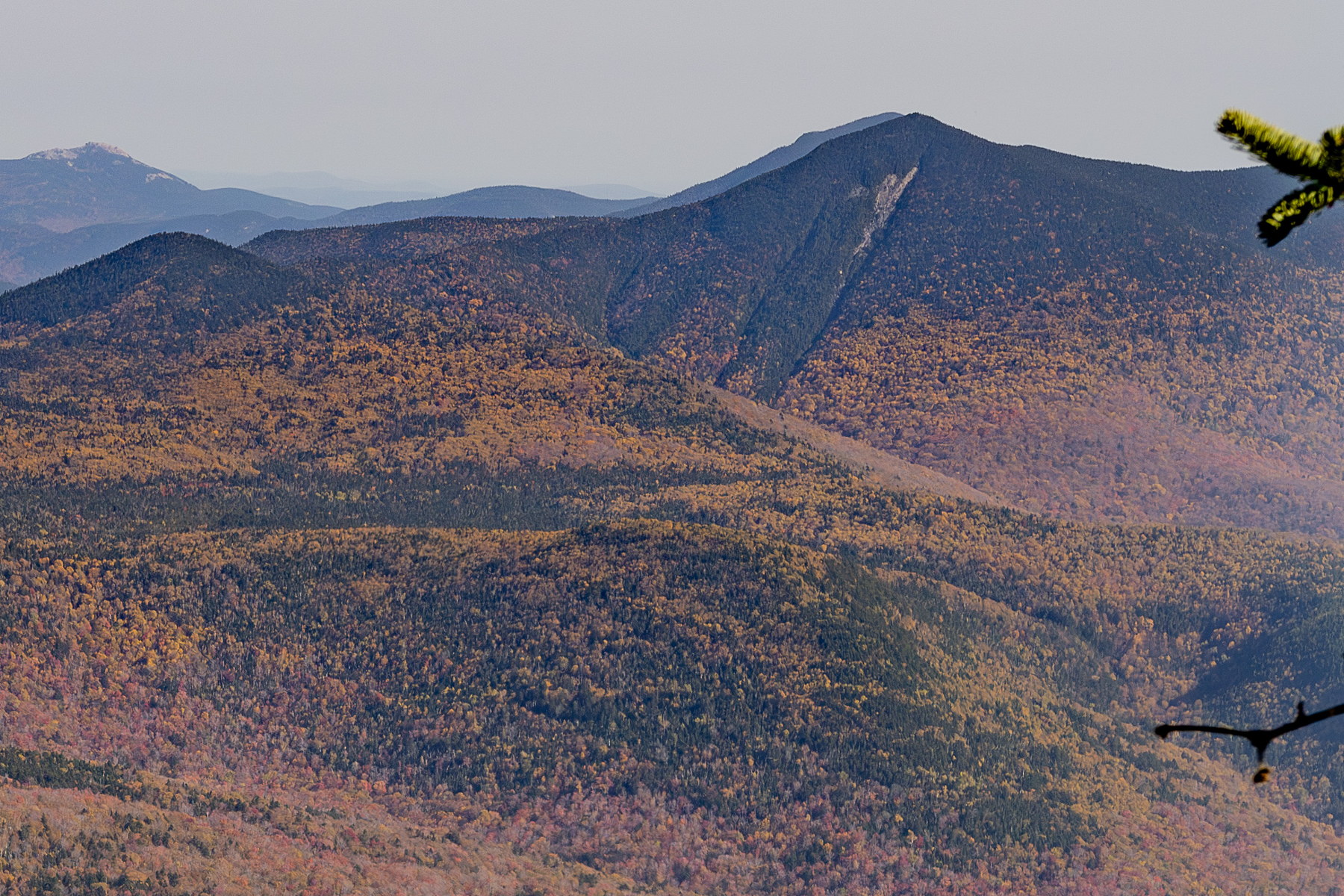
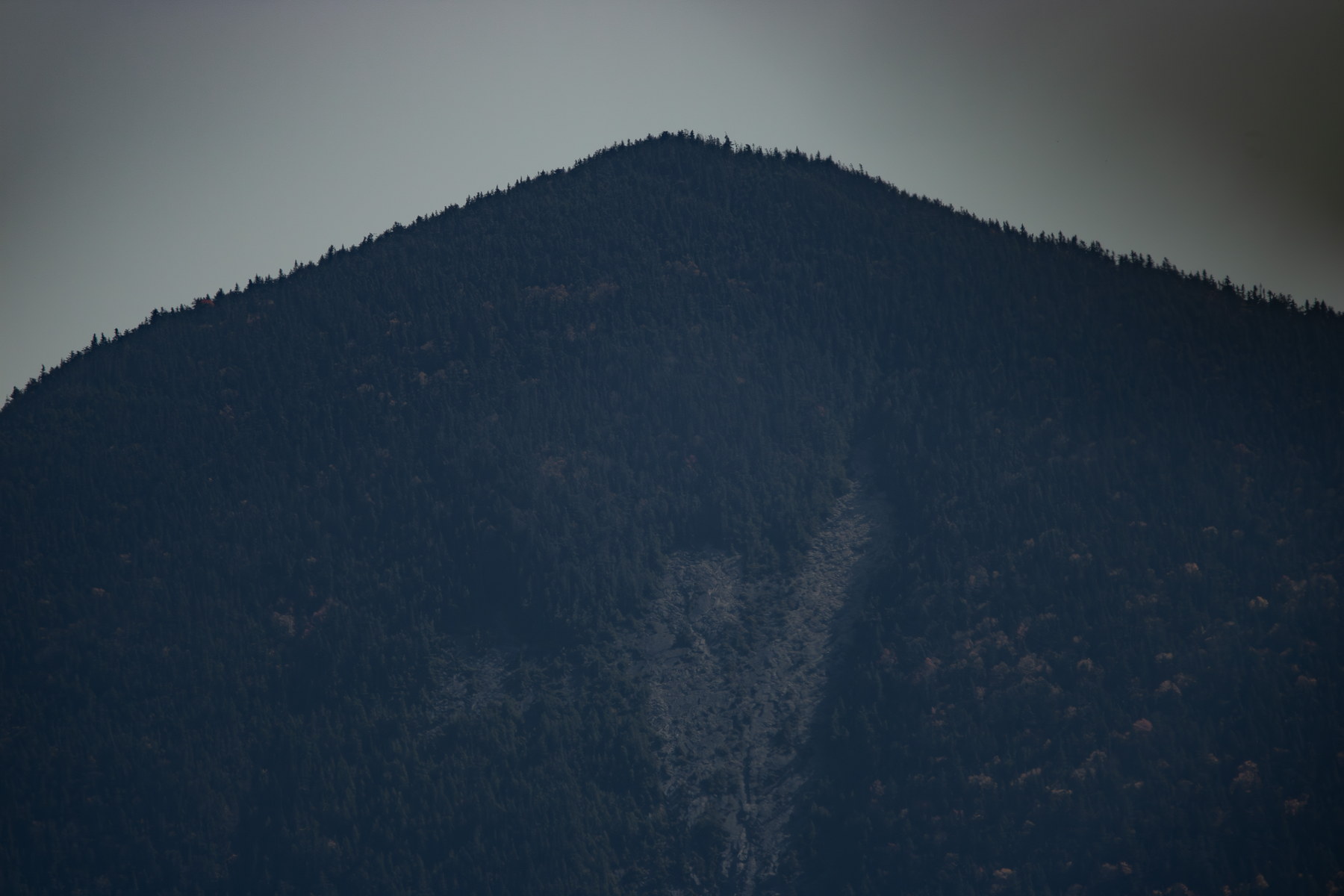
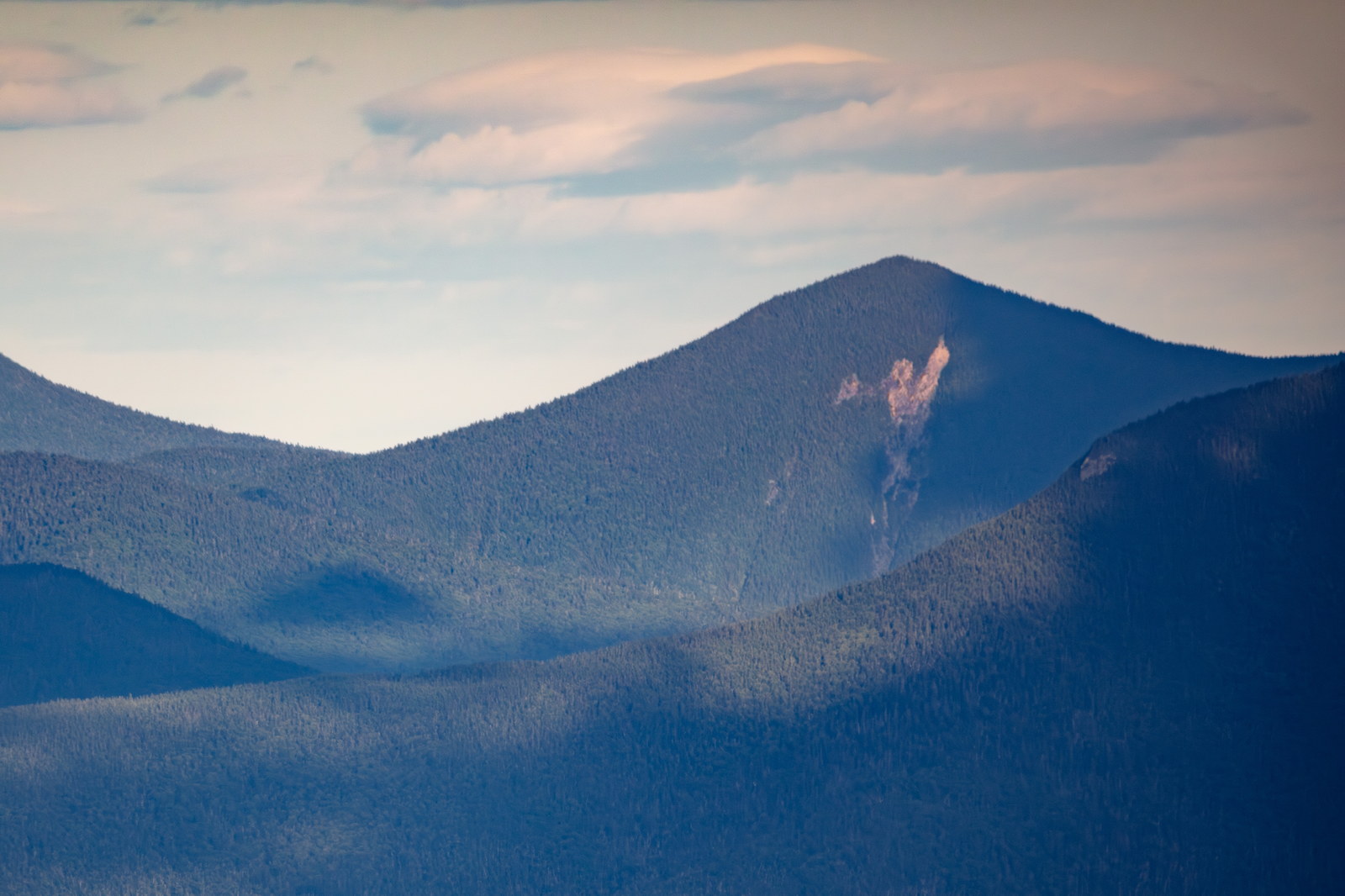
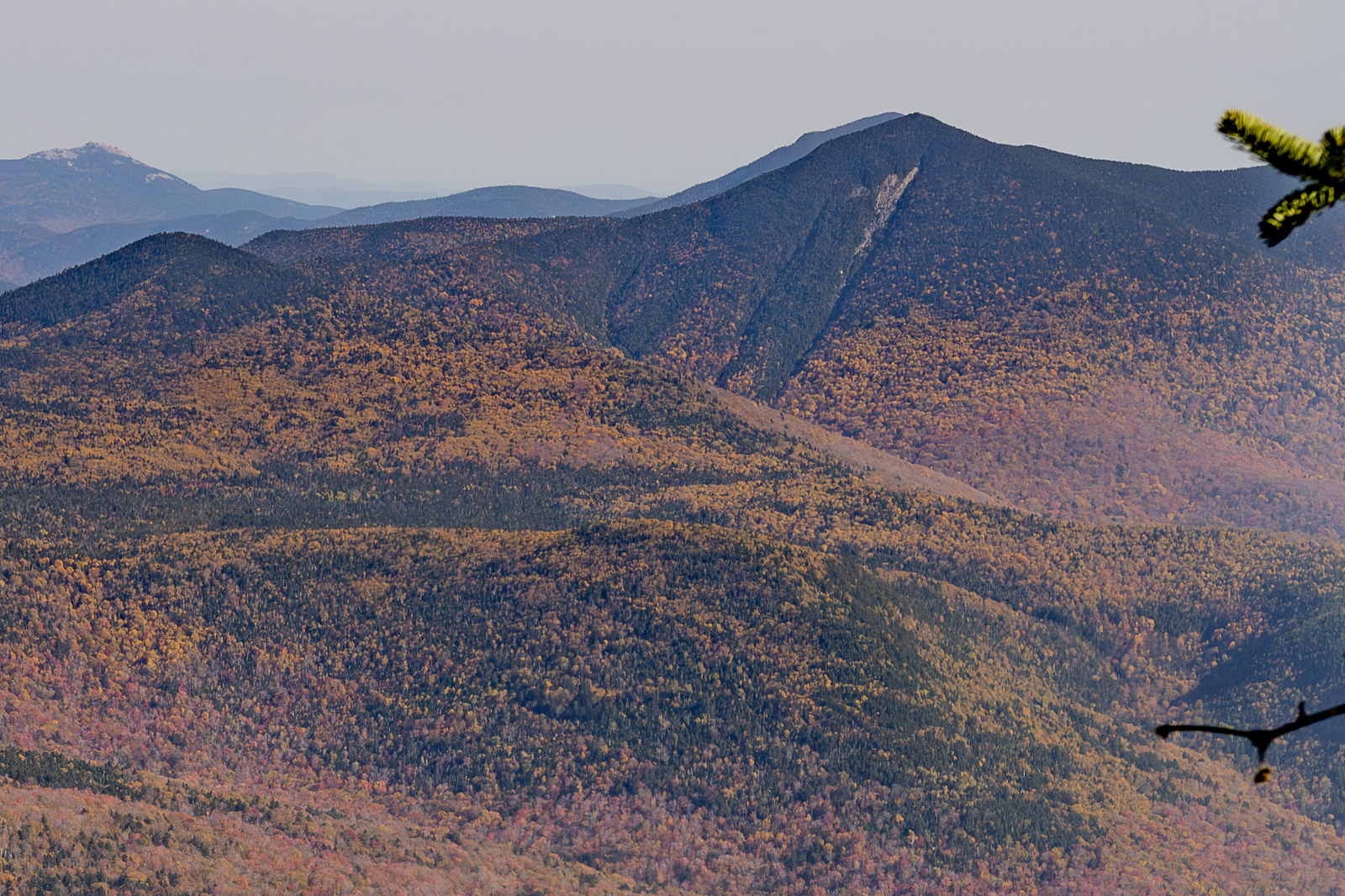
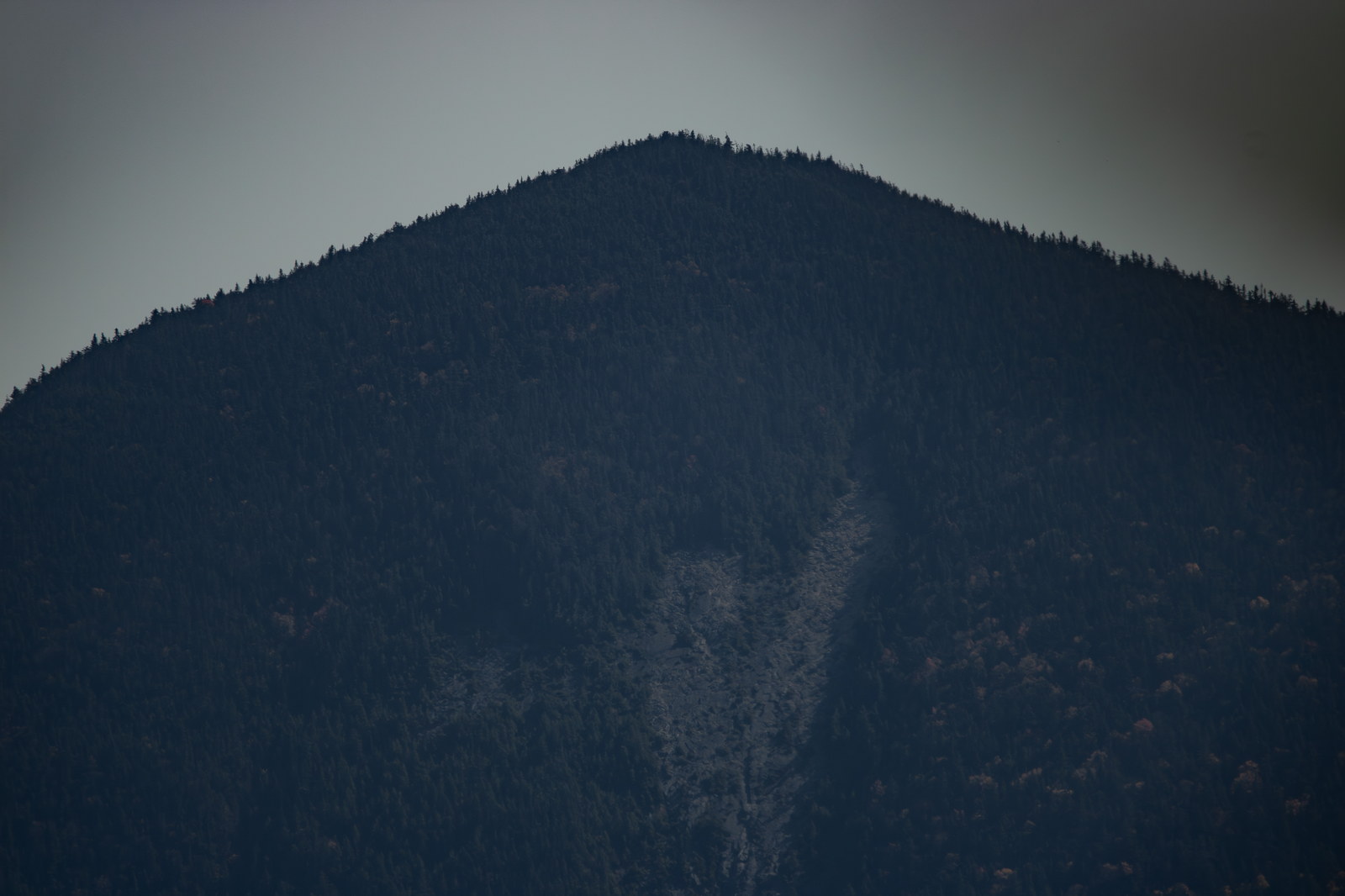
Mount Tripyramid (North Peak) is one of the three summits of Mount Tripyramid in the Sandwich Range of the White Mountains. The North Peak stands at 4,180 feet (1,274 m), making it the highest of the Tripyramid trio. It is located in Grafton County, New Hampshire. North Tripyramid, along with Middle Tripyramid, is included on the Appalachian Mountain Club’s list of 4,000-footers. The two peaks are connected by a ridge and separated by a deep col. The summit of North Tripyramid is wooded, but a hike up its steep North Slide (for experienced hikers) or the gentler approach from the south provides views along the way, and there are limited outlooks near the summit itself. North Tripyramid is the highest of the three summits of Mount Tripyramid in the Sandwich Range. The Tripyramids get their collective name from their three distinct cone-shaped peaks, which resemble a cluster of pyramids rising from the forest. The naming is credited to Arnold Guyot, a prominent 19th-century geographer and cartographer, who systematically surveyed the White Mountains in the 1850s and bestowed many of their names. Guyot named these peaks “Tripyramid” due to their tri-peaked form. North Tripyramid, being the tallest, stands at 4,180 feet and is included on the AMC’s official 4,000-footer list along with Middle Tripyramid. The area around the Tripyramids has a history of logging and natural landslides. In August 1885 (and again in 1892), heavy rains triggered landslides on the north side of North Tripyramid, creating the now-famous North Slide (and similarly, the South Slide on the south side in 1869). These slides were notable enough to be mentioned in early trail reports, and by the early 1900s hikers were using them as adventurous routes. The Livermore brothers ran logging operations on Tripyramid’s lower slopes (1890s), using a series of switchback logging railroads – remnants of which hikers still encounter, such as the grade in Livermore that the Mount Tripyramid Trail follows. By 1916, as logging waned, the WMNF took over and the area gradually returned to wilderness. North Tripyramid’s summit is densely wooded, so historically it was not a site for fire towers or structures. However, one tangible bit of history is an old blaze at the top marking the junction of paths laid out by the AMC in the 1920s. Those trails remain, guiding modern hikers up the same steep slides that early mountaineers tackled with alpenstocks and hobnailed boots.